
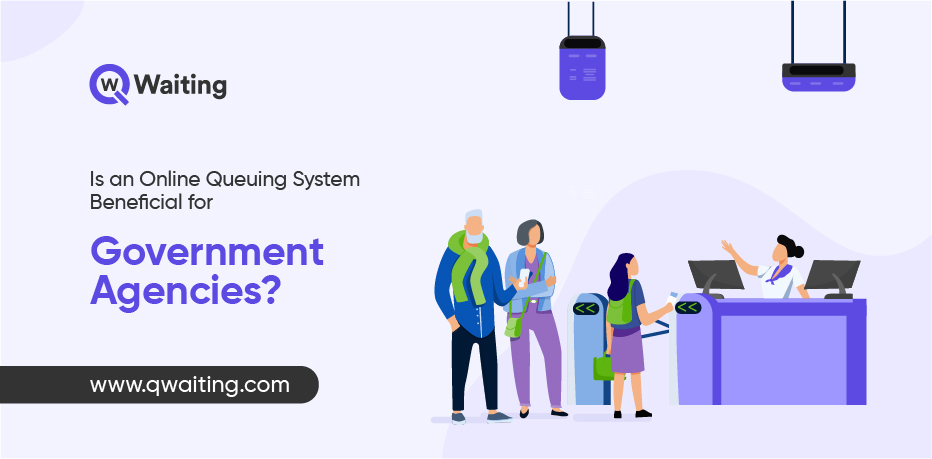
If you walk into a government office early in the morning, you will see many people waiting in long lines. Some people get there an hour before the doors even open just to make sure they get help. There are usually not enough workers at the front desks to help everyone quickly. This makes people feel stressed and frustrated before the day even starts.
These long waits change how people feel about their government. Every time a citizen has a bad experience, they lose a little bit of trust in the system. It is no longer a question of whether an online line-booking system is a good idea. Instead, government offices need to realize that they must use these tools to stay helpful. If the service is slow and messy, people will stop trusting the agencies that are supposed to serve them.
The Real Cost of Traditional Queues in Government Offices
The real problem is not just the line. It is the stress on workers and the hidden mistakes that slow down every department long after people go home.
Waiting as a Trust Issue, Not an Inconvenience
Waiting 3 hours only to find out you forgot a paper is very frustrating. It makes people feel like the government does not care about their time. Not knowing how long the wait will take is even worse than the wait itself. These bad experiences make people lose faith in how their government is run.
Citizen Psychology Inside Physical Queues
People get angry when they do not know how long the wait will take. Even a short line feels long if you cannot see your place in it. Seeing someone cut the line makes people feel even worse. This lack of clear information causes stress for both the citizens and the staff who have to help them.
Operational Strain on Front-Desk and Service Staff
Teams spend too much time managing crowds instead of doing their actual jobs. They have to stop working to answer questions or settle arguments, which leads to burnout. Because there is no plan, some desks are way too busy while others are empty. This makes the work uneven and slows everything down for everyone.
Missed Appointments, Repeat Visits, and Growing Backlogs
When lines are messy, people give up and leave because they cannot plan their day. They have to come back many times for one task, which makes the lines even longer. This creates a huge pile of unfinished work. A good queue system decides if a government is truly helping people or just managing a frustrated crowd.
Traditional Queue vs Online Queue Impact in Government Offices
| Metric | Traditional Queue | Online Queue System |
| Avg Wait Time | 45-90 minutes | 15-25 minutes |
| Staff Load | High (crowd control) | Low (service-focused) |
| Citizen Satisfaction | 35-50% | 75-85% |
| Repeat Visits | 30-40% | 8-12% |
| Daily Throughput | 120-150 citizens | 200-280 citizens |
What an Online Queuing System Really Means for Government Agencies
This isn’t about replacing people with screens. It’s about creating a predictable, manageable service flow so both citizens and staff can function without chaos.
Moving From Walk-Ins to Predictable Citizen Flow
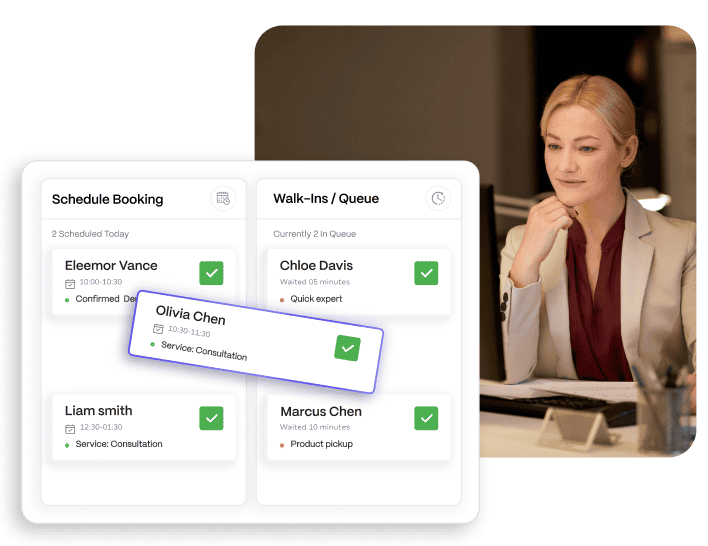
Digital queue management for government offices blends scheduled appointments with walk-in management, so you’re not choosing between flexibility and control—you get both. Citizens receive clarity before they arrive: expected wait times, required documents, and even notifications if delays occur.
This simple shift reduces morning rushes when everyone arrives at opening time and prevents end-of-day pileups when people rush to get served before closing.
For a deeper knowledge of how digital tools streamline citizen services and improve government office efficiency, see our guide on Government Office Queue Solutions.
Reducing Anxiety Through Visibility and Communication
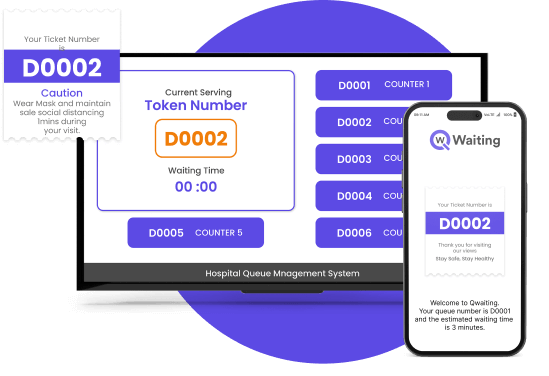
Real-time position updates change how people experience waiting. Whether through mobile apps, SMS notifications, or display screens, citizens know where they stand. They can step outside, grab coffee, or handle other errands instead of hovering nervously near the counter. What’s interesting is that visibility alone improves perceived service quality, even when actual wait times stay the same.
Accessibility Across Digital and Physical Touchpoints
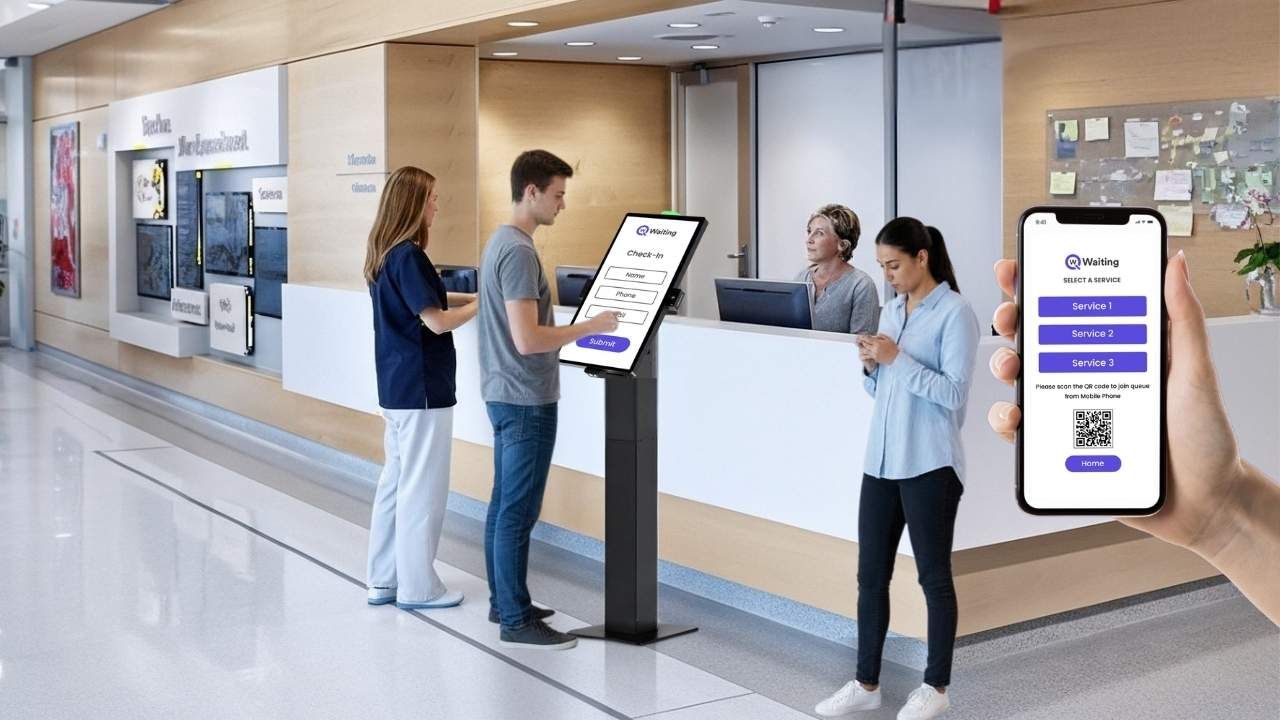
A common misconception: citizen service queue management requires everyone to use smartphones. Not true. Effective queue systems offer multiple access points:
- Mobile booking for tech-savvy citizens
- SMS for basic phones
- Kiosks for those who prefer in-person registration
- Assisted check-ins for elderly citizens or rural populations
The goal is inclusion, not exclusion. No one gets left behind because they don’t own the right device.
Peak Days, Policy Changes, and Crisis Readiness
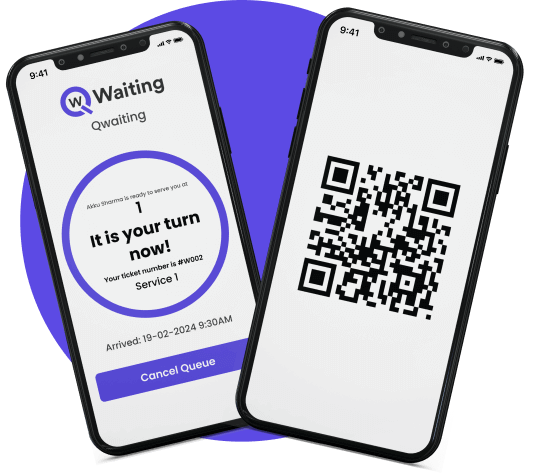
Election seasons, tax deadlines, policy changes, these create sudden demand surges that overwhelm traditional setups. A virtual queue system for the public sector prevents physical overcrowding during high-pressure periods by distributing load across time slots and channels. When unexpected spikes happen (and they will), services remain functional instead of collapsing under pressure.
Online Queuing Is Not “App-Only” — What Governments Get Wrong
The biggest implementation mistake? Assuming citizens must download apps or have smartphones. Real government appointment scheduling systems work across SMS, web portals, phone calls, kiosks, and walk-ins. The technology adapts to citizens, not the other way around.
Where Online Queuing Delivers the Highest Impact in Government
Not all departments face the same challenges. The highest returns come from services where volume, unpredictability, and citizen frustration intersect.
Citizen Service Centres and Municipal Offices
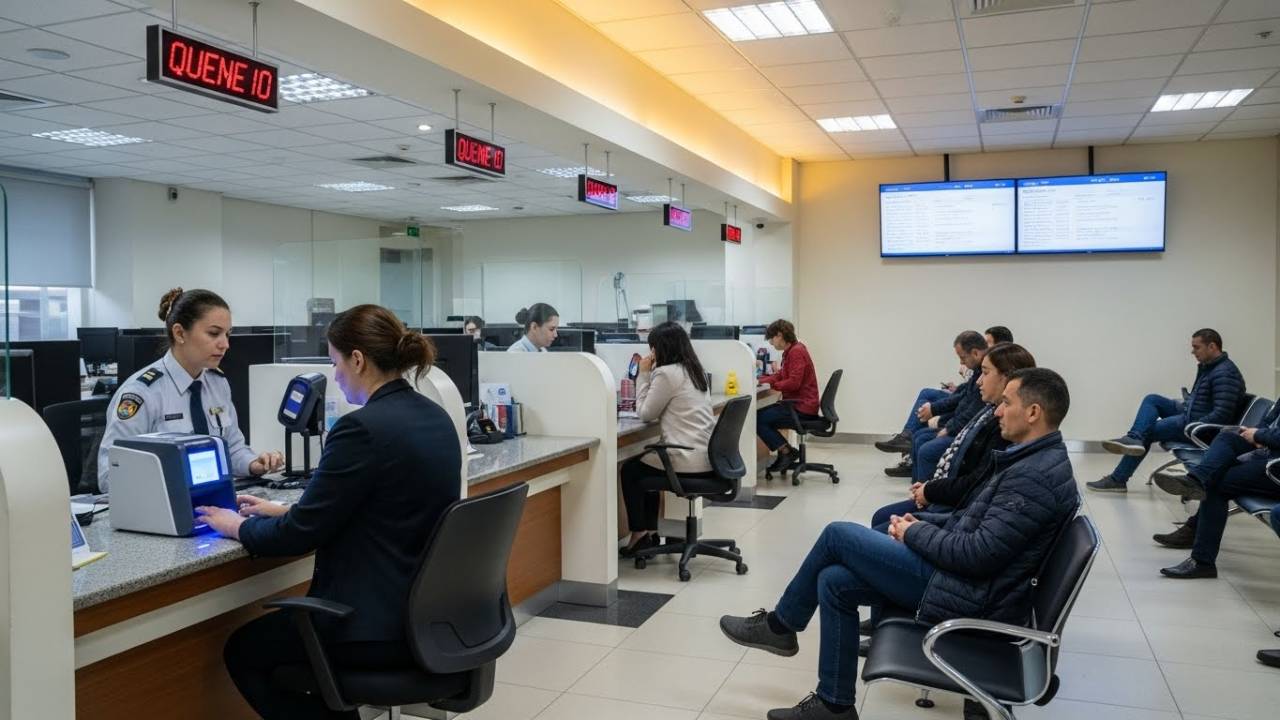
IDs, licenses, permits, birth certificates, these are document-heavy services where multiple processes happen under one roof. Without coordination, citizens bounce between counters, not knowing which queue to join. Queue management solutions for government agencies reduce this confusion by routing people correctly from the start and managing traffic across different service types simultaneously. It can be used in Social Security and Welfare Offices, banks etc.
Public Hospitals and Healthcare Facilities
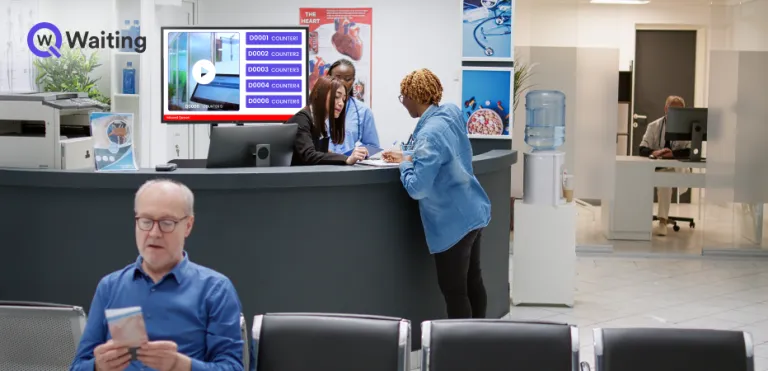
Registration queues, department-level waiting areas, lab appointments, healthcare environments need both scheduled flows and emergency flexibility. Preventing crowding matters more here than almost anywhere else, especially in sensitive settings. The system supports scheduled consultations while accommodating walk-in urgencies without creating bottlenecks at reception.
Immigration, Transport, and Regulatory Departments
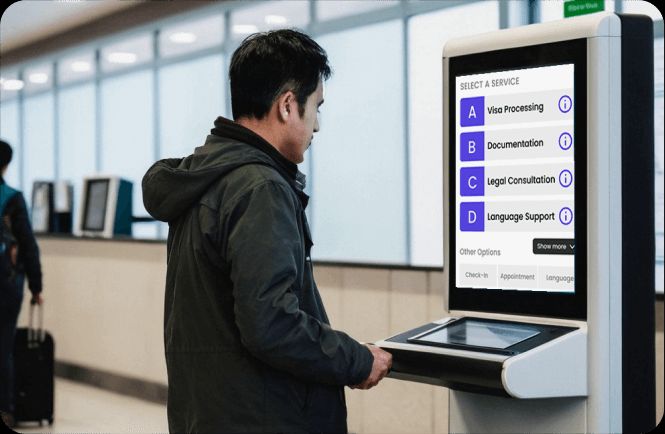
These handle document-heavy, high-volume services with seasonal demand fluctuations, visa renewals before holidays, and vehicle registrations at month-end. Managing this without chaos means improving throughput without expanding physical space. Look, this isn’t revolutionary, but it’s measurably effective: the same office, same staff, serving 40-60% more citizens per day.
What Government Agencies Must Evaluate Before Implementation
Enthusiasm for new systems is great, but procurement decisions need to survive real-world conditions and long-term operational requirements.
Integration With Existing Government Systems
Legacy infrastructure isn’t going away. Any online queue management system for the government needs to work within existing IT environments, not replace them entirely. Security protocols, data privacy compliance, and regulatory requirements aren’t negotiable. The system must meet government standards for information security and citizen data protection from day one.
Offline Continuity for Real-World Public Sector Conditions
Network outages happen. Power disruptions occur, especially in regional offices. An online system that can’t function offline creates bigger problems than it solves. Offline-ready systems ensure uninterrupted service regardless of connectivity issues. Citizens shouldn’t experience service failures because of infrastructure limitations beyond their control.
Change Management for Staff and Citizens
Technology adoption fails when people resist it. Training front-line teams properly matters—they need confidence in the system before citizens do. Clear public communication about changes prevents confusion and backlash. The transition should feel like an improvement, not a disruption. Smooth adoption requires planning, not just deployment.
Choosing a Platform Built for Scale and Governance
Pilot projects are fine for testing, but the government needs long-term scalability. Multi-location control, centralized policy enforcement, and the ability to manage dozens or hundreds of service points from one system—that’s what separates real solutions from stopgap measures. Platforms like Qwaiting are built specifically for this level of governance complexity and scale.
Government Queue System Evaluation Checklist
- Works with legacy government IT infrastructure
- Meets data security and privacy compliance requirements
- Functions offline during network or power disruptions
- Supports multiple access channels (mobile, SMS, kiosk, walk-in)
- Provides centralised control across multiple locations
- Includes real-time reporting and performance dashboards
- Scales from pilot programs to nationwide deployment
- Offers multilingual support for diverse populations
- Includes staff training and citizen communication support
Concluding words
So, is an online queuing system beneficial for government agencies? The answer depends on whether you view service delivery as an operational detail or a strategic priority. Small operational changes, giving citizens visibility, coordinating service flow, and reducing uncertainty, lead to measurable gains in public trust. Fewer complaints. Calmer offices. Staff who can focus on serving instead of managing chaos.
If citizens judge governments by how they experience services, what story do today’s queues tell? Are they seeing efficiency, transparency, and respect for their time—or are they seeing the same crowded lobbies and unclear processes that have defined public service for decades? The systems exist to change that narrative. The question is whether leadership will act on it.
Ready to see how digital queue management transforms government service delivery? Explore how Qwaiting helps public sector agencies reduce wait times, improve citizen satisfaction, and gain operational visibility across locations.
Book your 14-day free trial today!
FAQ’s
1. What is an online queuing system for government agencies?
A digital tool that organises citizen visits, manages wait times, and schedules appointments to create smoother, predictable service flow in government offices.
2. What are the benefits of online queuing for public sector offices?
It reduces wait times, lowers citizen frustration, increases staff focus, prevents overcrowding, and improves overall trust in government services.
3. Can online queue systems work for walk-ins as well as appointments?
Yes. Modern systems handle scheduled appointments and walk-ins simultaneously, giving flexibility while keeping service orderly.
4. How does online queuing improve staff efficiency in government offices?
Staff spend less time managing lines and more on serving citizens, reducing burnout and errors while increasing daily throughput.
5. Are online queue systems accessible to citizens who do not have smartphones?
Absolutely. Systems support SMS, kiosks, phone calls, and assisted check-ins to ensure everyone can access services.
6. How does online queuing reduce errors, repeat visits, and backlogs?
By providing clear instructions, required document reminders, and proper routing, citizens complete tasks efficiently, avoiding mistakes and unnecessary return visits.
