
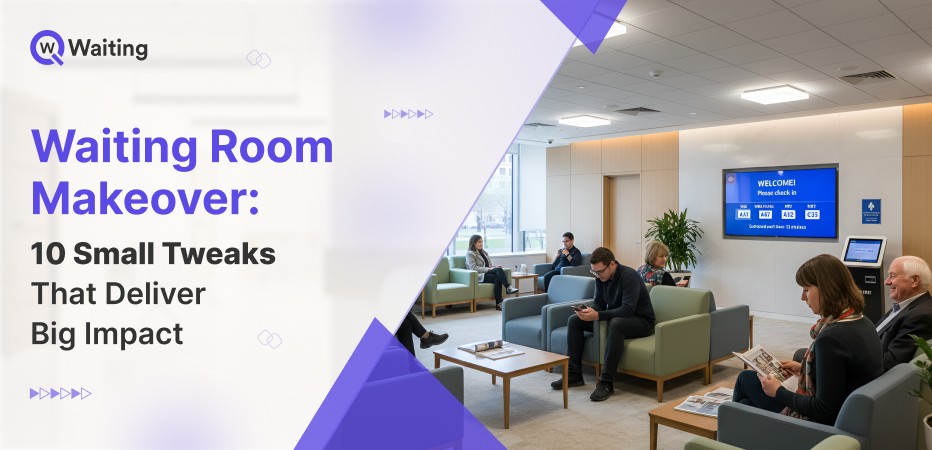
Waiting rooms play a crucial role in shaping a client’s perception of a business and its professionalism. It is more than just an empty space where people wait. This room creates the first impression of your business and decides if customers will feel confident about your brand or not.
Most business leaders spend money on things that happen after the wait. They pay for computer systems and better service delivery. But this is the key thing: The room where people wait, both the real room and the online waiting space, often decides if customers will trust your service later on. A good waiting experience makes them believe the rest will be good too.
In this blog, we will discuss how smart and small changes in waiting room design can shift the entire customer experience without requiring a complete makeover. We will talk about strategic tweaks that reduce anxiety, improve flow, and signal that your organization actually respects people’s time.
Why Your Waiting Room Deserves More Attention Than It Gets
Most bosses who manage how things run think waiting areas are just annoying places. They see them as things they have to have, not as chances to do something smart. This way of thinking is a big mistake that costs the business money. They should see the waiting room as a way to help their business, not just a problem.
Executive Snapshot: Why an impressive and modern waiting room matters.
- The waiting area is the first operational touchpoint customers experience—it sets expectations for everything that follows.
- Small physical and digital improvements can shift perception, satisfaction, and flow instantly without major capital investment.
- Modern expectations demand transparency, comfort, and clear direction—not outdated processes that force people to guess.
- Leaders who optimize waiting spaces often see faster service delivery, calmer environments, and measurably higher trust scores.
What Customers Expect Today (and Why It Matters to Leaders)
People today want more than just a fast wait. They want things to be easy with no problems, and want real-time updates on exactly where they are in line, without compromising their comfort.
If businesses ignore these wants, they create more than just a bad waiting time. This will result in more complaints. Also, people will leave before getting service, spreading negative word of mouth about your business. This means your business will lose money.
Here’s how waiting room influences customer Expectations: Then vs. Now
| Traditional Waiting Room | Modern Customer Expectations |
| Walk in, find a seat, wait silently | Clear check-in process with immediate confirmation |
| No idea where you are in line | Real-time visibility into wait times and queue position |
| Paper forms and manual sign-in | Digital check-in via kiosk or mobile device |
| Generic announcements via intercom | Personalized notifications via SMS or app |
| One-size-fits-all seating area | Zoned spaces for different needs and comfort levels |
| Static signage that confuses | Dynamic displays with helpful, timely information |
Why Waiting Rooms Still Influence Customer Satisfaction (More Than Most Leaders Realize)
The place where people wait gives them an idea about your business. This idea can be wrong or right. We call this a perception gap.
This waiting area either makes people feel sure about your service, or it makes their trust fall apart. This happens before anyone even starts helping them. The way the waiting room looks and feels tells the customer a lot.
The Moment-of-Truth Effect
Customers start to decide if they trust you within the first 30 seconds they come inside. The way your waiting room looks tells them a lot. Is it clean? Is it easy to understand? Is it neat and organized?
These things quickly show how well you manage your whole business. If the waiting room seems messy, old, or uncared for, customers will doubt you. They will already wonder if you can give them good service. The physical space you have shapes their confidence. This confidence then becomes like a filter. They will judge everything else you do through that filter.
Where Most Waiting Rooms Fall Short
If you go into most waiting areas, you will see the same problems. People are often crowded close to the door. It can be very noisy, which makes people stressed. How you move around the room is confusing. This makes people have to ask simple questions.
Checking in is often done by hand, not by a computer. This causes jams where too many people wait. There are also no updates on how long the wait will be. Everyone is left to just guess.
These are not just small look problems. There are problems with how the business operates. They make the service slower. They create different experiences for different people. They also make your workers feel overwhelmed. Your staff have to answer simple questions and deal with complaints that could have been avoided.
What One Clinic Director Told Us
“We redesigned our patient flow and added digital check-in kiosks. Within two weeks, our front desk staff reported 40% fewer interruptions, and patient satisfaction scores jumped 23 points. The waiting room went from feeling chaotic to calm, and that shift happened before we changed anything about our clinical care.”
— Operations Manager, Healing Hospital
10 Small Tweaks That Deliver Outsized Impact
Fixes are not about spending a lot of money. They are about making smart, strategic adjustments.
These adjustments fix the things that cause problems or friction points. Here are 10 quick fixes to pay attention to transform customer experience:
1. Redesign Flow Before You Redesign Furniture
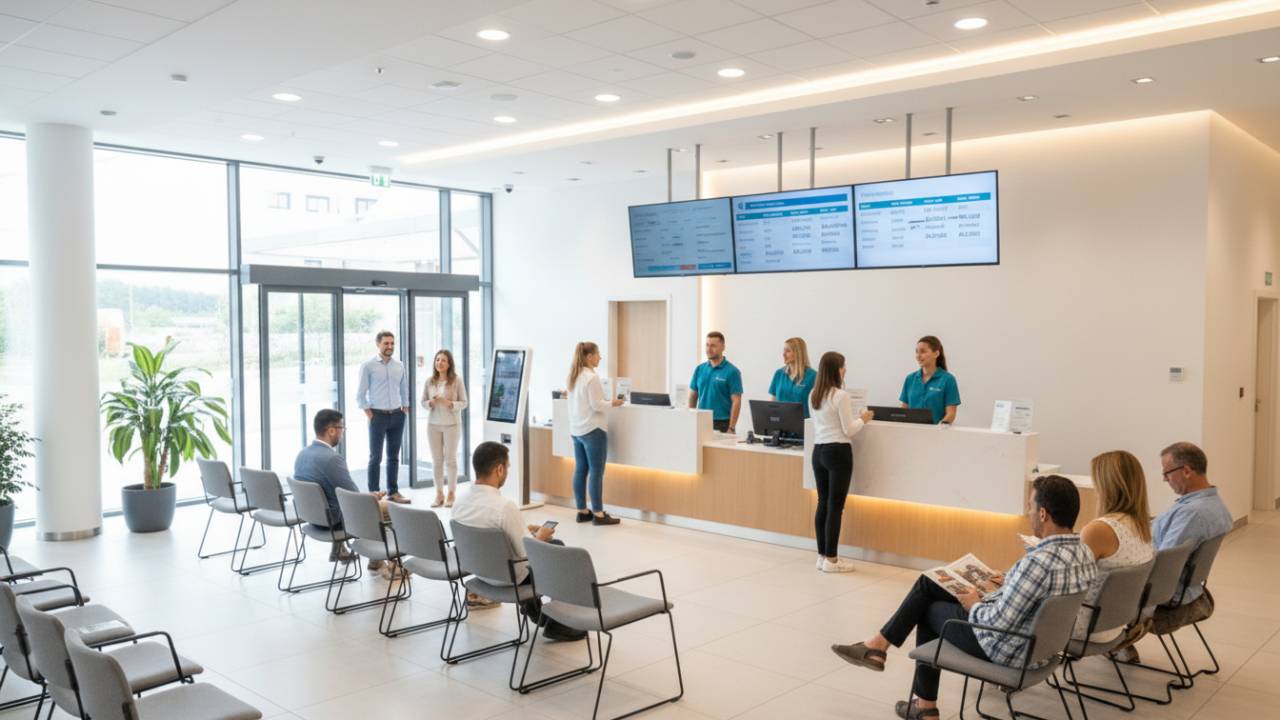
First, navigate how people actually walk through your waiting area. You need to make clear paths for people to come in and to leave. These paths should not cross each other or confuse people.
The main idea is to get rid of jams where people gather or bump into each other. Most waiting rooms are not planned well when they are first made. This means people naturally gather in bad spots. They bunch up at the check-in desk, near screens, and close to where staff serve them. You must fix the flow first. Once you know how people walk, it becomes easy to see where the chairs and tables should go.
Effective waiting rooms start with intentional movement, not furniture—because customer flow design determines whether a space feels calm or chaotic. If you want to explore why effective wait room design is mandatory, must read our blog:
Customer Flow Design: Creating the Perfect Waiting Experience
2. Make Check-In Fast, Friendly, and Frictionless
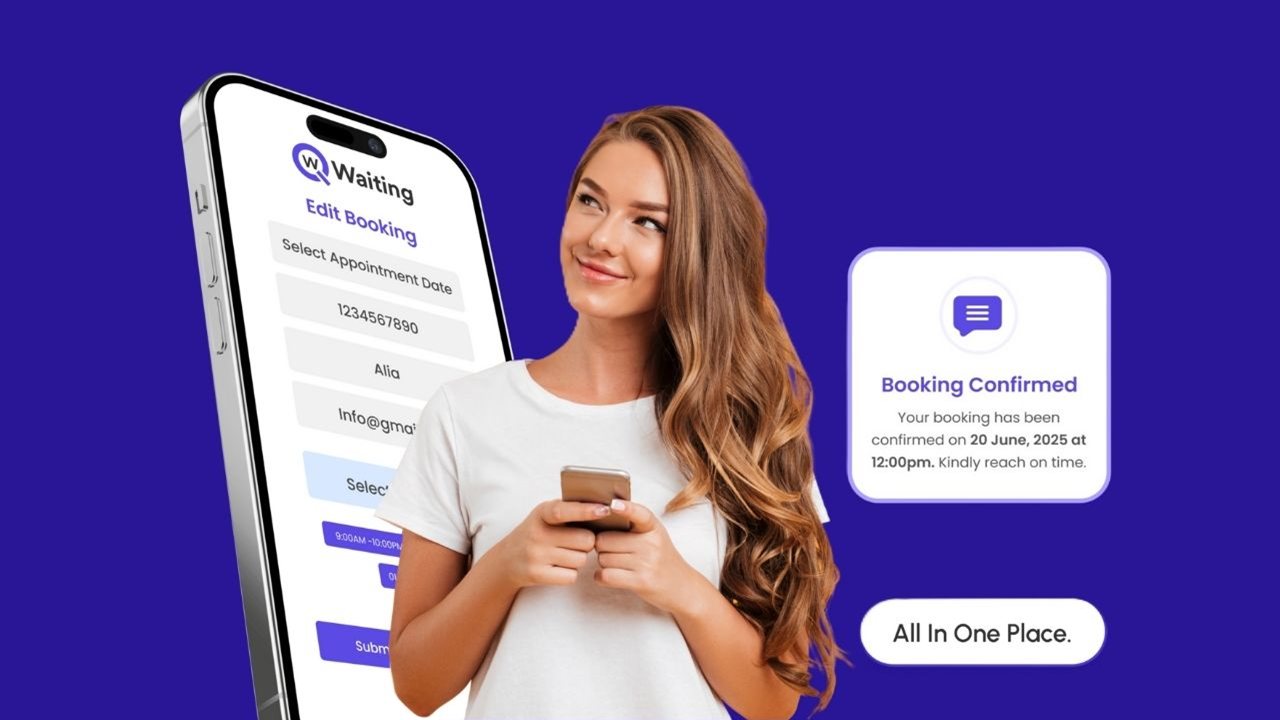
Stop using sign-in sheets made of paper. Instead, use digital check-in screens or let people register on their phones.
This change is not meant to replace your staff. It is meant to make things much easier for the customer. It helps at the time when people feel the most nervous.
Customers want to know for sure that they are in the system, and want clear directions on what they should do next. Digital check-in gives them both right away. This also lets your staff focus on people who have special problems. They can give personal help where it is really needed.
Here’s how digital Check-Ins are a smart option over manual systems:
| Manual Check-In | Digital Check-In System |
| Staff manually records every arrival | Automated capture of customer information |
| A single queue creates delays | Multiple kiosks eliminate bottlenecks |
| No immediate confirmation | Instant acknowledgment and queue position |
| Paper forms are prone to errors | Data accuracy and integration with backend systems |
| Staff tied to repetitive tasks | Team available for complex customer needs |
3. Real-Time Updates That Reduce Anxiety

The biggest thing that makes people stressed while waiting is not knowing things. It is the uncertainty.
You can fix this with screens that show the current line position, and send people alerts on their phones when their service is ready. These updates change waiting from just sitting still to knowing what to expect.
If you do not give people updates in real-time, every minute feels longer. This makes the number of complaints grow quickly.
4. Smarter Appointment Flow Management
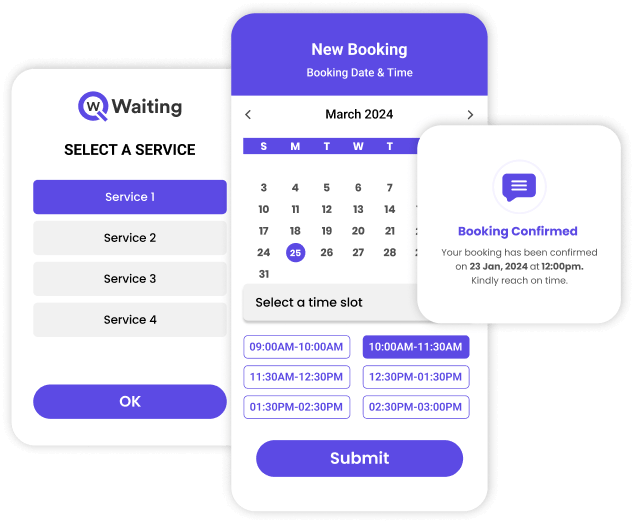
Smooth scheduling stops things from getting too crazy when you are at your busiest. This “peak-time chaos” ruins the customer’s experience. It also makes your staff feel overwhelmed.
Most businesses still book too many appointments. They do not think about how long the service really takes. They also do not leave extra time for people who have harder problems. What happens next? Work piles up all day long. You get long lines during certain hours. Your waiting room quickly goes from being empty to being too full.
You can stop this chaos. You need to stop overbooking. You also need to build smart rules for scheduling. Doing this fixes most of these problems before any customer even gets to your building.
5. Comfort Touches That Signal Care
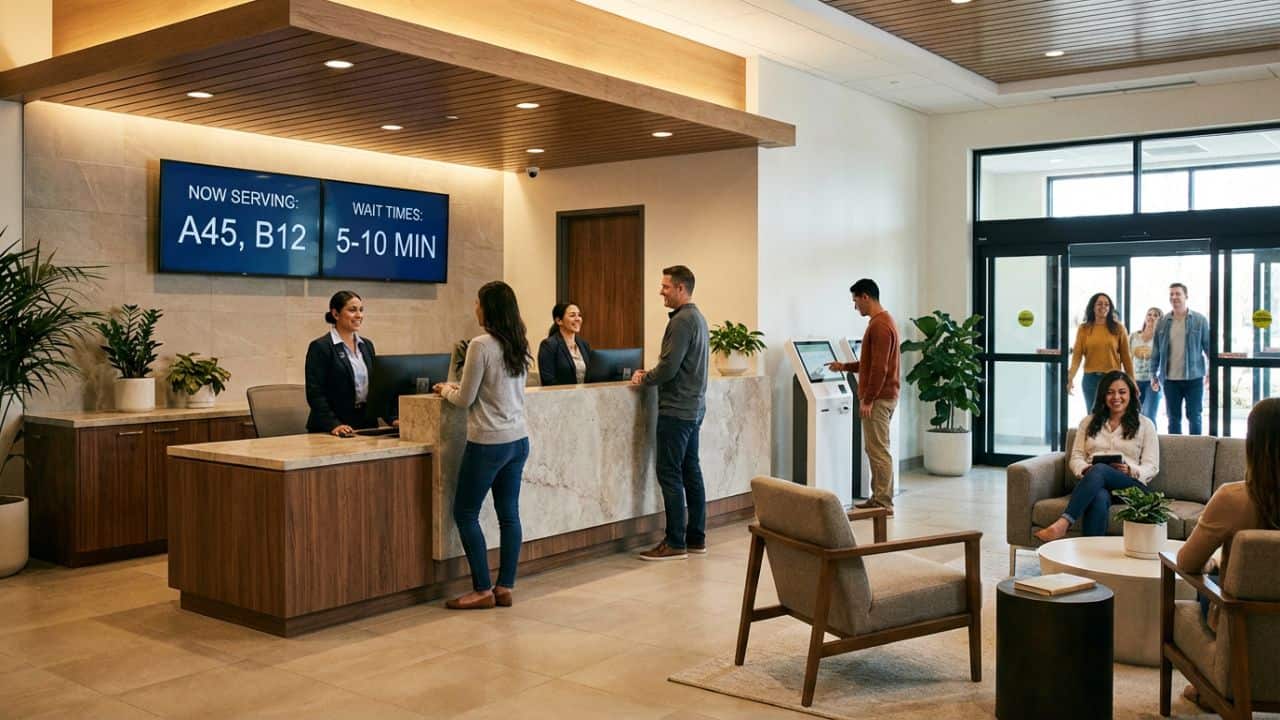
Comfy chairs and a hygienic place are important. Having a magazine stand and a charging socket near the chairs keeps the visitors engaged.
These are not just fancy extras. They are small signs that show you care about people’s time and how they feel. Businesses that pay attention to these small things get much higher trust scores. This is because the waiting room itself shows respect.
When everything looks like it was planned well and is kept in good shape, customers believe they are important to the business, and trust that the same careful attention will be given to the main service you provide.
6. Digital Displays That Inform and Guide
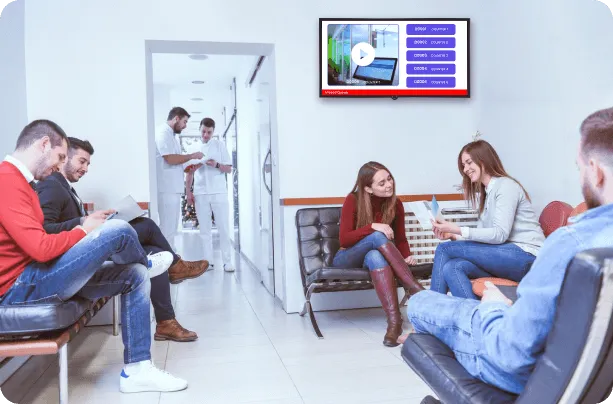
Modern digital screens do much more than just show what number is next in line.
- They give answers to common questions from visitors.
- Display real-time service updates and important announcements.
- They can also show directions in many languages and help people know where to go.
All of this information is changed and controlled from one main computer system.
Putting the right message on the screen at the right time helps a lot. It means staff are interrupted less often. Customers can find their way by themselves. Everyone stays informed without making the room too loud.
Many organizations are now treating digital screens as part of the customer journey itself! When signage and queue management work together, they don’t just inform people; they actively reduce confusion and shape behavior, as explored in our blog on
how digital signage and queue management create a better customer journey
7. Quiet Zones and Smart Zoning
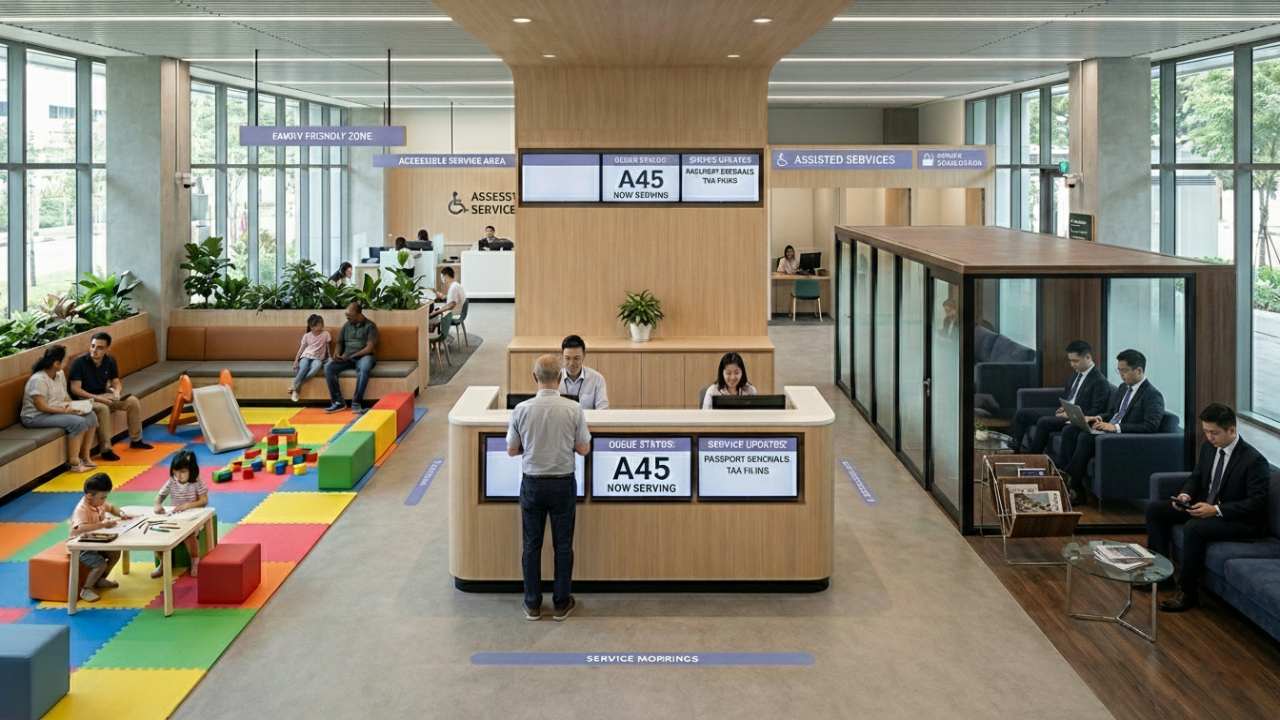
Not everyone who waits needs the exact same spot. A family with kids needs a different area than a business person checking emails.
You should make different zones in the waiting room. For example,
- You could have a family area with kid-friendly activities and space.
- Quiet zone for people who need to focus on work.
- Special service area for customers who need additional help.
Making these zones makes the whole room quieter. It makes people in specific groups more comfortable. It also makes people move around better. This is because people will naturally choose the area that fits what they need.
8. Smart Signage That Eliminates Confusion
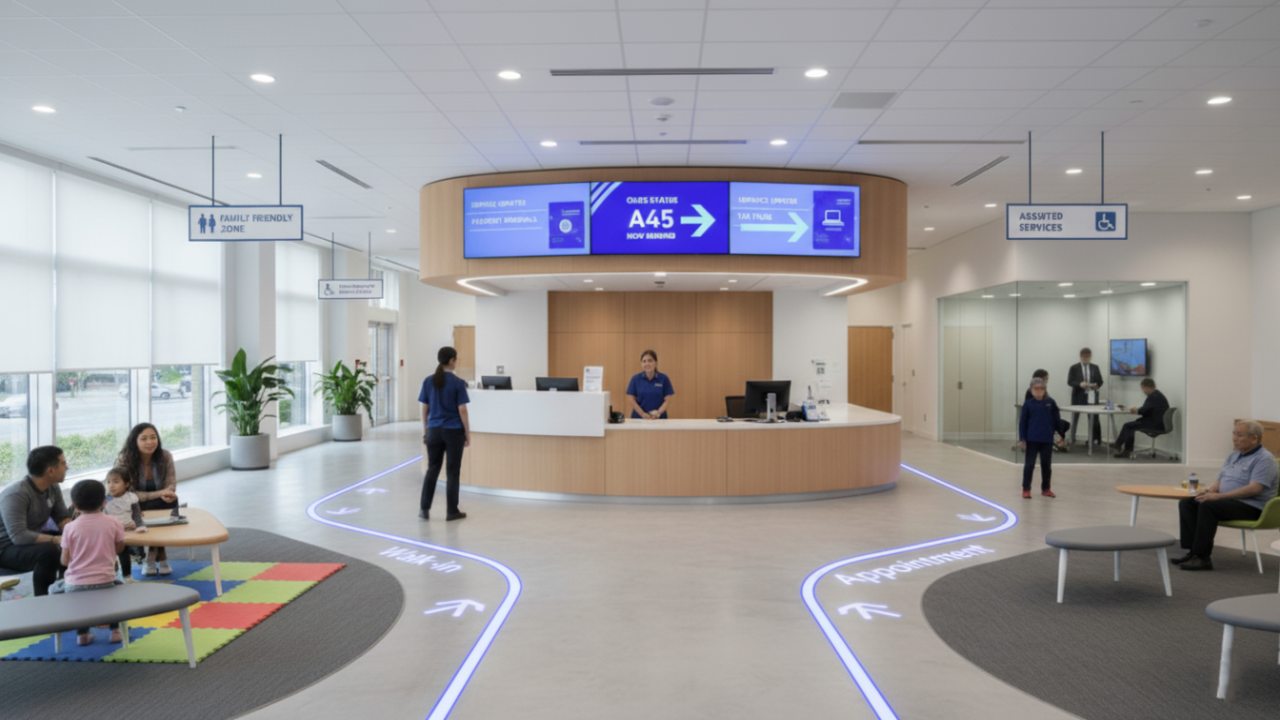
Visual clues help people find their way faster than just telling them.
- You can use colored paths on the floor.
- Display arrows on screens that point the right direction.
- Clear signs for different types of service.
- Include small, simple pictures that convey the same meaning everywhere.
These things help customers find their way on their own. Simple signs cut down on all the “Where do I go?” questions staff constantly get. This means fewer stops for your workers and less crowding near the desks. When the room itself tells people what to do, your team can focus on helping customers instead of just pointing them where to go.
9. Self-Service Touchpoints for Quick Tasks
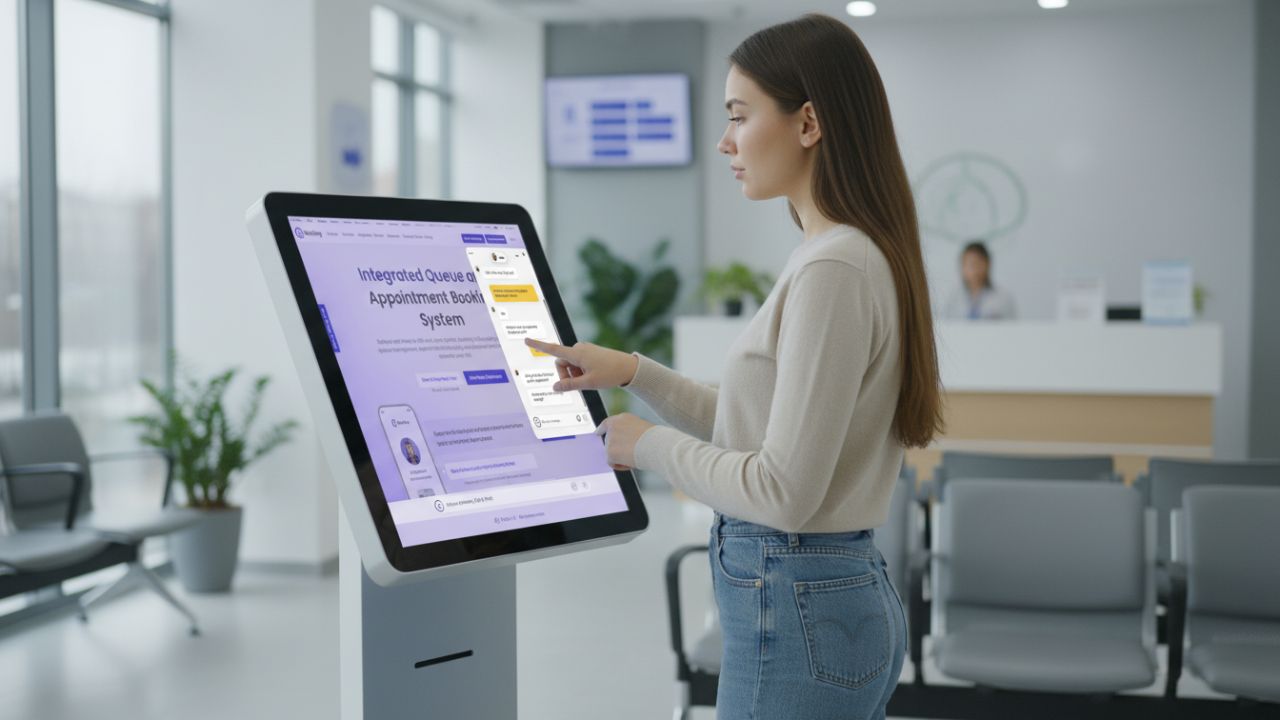
Many customers only need to do simple things. They might need to pay a bill, turn in a form, or change their information. These tasks do not need a person to help. But right now, these customers still have to wait in line.
You can fix this by adding self-service kiosks. These are like small computer stations. Customers can use them for these simple tasks by themselves. This quickly gives you many good things. The lines for harder services get much shorter. People move through the waiting area faster. Your staff has less pressure because they do not have to do simple office work. The most important thing is to make these stations easy to see and truly easy to use.
10. Human Help Where It Matters Most
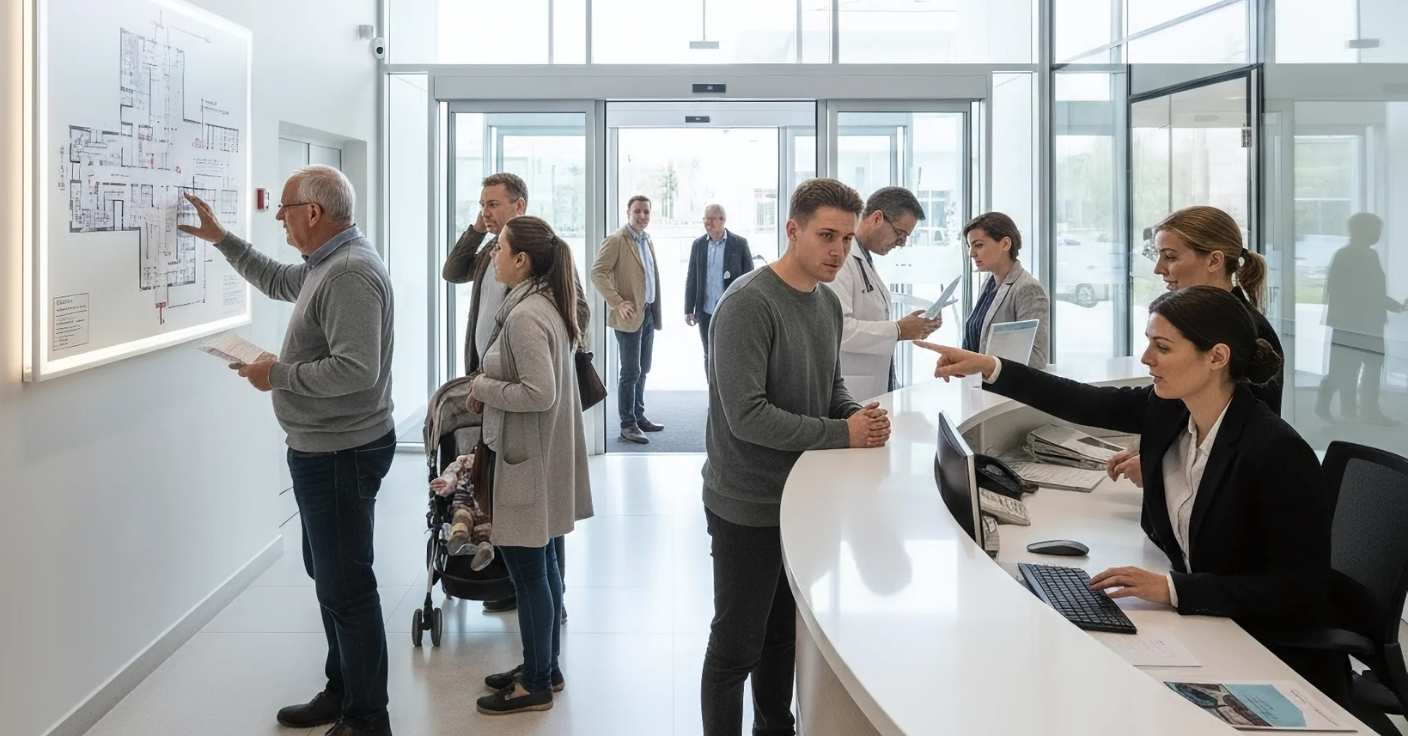
Here is the thing: using automation and letting people help themselves does not mean you fire your staff. It means your workers can be more helpful in places where only a person can really do the job well.
You should place your staff members where problems happen the most. This is called a high-friction point.
- Put staff near the check-in area to help people who are visiting for the first time.
- Place them in areas where people wait for complex services.
- Place them in zones where people often get confused.
Having a person give help at these important times makes customers feel more confident and happier. This works much better than having your staff stuck doing simple tasks that computers or machines can do easily.
The Transformation Effect: How These Tweaks Reshape Your Customer Journey
Small changes in the waiting environment create operational ripple effects that extend far beyond that single touchpoint.
Operational Ripple Effects
Smoother flow patterns eliminate bottlenecks that slow everything down. Service delivery becomes more consistent when staff aren’t constantly interrupted by preventable questions. Faster movement through waiting areas means you can serve more customers in the same timeframe without adding resources. And lower stress levels, for both customers and employees, create a fundamentally different atmosphere that makes problem-solving easier when issues do arise.
Customer Perception Shifts Immediately
A modern, well-organized waiting area feels consistent with high-quality service. Customers arrive expecting professionalism, and the environment confirms they made the right choice. They feel respected when you’ve clearly thought about their comfort and time. They feel informed when updates are transparent and accessible. And they feel valued when the entire experience, from entry to service delivery, works smoothly. That perception translates directly into loyalty, positive reviews, and referrals.
The New Waiting Journey Map
- Arrival → Clear entry path with visible signage
- Check-In → Digital kiosk confirms registration in 30 seconds
- Updates → digital display shows real-time queue position and estimated wait
- Waiting → Comfortable, zoned seating with charging stations
- Notification → SMS alert when service is ready
- Service → Smooth handoff to available staff member
The difference isn’t revolutionary technology, it’s intentional design that removes friction at every step.
Making the Shift: Where to Start
Look, this isn’t about perfection. It’s about identifying the highest-friction points in your waiting area and making targeted improvements that deliver immediate operational and perceptual value.
Modern queue management solutions like Qwaiting integrate many of these improvements, digital check-in, real-time updates, appointment flow optimization, and customer journey analytics into platforms designed specifically for service environments. But the technology only amplifies good design. Fix the fundamentals first: flow, transparency, comfort, and clear communication. Then layer in the digital tools that scale those improvements across locations and service types.
The organizations winning on customer experience right now aren’t necessarily the ones with the biggest budgets. They’re the ones treating every touchpoint, including the waiting room, as a strategic opportunity to build trust, reduce friction, and deliver on the promises they make. That starts with recognizing that where people wait matters just as much as what you deliver once they reach service.
If you’re ready to see how these waiting room improvements translate into measurable business outcomes, calculate your potential ROI or book your free trial with Qwaiting today!