
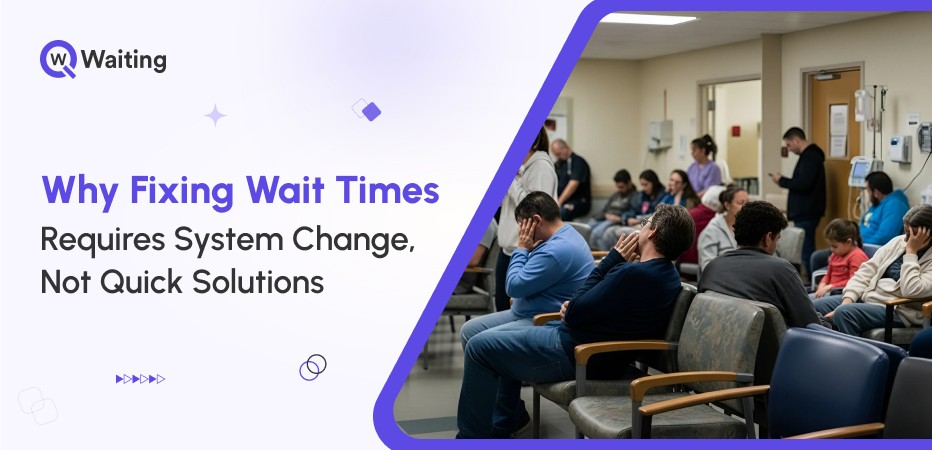
If you go to a bank at noon or a hospital on Monday morning, you will see many people waiting in line, staff members overwhelmed, and management thinking the answer is to hire more personnel or buy better chairs. However, these leaders are missing the real point. Long lines do not happen just because there are not enough workers, but because the whole system they use is broken and has been hurting the way customers move through the building for a long time.
Quick fixes are easy to see and simple to start. They allow leaders to tell others that they are fixing the issue. However, many people find that adding more workers or better rooms does not stop the complaints. This is because they are only fixing the surface of the problem while the real cause stays hidden. You cannot fix a big issue just by working harder or spending more money. Instead, you have to change the whole plan for how customers get help. This starts from the very first moment a person clicks a button or walks into the building.
In this blog, we will discuss how reconstructing the waiting room or hiring staff isn’t the only solution to reduce customer wait times. It is important to measure how your software works.
Why Quick Fixes Keep Failing (Even When They Look Good)

You have likely tried many quick fixes before. These ideas might work for a week or a month. However, the old problems always come back eventually. Now, you have the same long lines plus the extra cost of the things you bought. You are spending more money, but the wait times are still just as bad as they were at the start.
Here’s why quick fixes aren’t effective:
The Cosmetic Fix Trap
Better chairs do not actually make the wait shorter. They only make people feel a little better while they sit there. Soft music, plants, or free coffee are just ways to make people comfortable, but they do not change the reason why people are waiting in the first place.
The real problem is that you are spending money to make a bad system feel okay instead of fixing the system itself. This is a mistake.
Staffing More People Isn’t a Strategy
Hiring more people for busy times seems like a smart move. However, most businesses do not have a steady rush that happens at the same time every day. Instead, the number of customers can change quickly because of the weather, paydays, or local events. Because these changes are hard to predict, having a set number of workers does not always work.
The real secret to fixing long lines is not just about hiring more people. It is about how the work moves from one step to the next. You need to fix the “bottlenecks,” which are the specific spots where the work slows down and gets backed up.
Manual Workarounds Create Invisible Chaos
Manual methods of using registers and pens to record customer information usually fall apart when things get really busy. Sometimes numbers are called in the wrong order, or people miss their turn because they stepped away for a moment. This causes a lot of stress because your personnel spend more time managing the line than actually helping the people in it.
Here are some common quick solutions businesses use to major problems that won’t even last for long:
| Common Quick Fix | Short-Term Benefit | Long-Term Risk | Remaining Gap |
| Comfortable seating | Reduces immediate complaints | No impact on actual wait time | Customers still wait just as long |
| Increased staffing | Handles current peak | Unsustainable costs, still reactive | Can’t adapt to demand variability |
| Manual token systems | Creates perceived order | Requires constant oversight, error-prone | No visibility into real-time flow |
| Entertainment (TV, magazines) | Distraction from waiting | Doesn’t reduce service time | Process inefficiency unchanged |
Waiting is a System Problem — Understanding the Full System
If you want to make wait times shorter, you must stop looking at lines as a single problem. To fix the wait, you have to look at every step a customer takes from start to finish. If you only look at the line itself, you are missing the broken parts of the machine that caused the line to form.
Here’s how you can fix the problems deeply:
Demand Intake
Every person who visits your business is a request for help, and every customer request can be different. Many companies make the mistake of treating everyone the same way. A person who made an appointment should not have to fight for a spot against someone who just walked in without a plan. When you don’t separate these different groups right at the start, it causes a big mess.
The problem is that your online booking tools and your in-person lines often don’t connect. This creates a lot of confusion and conflict, which ultimately results in much longer wait times for everyone.
Flow Design
This is the part where things usually go wrong. Once a person enters a building, they go through several steps. They might have to check in, talk to a worker to explain what they need, get the actual service, and then pay at the end. Each of these steps takes a different amount of time and needs a certain number of staff members. Each step can also become a place where things get stuck. If one step takes three times longer than the others, it creates a backup.
To keep people moving, every step in the process needs to work at the same speed. When the stages do not match up, the whole line stops moving, and the wait grows longer for everyone.
System Flow: From Entry to Service Completion
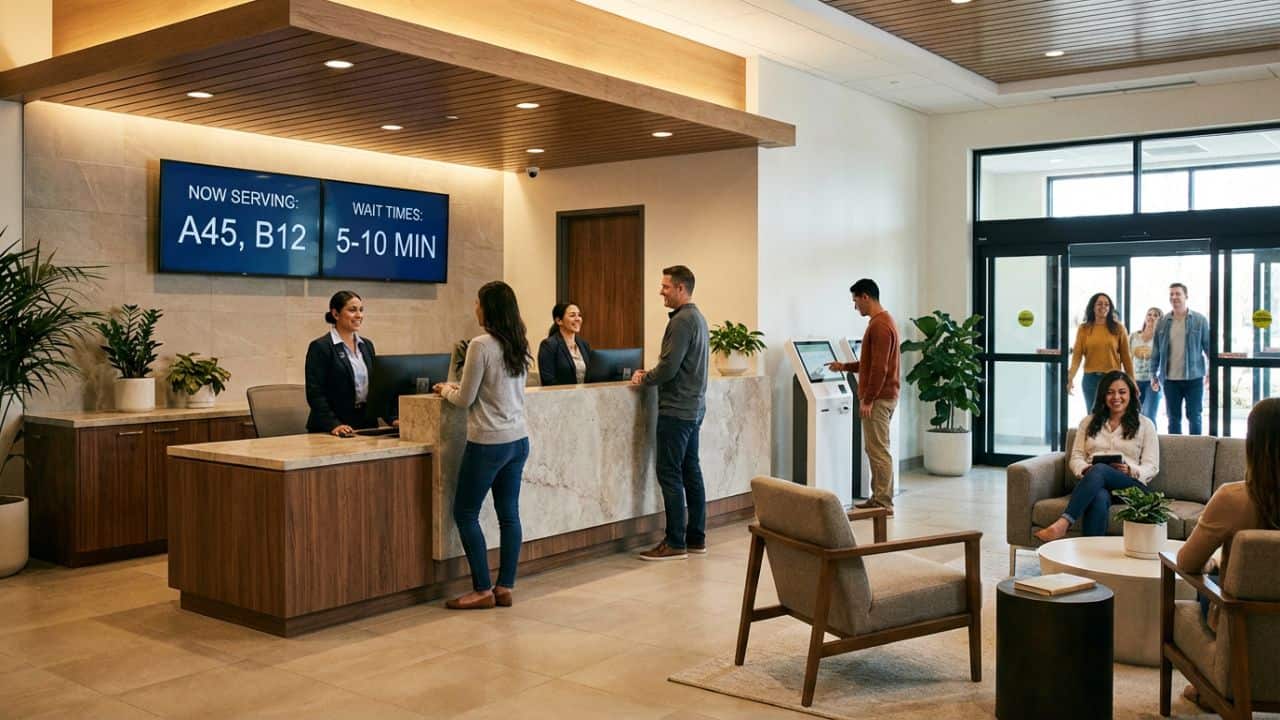
- Entry point → Customer arrives (walk-in/appointment/virtual queue)
- Queue logic → Routing based on priority, service type, or availability
- Service stage → Actual interaction (transaction, consultation, procedure)
- Communication touchpoints → Updates sent at each transition
- Exit & feedback → Service complete, post-interaction follow-up
Most delays happen between the steps. Waiting for a manager to say yes or for workers to do things differently creates stops. Smooth handoffs are more important than being fast.
Visibility & Communication Gaps
Waiting feels longer when you are confused. A fifteen-minute wait feels twice as long if nobody talks to you. Telling someone they are third in line makes them feel much better.
Using screens or texts to show wait times helps a lot. It makes the invisible wait visible. Even if the time is the same, people are happier when they know the plan.
What System Change Looks Like in Practice
To stop using temporary fixes and start redesigning, you must change your thinking. It is not as hard as it sounds. You just need to look closely at how customers move through your business from start to finish. Instead of just covering up problems, you build a better path for people to follow.
Designing Waiting Out of the Experience
The best line is one where you don’t have to stand. Virtual lines let people check in using their phones. This allows customers to wait in their car or a coffee shop instead of a boring lobby.

Smart queue systems give people control over their time. Apps send texts when it is almost your turn or let you see your spot in line. The wait time might be the same, but the experience feels much better because you aren’t stuck in one place.
Orchestrating Demand, Not Reacting to It
Scheduling tools should do more than just fill a calendar. They help you match the number of customers to the number of workers you have available. A smart system knows when to leave extra time for hard tasks. It spreads out different kinds of work so the staff does not get overwhelmed all at once. It also makes sure there is a good balance between people with appointments and people who just walk in.
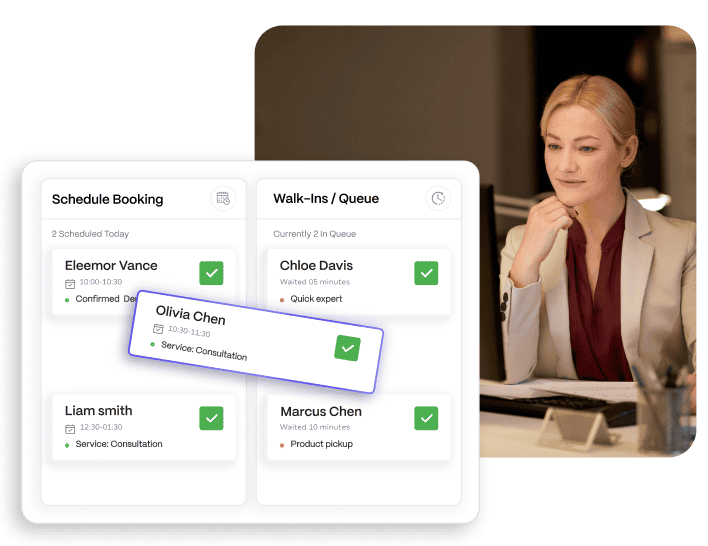
It uses customer behavior information to change the schedule automatically. This keeps the work moving smoothly and prevents long lines from forming before they even start.
Making the Invisible Visible
Being open about information changes everything. Computer screens for managers show where the work is getting stuck and which workers are busy. Screens for customers show the wait times and their place in the line. This means nobody has to guess what is going to happen next.
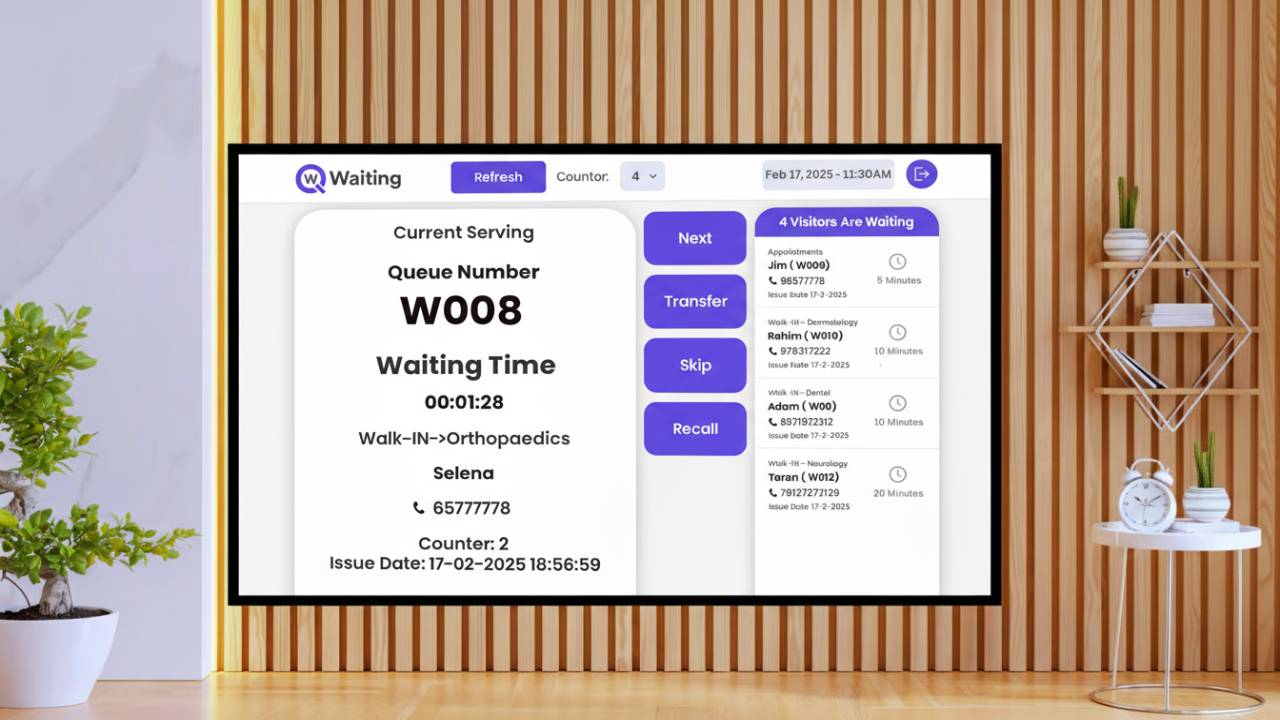
When everyone can see the truth, they act differently. Workers see a line growing and move quickly to help before it gets too long. Customers can decide to come back later if they see the wait is too high. This helps the business run itself smoothly instead of being a stressful mess.
Building Flexibility Into the System
Rigid systems break under pressure. Smart systems adapt. Dynamic routing sends customers to the next available qualified staff member instead of locking them to a specific person. Priority levels adjust based on wait time, service complexity, or customer status. Staff can be reassigned in real time when one area gets slammed.
Before implementing system change: “We had constant complaints, staff were stressed, and no amount of overtime helped. Peak hours were chaos—customers walking out, phones ringing unanswered, and everyone just trying to survive the day.”
After redesigning the flow with integrated queue management, “Wait times dropped by 40% in the first month. Staff actually have time to deliver better service instead of just managing crowds. Our customer satisfaction scores finally moved from the red zone into green. More importantly, we’re in control instead of constantly reacting.”
Customer Psychology of Waiting
People handle waiting better when they have information. Knowing you are fourth in line feels much better than knowing nothing at all. Virtual lines help by sending updates to your phone. This removes the stress of not knowing. Making customers feel in control is more important than being fast.
How Leaders Should Think About Fixing Wait Times
If you’re a decision-maker reading this, here’s what actually needs to change in how you approach this problem.
Shift From Speed to Flow
Stop asking “How do we serve customers faster?” Start asking, “How do we design a system where customers flow smoothly without backups?” Speed is a tactic. Flow is a strategy. When your entire process is optimized for smooth handoffs, minimal idle time, and intelligent routing, speed happens naturally.
Treat Waiting as a Strategic KPI
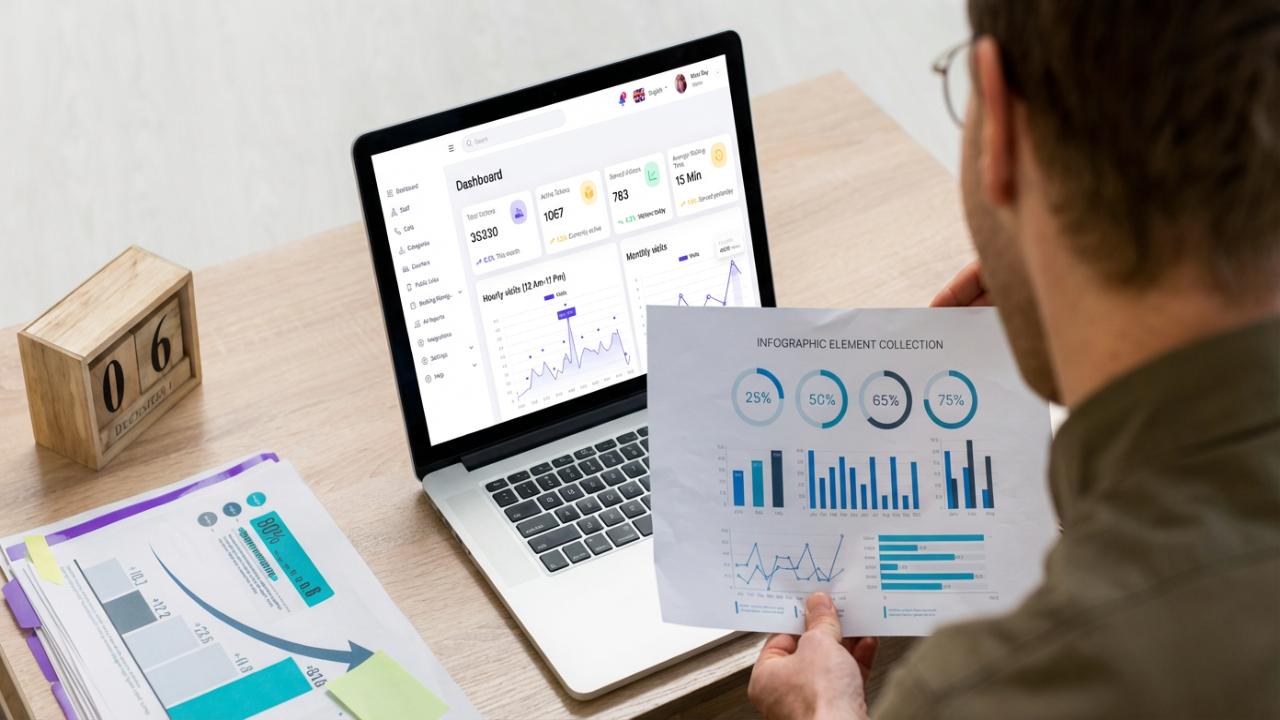
If wait times aren’t in your board-level dashboard right next to revenue and costs, they should be. Customer experience, operational efficiency, and revenue performance are all directly tied to how well you manage flow. Track average wait time, but also track variance, peak-period performance, and abandonment rates.
When executives see these metrics regularly, they stop treating queue problems as operational annoyances and start treating them as strategic priorities.
Invest in Scalable Systems
There’s a difference between buying a bunch of fragmented tools and implementing an integrated platform. Fragmented approaches give you a check-in kiosk that doesn’t talk to your scheduling software, which doesn’t connect to your staff dashboard, which can’t feed data to your analytics system. You end up with five separate systems that require manual coordination.
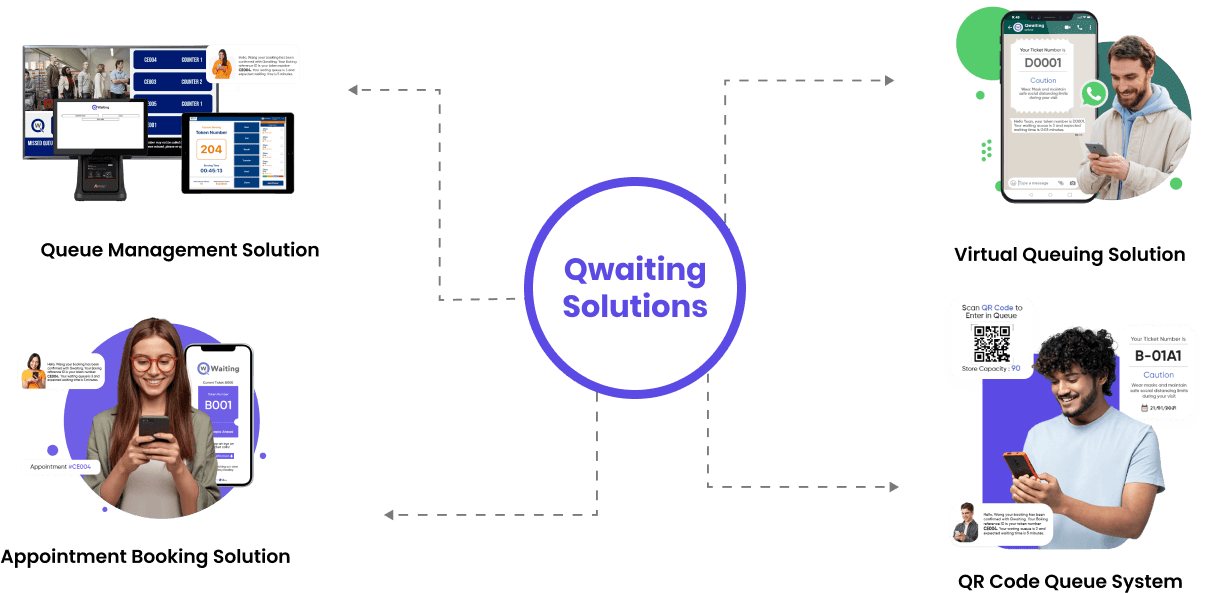
Smart queue management platforms unify the experience. Digital queue solutions that connect intake, routing, communication, and analytics create one coherent system where changes propagate automatically, and data flows seamlessly. You’re not bolting solutions onto a broken process, you’re implementing a new process.
This is exactly why cloud-first queue management matters. In our blog, Why Cloud-First Queue Management with Smart Offline Mode Is the Future of Enterprise Operations, we break down how enterprises eliminate operational blind spots by ensuring customer flow stays uninterrupted—even during network failures or peak stress moments.
Conclusion: Waiting Won’t Fix Itself
Quick fixes are temporary. They make you feel productive without actually solving anything. System change is transformative! It addresses root causes, creates lasting improvement, and compounds over time as you continue refining the process.
Because if you’re still adding chairs, hiring more staff, and hoping the problem resolves itself, you already know how this story ends. But if you’re ready to think differently, to implement smart queue management that orchestrates demand, makes waiting invisible, and gives you real-time control over customer flow, then you’re looking at a fundamentally different outcome.
The tools exist. Platforms like Qwaiting integrate appointment scheduling software, virtual queuing solutions, and real-time analytics into one coherent system designed specifically for this challenge. But the technology is only effective if you’re willing to redesign the system it supports.
Explore how modern queue management systems can transform your customer experience. Book your 14-day free Qwaiting trial and learn more about integrated solutions or see virtual queuing in action.