
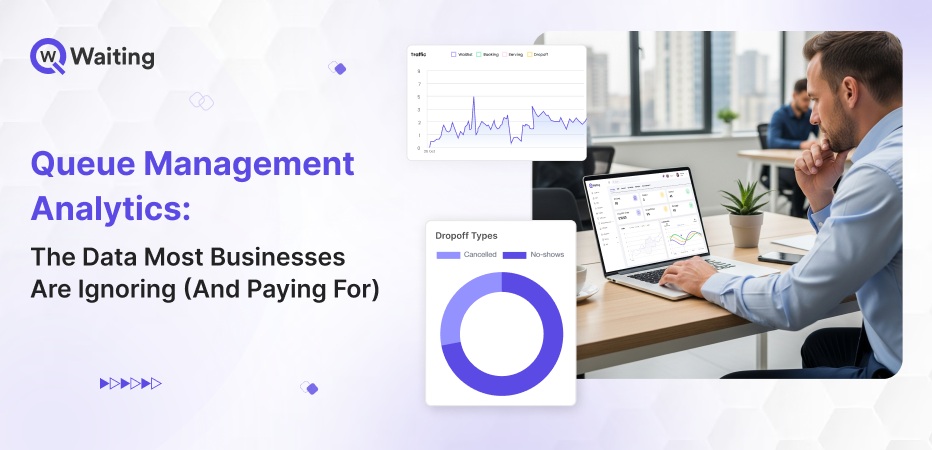
Most businesses don’t lose customers just because of one bad experience. Instead, they lose them because they didn’t notice a problem growing over time. Maybe a line looked okay on a report, but in real life, it was way too slow. Or perhaps people got tired of waiting and left, but no one realized how much money was being lost because of it. These tiny issues add up, but they often stay hidden from the bosses.
Most companies ignore these signals or think of them as just “lines.” They only talk about long lines when something goes wrong. They don’t use that information to make the business better before a crisis happens. This isn’t just about looking at a screen with lots of numbers. It is about leaders actually seeing what is happening in their stores. Most bosses just guess based on old surveys. However, looking at how lines move can give a “heads up” before things get bad. It shows patterns that help leaders make smart choices right away.
We aren’t just talking about counting people in a line. We are talking about why important information isn’t reaching the people in charge. When leaders finally get this data, they can change everything. It helps them fix problems before the customers decide to leave for good.
Why Queue Data Is a Leadership Blind Spot
Queue analytics should inform strategy. Instead, it gets buried in operational reports that executives never open. The gap isn’t technical, it’s structural. And it’s costing more than most leadership teams realize. Here’s how ignoring such data hurts businesses:
“We Have Data” vs “We Use Data”
Having data isn’t the same as using it. Many leaders track wait times and think everything is fine, but simple averages hide the real mess. A report might look perfect, while customers leave angry. Collecting numbers gives a fake sense of safety. You don’t need more data; you need to understand what the numbers are actually saying.
Decision-makers serious about data-driven experience design should read our guide on:
applying business intelligence to customer experience delivery
The Real Reasons Queue Analytics Gets Ignored
Queue data is often ignored because no single department is responsible for it. Bosses look at sales or complaints, but they miss the actual journey the customer took. A person waiting 40 minutes might not complain; they just leave and never return. Without looking at these lines, leaders will never understand why they are losing people.
The Cost of Inaction No One Sees on a Balance Sheet
When customers give up and leave, businesses often blame the wrong things. They don’t realize people left because the wait was too long. Bosses might even blame the customers for being “no-shows” instead of fixing the slow service that caused the problem.
The biggest mistake a company can make isn’t buying the wrong software. It is moving forward while being totally blind to these issues. While one business is just guessing what to do, its competitors are using data to get ahead. Every month spent guessing costs a lot more than just fixing the problem.
The Queue Metrics That Actually Matter (And Why They Change Decisions)
Some data is just for show, while others help you take action. Numbers reveal real problems you can fix instead of just telling you what you already know. Here’s why queue metrics really matter and help businesses grow:
Wait Time Is Just the Starting Point
Average wait times can be very tricky. A “12-minute average” sounds fine, but it might mean some people waited 3 minutes while others waited 35. Customers only remember the long, frustrating waits, not the average. It is much smarter to track busy hours and how many people give up and leave. Real experiences matter more than math.
Perceived Wait Time vs Actual Wait Time
Waiting isn’t just about the clock; it’s about how people feel. 10 minutes of wondering what’s happening feels much longer than 15 minutes with helpful updates. Customers care about honesty and knowing what to expect. If a business only tracks minutes and ignores frustration, they’ll never truly understand why their customers are unhappy or why they aren’t coming back.
Abandonment, Drop-Off & No-Show Analytics
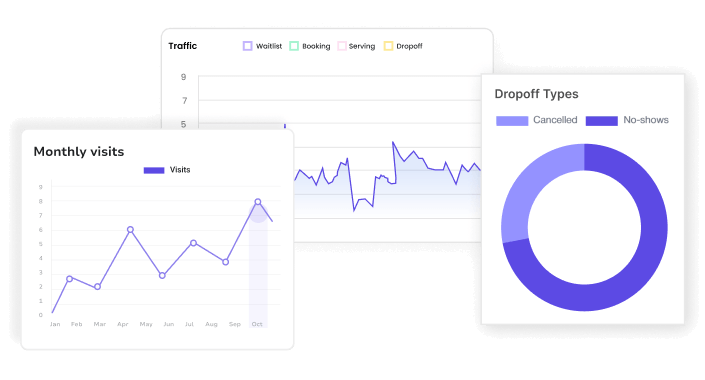
When a customer leaves a line early, they are sending a message. It usually means something is wrong, like confusing signs or a wait that was way too long. The same goes for “no-shows.” Instead of blaming the customer, businesses should fix their own systems. Tracking why people drop out helps fix the journey instead of blaming the person.
Here’s a simple comparison table of metrics businesses measures but what they should track and its impact on the business operations:
| Metric | What Most Businesses Track | What Leaders Should Track | Business Impact |
| Wait Time | Average across all customers | Peak-hour variance & 90th percentile | Reveals when service breaks down |
| Abandonment | Total count | Abandonment triggers & threshold points | Identifies where friction happens |
| Service Time | Team averages | Variation by staff, time, and task | Surfaces training or process gaps |
| No-Shows | Percentage of missed appointments | Patterns by booking channel & timing | Improves scheduling & reminder strategy |
| Demand Patterns | Monthly or weekly totals | Hourly and seasonal bottleneck forecasts | Enables proactive staffing decisions |
Peak Demand & Bottleneck Analytics
Static staffing models fail dynamic demand. A location might be overstaffed Tuesdays at 11 a.m. and understaffed Thursdays at 3 p.m.—but leadership only sees weekly totals. Bottleneck analysis identifies when and where congestion forms, not just that it happened.
Historical patterns make forecasting possible. Once you know that every third Friday spikes 40% above normal, you stop reacting to it and start planning for it. That’s the shift from firefighting to operations.
Staff Performance Without Micromanagement
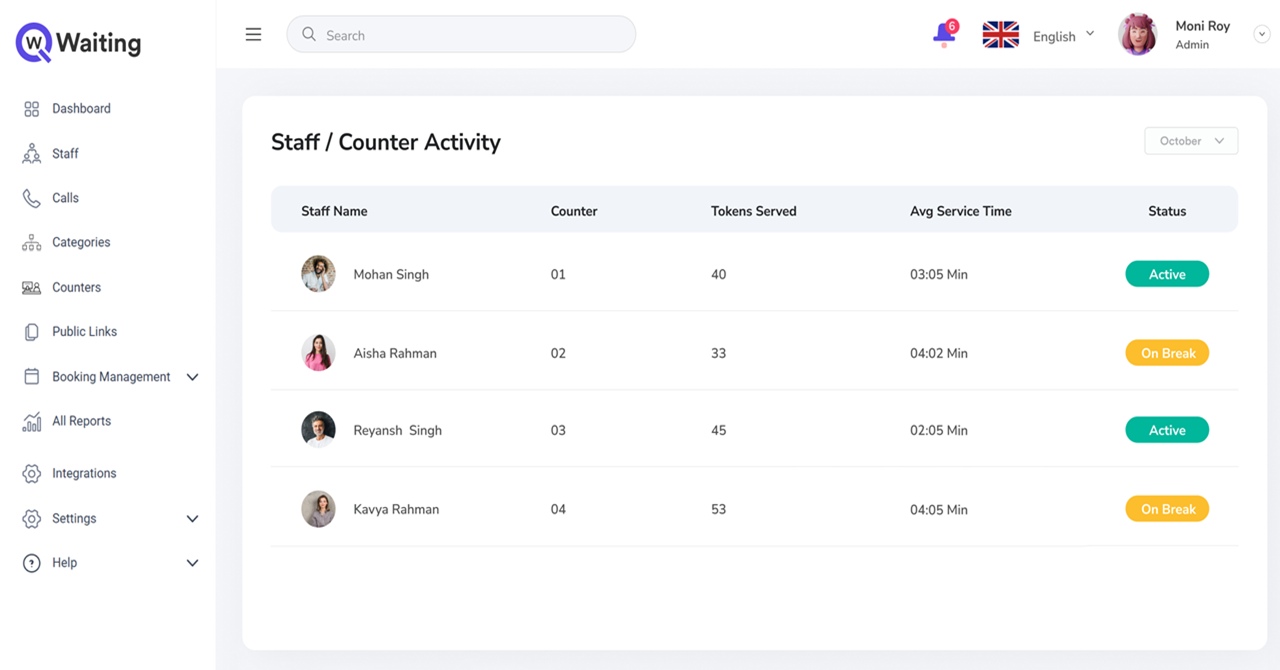
Service time variation matters not to punish slower staff, but to understand why variation exists. Is it a skill gap? Process inefficiencies? Uneven task distribution? Queue data analytics surfaces these patterns without surveillance.
Skill-based routing insights reveal whether tasks are being assigned effectively. Fairness and morale improve when workload distribution is visible and performance expectations are data-informed, not assumed.
For leaders ready to go deeper into which performance indicators truly shape operational outcomes, exploring the metrics that matter most in day-to-day decision environments adds useful context.
How Industry Leaders Turn Queue Analytics Into Better Decisions
Analytics only matters if it changes what you do. The organizations getting value from queue management analytics aren’t tracking more, they’re deciding differently. They’ve moved from reacting to patterns to anticipating them.
From Firefighting to Forecasting
Reactive management costs more and delivers less. Proactive planning knowing Tuesday afternoons will surge, understanding holiday demand, predicting staffing needs two weeks out creates operational stability. Forecasting isn’t about real-time monitoring. It’s about using historical queue data to prevent problems before customers feel them.
Leaders who forecast don’t just respond faster. They stop needing to respond at all. That shift changes budgets, reduces stress, and improves outcomes across locations.
Translating Queue Data Into Executive-Level Language
Executives don’t care about average handle time. They care about revenue, risk, brand trust, and scalability. Queue analytics becomes strategic when it’s presented in business terms—minutes converted to lost transactions, abandonment rates tied to market share, service inconsistency framed as brand risk.
Boards care about whether performance is consistent across 50 branches or wildly uneven. Cross-location flow data tells them whether operations are scalable or fragile. That’s when queue metrics move from operational detail to executive agenda.
For organizations scaling across locations, read our guide on:
centralized queue dashboards to understand the strategic impact
Cross-Location Benchmarking at Scale
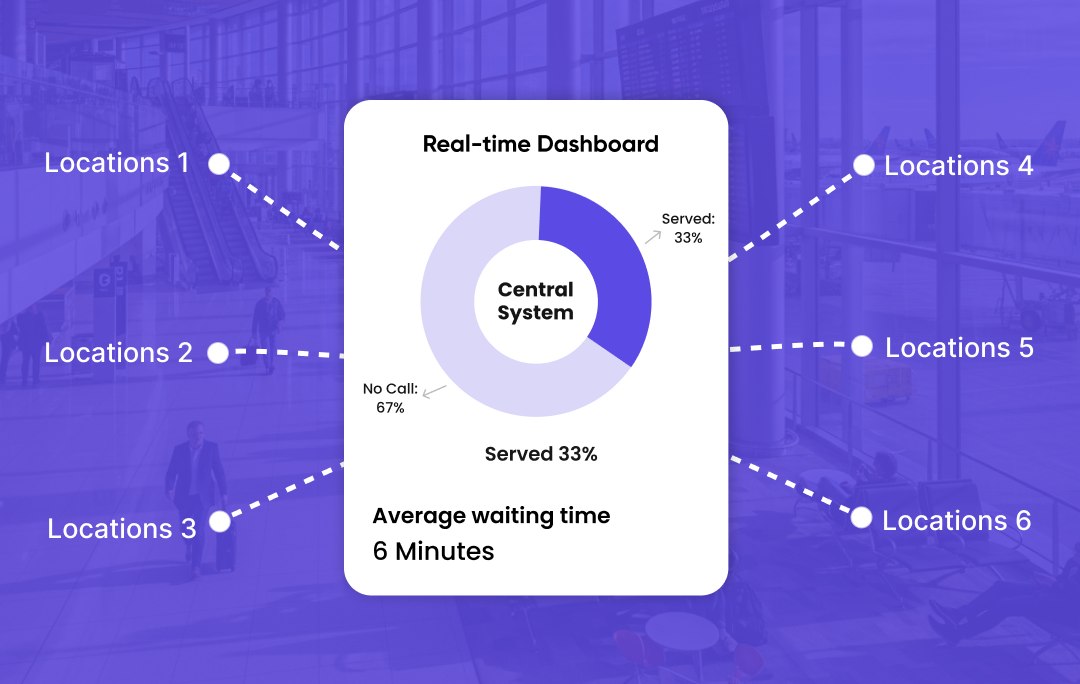
You can’t improve what you can’t compare. Queue analytics platforms that enable cross-location benchmarking help leaders identify best performers, replicate what works, and address underperformance with data, not assumptions.
Regional inconsistency damages brands. Analytics exposes it. Smart organizations use that visibility to standardize service quality without sacrificing local flexibility. The result is fewer escalations, better customer trust, and more predictable outcomes.
Queue Analytics in Action Across Industries
Queue challenges aren’t universal. A hospital’s bottleneck isn’t the same as a bank’s. Retail peak-hour pressure doesn’t mirror government service demand. Effective queue management analytics adapts to industry-specific realities, not generic metrics.
Healthcare – When Time Impacts Outcomes
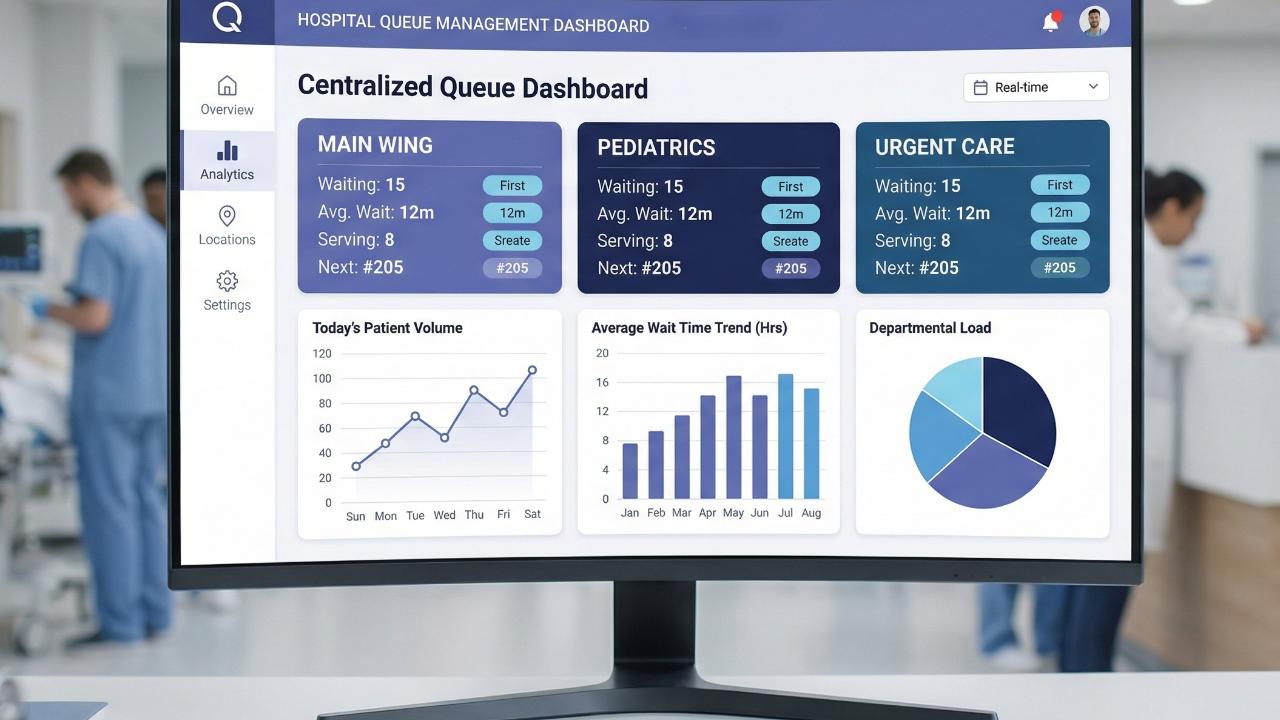
In healthcare, queues aren’t just inconvenient—they affect clinical outcomes and patient safety. Identifying where delays occur—registration, triage, diagnostics—helps administrators separate clinical bottlenecks from administrative ones. Balancing scheduled appointments with urgent walk-ins requires real-time demand visibility.
Predictability reduces patient anxiety as much as speed does. Analytics that track wait time transparency and communication touchpoints improve satisfaction even when duration stays constant. And because healthcare data must remain compliant, anonymized queue insights provide operational clarity without privacy risk.
Banking & Financial Services – Where Wait Time Equals Trust
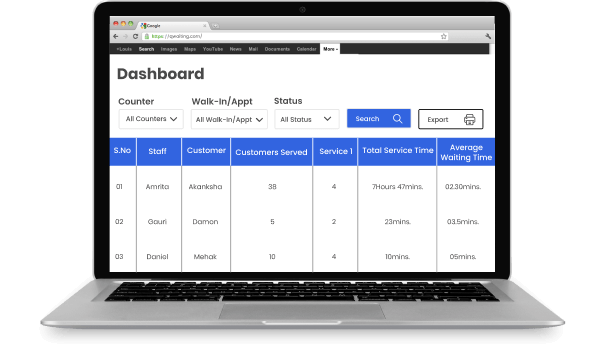
Financial services customers equate wait time with respect. Long queues signal inefficiency. Poor prioritization feels unfair. Queue analytics helps banks understand demand patterns across branches, optimize service lanes, and manage compliance requirements without slowing throughput.
Leaders also use flow data to balance digital and in-person demand. Which transactions should move online? Which requires face-to-face service? Customer flow analytics answers those questions with evidence, not guesswork.
Retail – The Revenue Lost Between the Entrance and Checkout
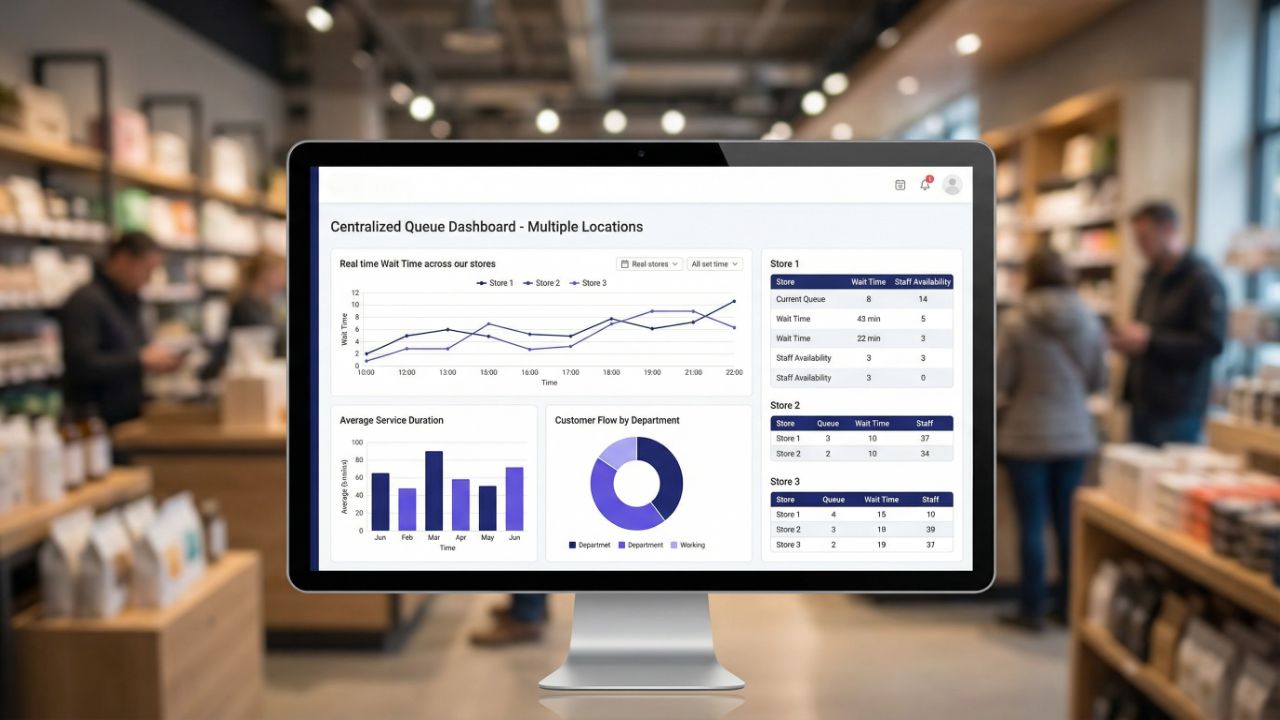
In retail, abandoned queues are abandoned purchases. Every customer who walks out before checkout represents lost revenue that never appears in sales reports. Peak-hour conversion leakage—when stores are busiest but conversion drops—costs more than most operations teams realize.
Queue analytics identifies when checkout flow breaks down, which service counters create friction, and how staffing adjustments impact sales. It turns foot traffic into a manageable variable, not an uncontrollable one.
Government & Public Services – Transparency at Scale
Public service organizations face unique accountability pressures. Citizens expect fair treatment, visible service order, and reasonable wait times. Queue analytics provides the transparency needed to build trust while maintaining privacy and ethical data use.
Complaint volumes drop when wait times are communicated clearly, and service feels equitable. Analytics platforms designed for government environments prioritize compliance, anonymization, and public accountability—not just efficiency.
From Data to Action—What a Modern Queue Analytics Platform Enables
Queue data only creates value when it moves from insight to action. Modern platforms don’t just report what happened; they enable better decisions across teams, locations, and leadership levels. The goal isn’t more dashboards, it’s more clarity.
One Unified View of the Customer Journey
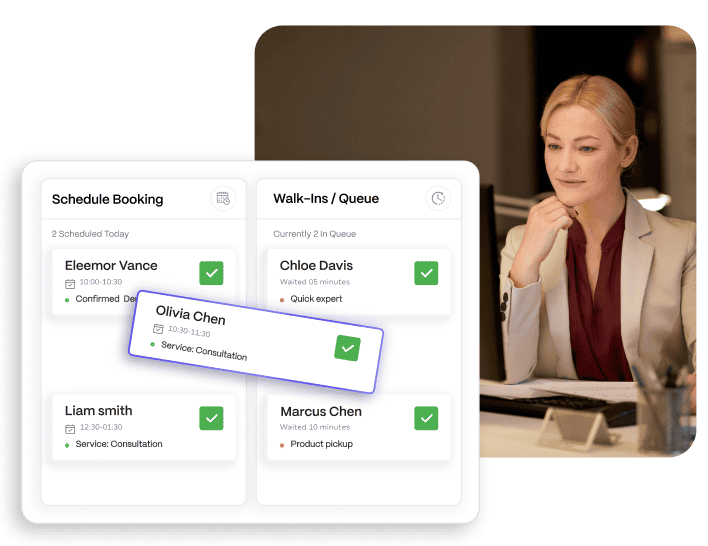
Walk-ins, appointments, virtual queues; most organizations manage these separately. That fragmentation kills insight. A customer might book an appointment, arrive early, and join a walk-in queue. If those systems don’t talk to each other, you’ll never understand the full journey.
Unified queue analytics platforms connect every touchpoint. Leaders see the complete flow, not isolated moments. That’s when patterns emerge that siloed data never reveals.
Real-Time Visibility That Supports Faster Decisions
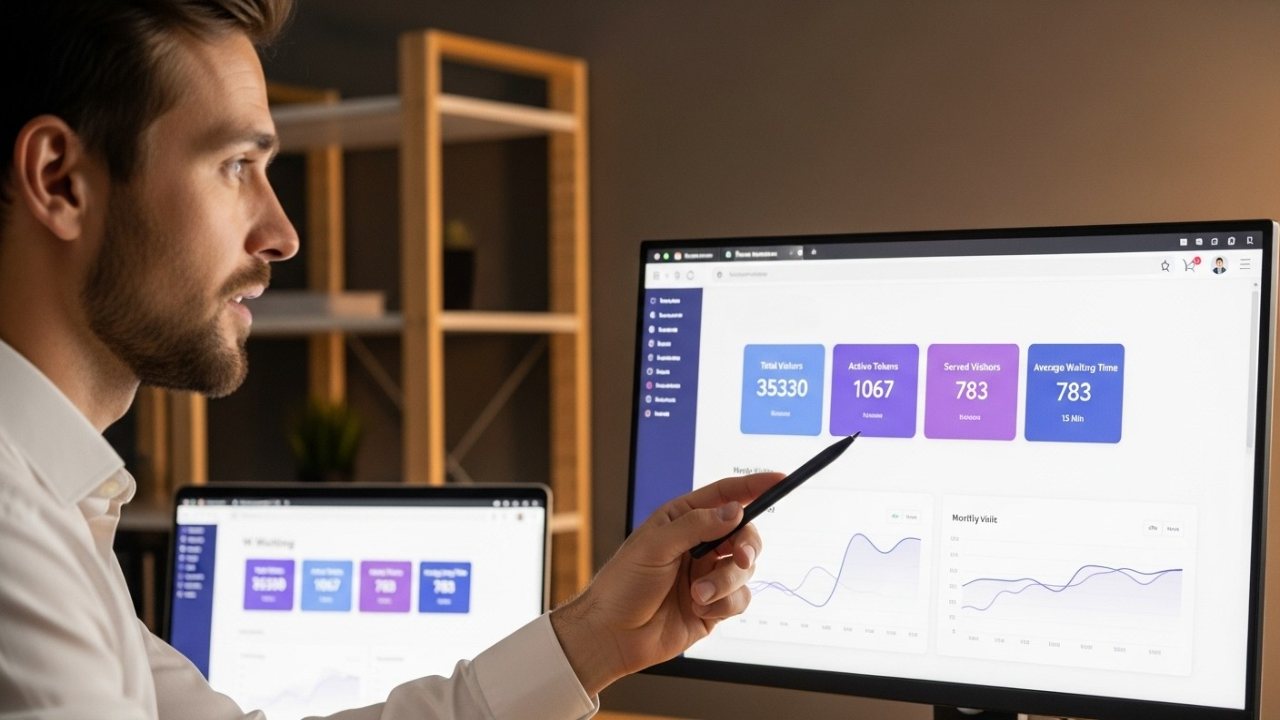
Real-time doesn’t mean constant intervention. It means knowing when to act and when to trust the system. Live queue insights help managers spot problems before they escalate—understaffing, unexpected surges, technical failures—and respond without overreacting.
Frontline teams gain autonomy when they can see what’s happening across locations. They don’t need permission to adjust. They need visibility. Analytics platforms designed for decision-making empower staff without overwhelming them.
Turning Insights Into Habits, Not Reports
Dashboards fail when no one owns them. Queue analytics works when it’s embedded into daily operations—managers checking morning demand forecasts, executives reviewing cross-location performance in strategy meetings, staff using flow data to balance workloads.
Role-based analytics ensures everyone sees what matters to them. Executives need strategic patterns. Managers need operational triggers. Staff need real-time context. A platform that serves all three turns data into culture, not obligation.
What Queue Analytics Is—and What It Is Not
Queue analytics isn’t surveillance. It’s not about monitoring individual staff performance minute-by-minute. It’s not another report that gets ignored. It’s a decision-enablement layer for modern service organizations—built to surface patterns, predict demand, and improve outcomes without micromanagement.
Done right, it creates operational clarity, reduces guesswork, and makes service delivery more consistent and scalable. Done wrong, it becomes noise.
Conclusion
Queues are a mirror of how a business truly operates. They reveal demand patterns, capacity limits, service friction, and decision-making blind spots. Organizations that ignore queue data aren’t just missing insights—they’re operating with less clarity than their competitors.
The shift from firefighting to forecasting, from reactive fixes to proactive strategy, starts with visibility. Queue management analytics gives leaders what reactive reports and monthly summaries can’t: the ability to see problems forming, understand why they’re happening, and intervene before customers feel the impact.
This isn’t about technology for technology’s sake. It’s about competitive advantage. In 2026, the strongest organizations won’t be the ones with the shortest queues, but the ones that understand them best. Book your free consultation call with Qwaiting and be on the smarter side.