
Growing a business should make things better for customers. However, big companies often find that growth makes things more confusing. When a company opens more stores, it usually leads to longer lines and scattered information. Leaders have to guess how to fix problems instead of using real facts. They often end up just reacting to complaints after they happen. The main issue is not that the staff members aren’t trying hard enough. The real problem is that the leaders cannot see the whole picture. Every different branch or office uses its own way of tracking customers. This makes it very hard to improve the experience for everyone.
To fix this, organizations can use one main dashboard to track all their lines in one place. This creates a single source of truth for the entire business. Instead of having messy data everywhere, everything becomes clear and easy to read. These tools give leaders the control they need to plan ahead. It helps them make customer service better on purpose instead of just guessing.
In this blog, we will talk about how centralized dashboards help organizations control their customer flow and manage staff activities with just a few clicks.
Why Customer Experience Breaks First When Enterprises Scale
As companies grow, they scale locations and service lines. This creates a mess that leaders cannot see or control. Without clear data, the customer experience begins to fail. Here are some reasons why customers prefer to abandon your brand when organizations scale;
Growth multiplies queues—but visibility stays fragmented
Different offices and departments often use their own separate rules and ways of measuring success. This makes it impossible for leaders to see how every customer is being treated at the same time. A plan that works well in one city might fail in another. Because the data is hidden in different spots, leaders do not notice these problems until customers start complaining.
The hidden cost of not seeing the full customer journey
When service is poor or unpredictable, customers quickly lose trust in a brand. Instead of fixing problems before they start, teams spend all their time dealing with angry customers. Leaders make big decisions based on guesses or old notes rather than on what is happening right now. This creates a messy experience that customers can see clearly, even if the bosses do not realize there is a problem.
Local optimization vs. enterprise experience
Each store might look okay on its own, but the whole company struggles when operations aren’t synchronized. There is no single rule for what “good service” should look like. Because leaders cannot see everything at once, they find it hard to make sure every branch follows the same plan. Different locations use different measures of success, making it hard to hold anyone accountable. In the end, getting good service feels like a game of luck for the customer.
What a Centralized Queue Dashboard Really Means (And What It’s Not)
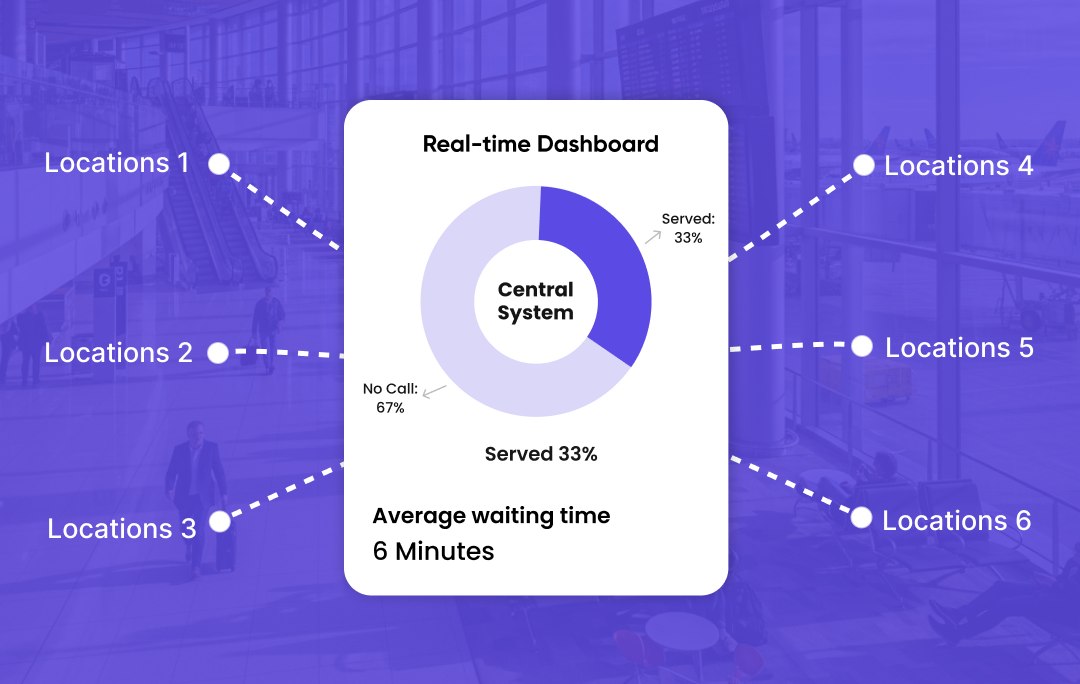
A central dashboard is more than just a report. It’s an operating layer that gives enterprises real-time visibility into every customer interaction, every queue, and every service touchpoint, across locations, channels, and time zones.
Here’s why and how having a centralized dashboard is a competitive advantage for businesses:
One source of truth for every customer interaction
- Real-time visibility across physical queues, virtual queues, appointments, and kiosks eliminates guesswork.
- Standardized CX metrics across locations and departments mean everyone speaks the same language.
- Clear accountability through consistent data definitions ensures performance isn’t measured differently depending on who’s reporting it.
Not another tool—an operating layer for CX at scale
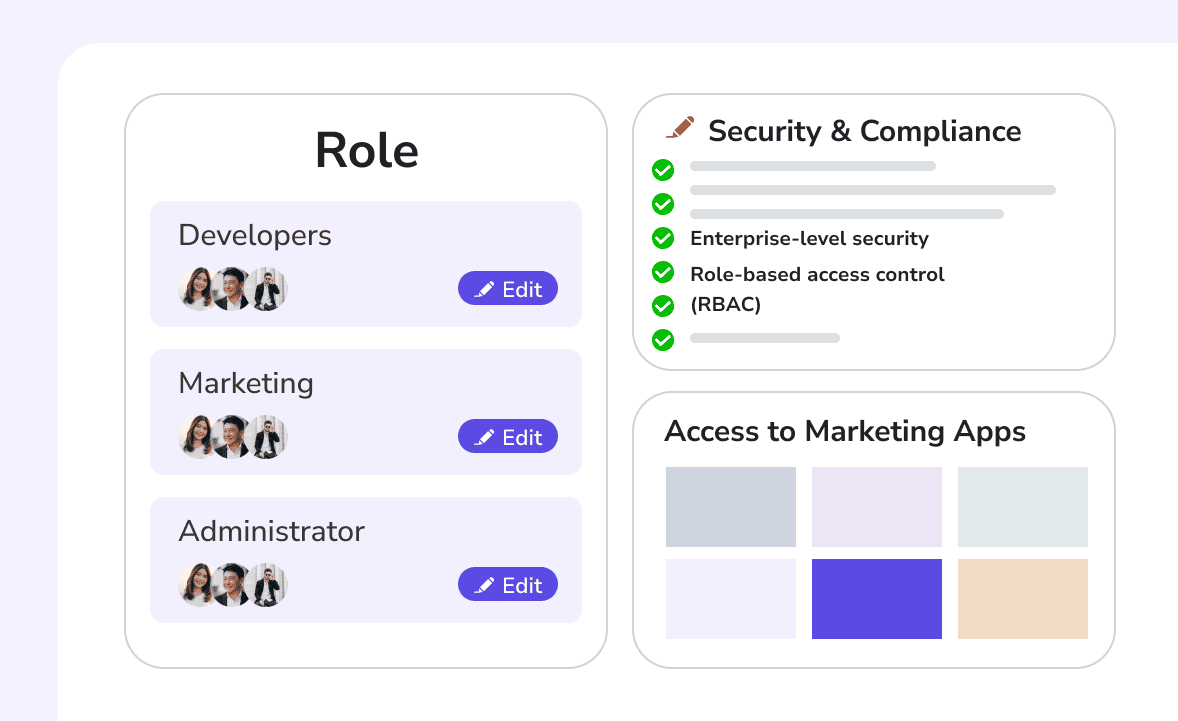
Dashboards support frontline teams instead of adding complexity. Role-based views for executives, operations, and local staff ensure everyone sees what they need, nothing more, nothing less. This enables proactive service orchestration, not passive monitoring. Leadership can intervene before problems spiral, not after customers complain.
Driving adoption through simplicity and relevance
Faster buy-in happens when teams see data that reflects their daily challenges, not abstract metrics disconnected from reality. Reduced resistance comes from insights that are actionable, not academic. Alignment across CX, IT, and operations happens from day one when the dashboard becomes a shared truth, not another competing system.
How Centralized Dashboards Transform Enterprise Decision-Making
Visibility changes behavior. When leadership can see what’s happening across the enterprise in real time, decision-making shifts from reactive firefighting to proactive strategy. The question stops being “What happened?” and starts being “What should we do now?”
From “What happened?” to “What should we do now?”
Live alerts for queue spikes and service-level breaches let teams respond immediately. Predictive trends highlight risk before customers complain, giving operations a head start. Faster intervention during peak demand periods prevents congestion instead of managing it after the fact.
Proactive CX instead of damage control
Preventing queue congestion is cheaper and smarter than apologizing afterward. Dynamic staff allocation based on real-time demand ensures resources go where they’re needed most. Identifying root causes instead of treating symptoms creates lasting improvements, not temporary fixes.
Aligning CX, operations, and IT around the same data
One version of the truth for executive reporting eliminates conflicting narratives. No more chasing manual reports or reconciling contradictory dashboards. Stronger CX governance and performance benchmarking become possible when everyone works from the same dataset. Accountability becomes clear, not negotiable.
For enterprises looking to operationalize real-time insights, our deep dive into queue overview per time and per day reports shows how live performance data drives faster, more informed decisions across locations and service channels.
Table: Key Enterprise CX Metrics Enabled by Centralized Dashboards
| Metric | Why It Matters | Who Uses It | Business Outcome |
| Average wait time across locations | Reveals inconsistencies and bottlenecks | Operations, CX leaders | Standardized service delivery |
| Queue abandonment rate | Signals frustration before complaints | Frontline managers, execs | Reduced customer churn |
| Peak-hour service capacity | Identifies demand vs. resource gaps | Workforce planners, ops | Optimized staffing, lower costs |
| Customer flow trends | Predicts congestion patterns | Strategic planners, IT | Proactive resource allocation |
| SLA compliance by region | Measures governance effectiveness | Executive leadership | Accountability, risk mitigation |
If you want to know a detailed list of metrics leaders must follow for ongoing business processes, you must read our blog on:
Queue Management KPIs: 5 Metrics That Drive Operational Excellence
Enterprise Use Cases Where Centralized Queue Visibility Delivers the Biggest Impact
Centralized dashboards don’t just provide data; they enable decisions that were impossible before. The impact shows up differently depending on the industry, but the pattern is the same: visibility drives control, and control drives better experiences.
Retail and banking: Managing peaks without chaos
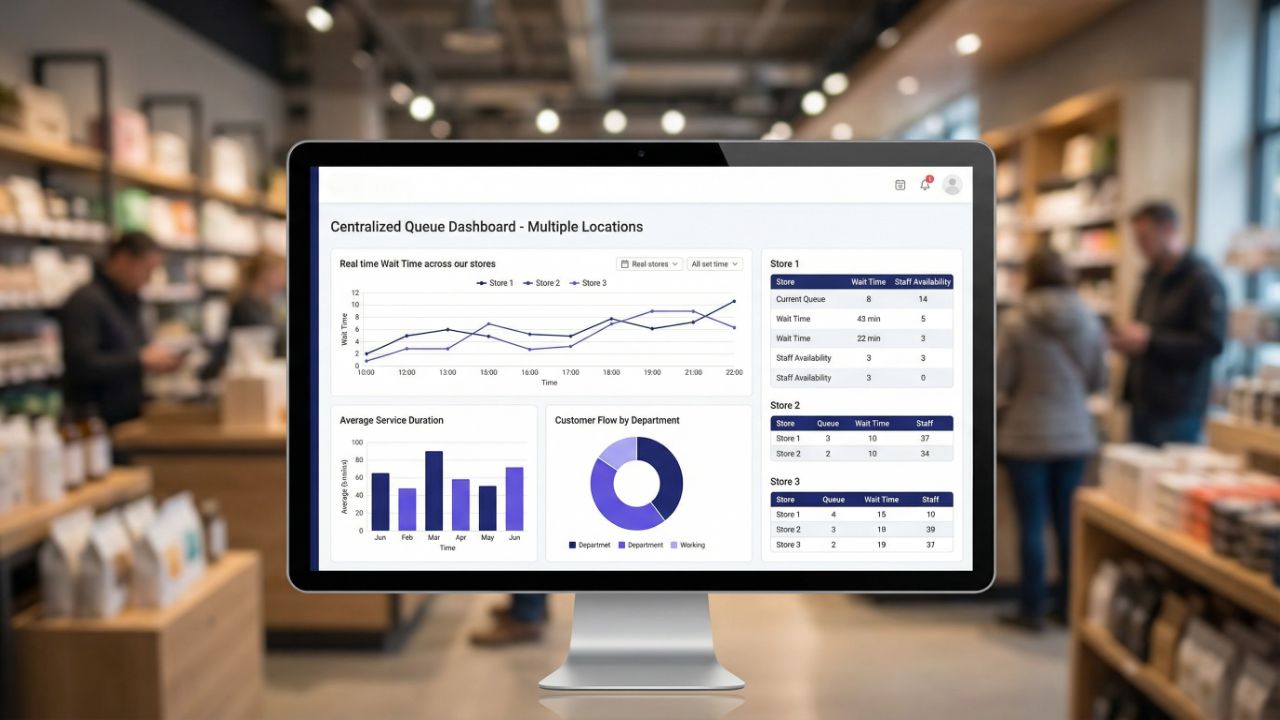
Handling seasonal surges, promotions, and salary-day traffic requires real-time load balancing across branches. Without centralized visibility, some locations drown while others sit idle. Centralized dashboards balance customer load across branches and service counters, delivering consistent service experiences regardless of location.
Healthcare and government: Fairness, transparency, and compliance
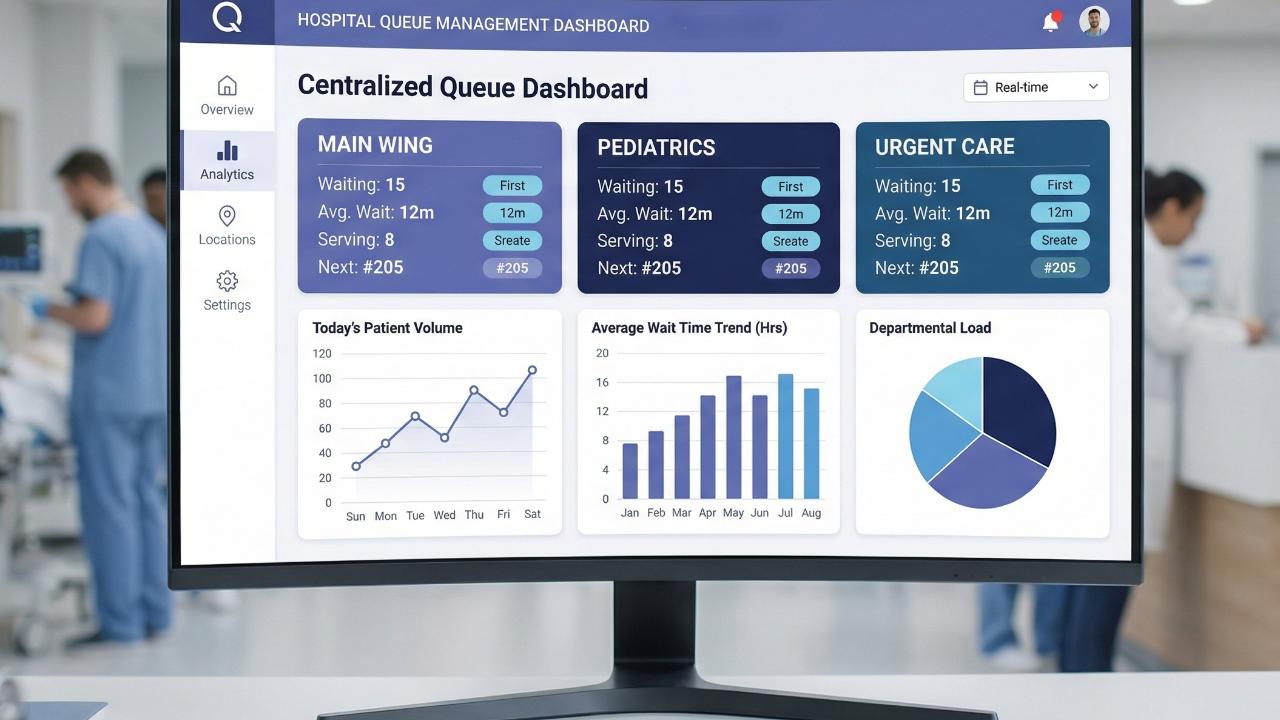
Reducing patient and citizen frustration through predictable waits isn’t just about efficiency, it’s about equity. Supporting equitable service delivery across departments ensures no one is forgotten or deprioritized. Meeting reporting, audit, and compliance requirements becomes automatic when data is centralized and standardized.
Large venues and service networks: Scaling without losing control
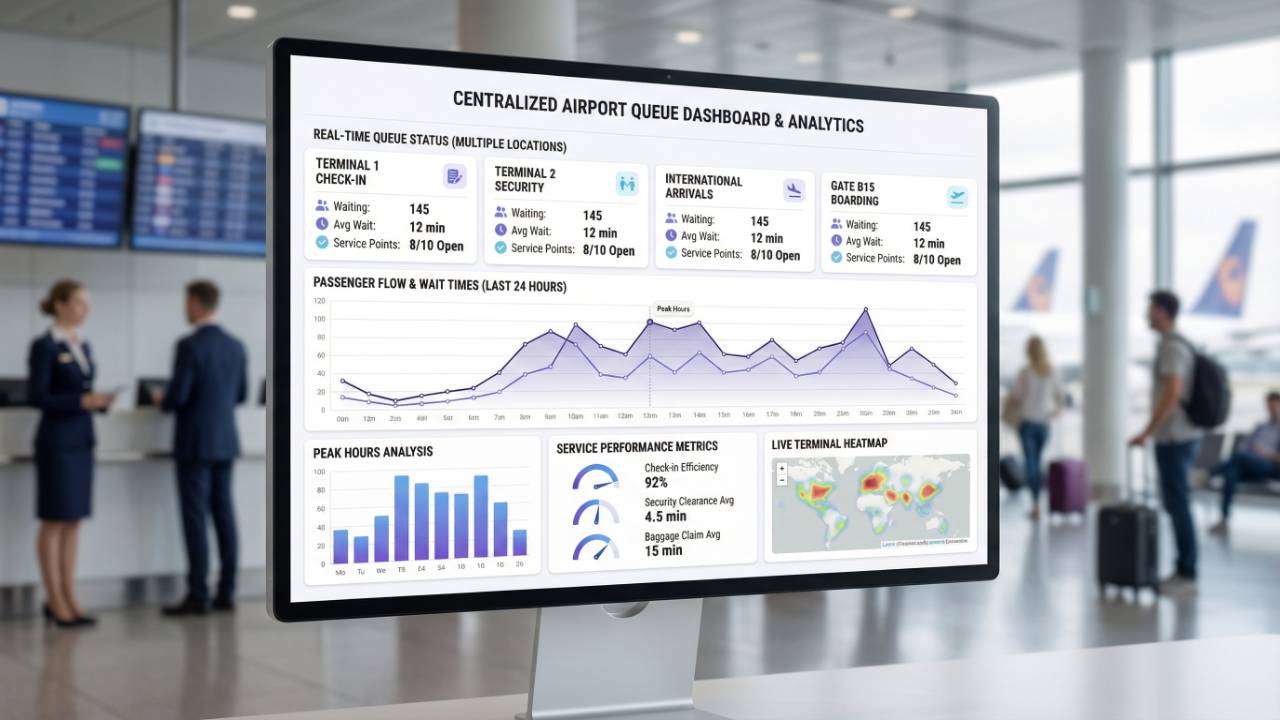
Airports, campuses, and enterprise service hubs face unpredictable volume spikes. Maintaining service consistency during high-volume periods requires real-time visibility and rapid response. Centralized dashboards give leadership confidence during operational stress, because they can see what’s happening and act accordingly.
In high-volume environments like events and service hubs, the role of real-time queue orchestration becomes even clearer as we explore how digital lines are enhancing the guest experience at events, where visibility and smart flow management turn chaotic entry points into memorable experiences.
What Industry Leaders Should Look for in a Centralized Queue Dashboard
Not all dashboards are built for enterprise scale. The difference between a reporting tool and a strategic operating layer comes down to a few critical capabilities that separate surface-level visibility from real control.
Scalability without operational friction
Works across countries, time zones, and service models without requiring custom configurations for every region. Easy for local teams to use, powerful enough for headquarters to trust. No trade-off between simplicity and depth.
Actionable insights, not passive reporting
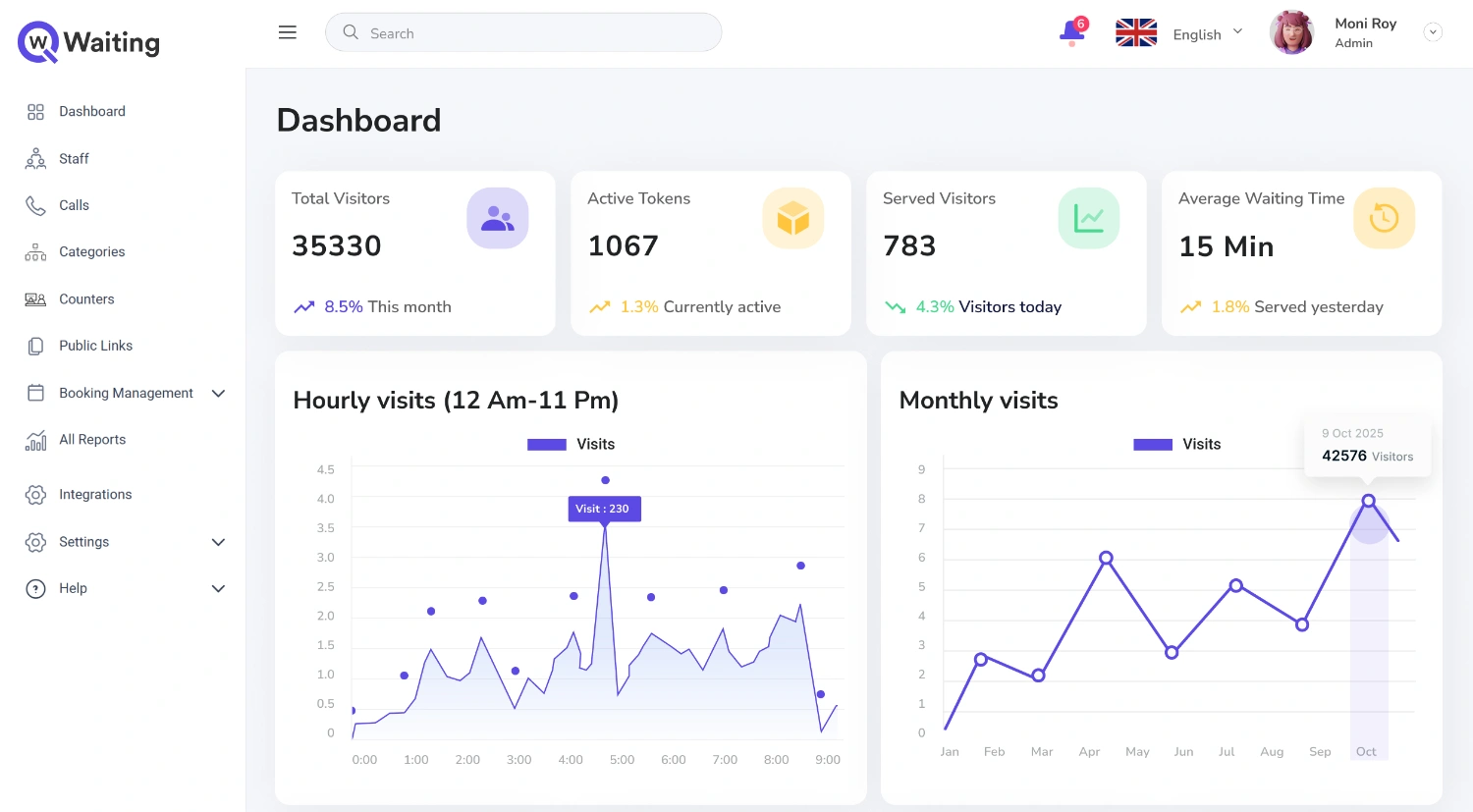
Clear signals that prompt immediate action, not buried in noise. Insights that support both daily operations and long-term planning, so the dashboard serves multiple needs without becoming bloated or confusing.
Built for enterprise trust and CX governance
Secure, reliable, and ready for executive oversight. Enables benchmarking, accountability, and performance standards across the organization. Leadership can trust the data because it’s consistent, auditable, and complete.
A foundation for future-ready customer experience
Supports omnichannel growth without re-platforming. Prepares enterprises for smarter automation and analytics as CX strategies evolve. Future capabilities build on this foundation, they don’t replace it.
The Real Role of Centralized Queue Dashboards
Centralized queue dashboards act as a CX control tower, giving enterprises the visibility they need to scale experiences intentionally, not reactively. They don’t just report what happened. They enable what happens next.
When every customer interaction is visible, every experience becomes a strategic choice. Leaders stop reacting to complaints and start preventing problems. Teams stop working from conflicting data and start working from a shared truth. The enterprise stops scaling complexity and starts scaling consistency.
That’s not automation. That’s not optimization. That’s control, and in a large enterprise, control is the foundation of every great customer experience.
When every customer interaction is visible, every experience becomes a strategic choice. Book your free consultation call with Qwaiting today.