
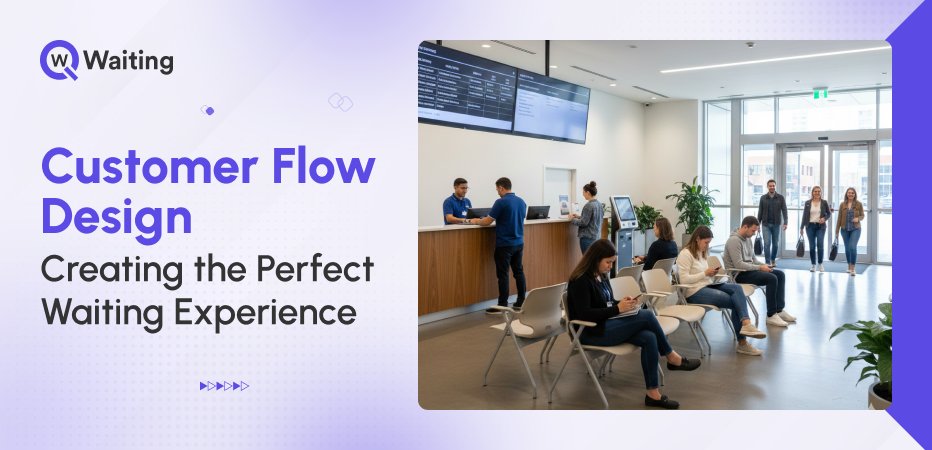
Most businesses care a lot about how fast they serve people. They count the seconds they save. They check how fast their staff members are. They also watch how long it takes to complete a sale. But many businesses forget something important. Customers not only remember the time they waited but also the feelings they had while they waited.
Waiting in a line does not always feel bad just because it is slow. How a line feels depends on its design. This means how a business controls where people move. It refers to how they communicate what to expect to people. It also means shaping how people feel from the moment they walk inside. If a business does this well, it changes a simple line into something that helps it beat its competitors.
The Power of Customer Flow: Why Waiting Experience Defines Your Brand
Your waiting area speaks before your staff does. It sets expectations, triggers emotions, and shapes decisions, all before a single service interaction begins.
Waiting Isn’t Just Waiting: It’s a Brand Moment
Every line you see tells people what your company cares about most. A messy line that is hard to understand shows that things are not organized. A line that is calm and clear shows that the company respects the customer’s time.
In banks, people trust the brand more based on how long they think they waited. This is often more important than how fast the actual business part was. In hospitals, if people are unsure how long the wait will be, their happiness can drop a lot. Stores lose customers if people cannot quickly decide if the wait is worth their time.
Why Flow Design Matters in 2025
Expectations were completely changed by the pandemic. Transparency, control, and comfort are now considered baseline criteria by customers rather than high-end capabilities. According to PwC research, 51% of consumers said they’d be less loyal to a brand if its online-shopping experience “isn’t as easy or enjoyable as shopping in person. That has a quantifiable effect on retention as well as satisfaction ratings.
By viewing queue design as a customer experience strategy, multinational corporations like Apple, Starbucks, and Emirates have raised the bar. They have demonstrated that controlling the flow gives you control over the story. Rivals that disregard this benefit are deliberately opting to lose clients before any service is provided.
Designing the Flow: The Science Behind Smooth Movement
Effective customer flow design isn’t decorative. It’s engineered psychology combined with spatial intelligence and smart technology integration.
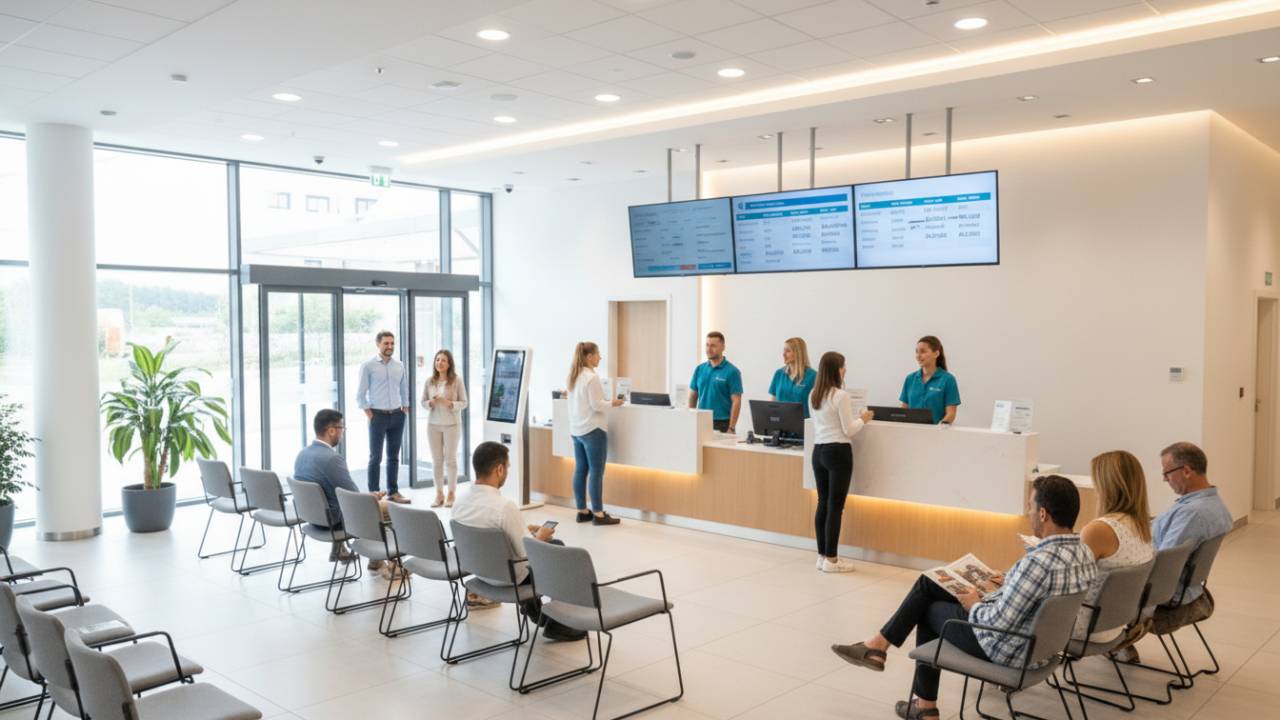
Spatial Layout: Guiding Without Confusing
Think of your space in four functional zones: entry (orientation), waiting (holding), service (transaction), and exit (departure). Each zone serves a psychological purpose.
- Entry zones need clarity, customers should understand their next action within three seconds.
- Waiting zones balance density with comfort.
- Service zones minimize distractions.
- Exit zones encourage smooth departure without backflow congestion.
Digital queue systems eliminate the chaos of physical lines snaking through spaces. They let you control crowd density, redirect traffic during peak periods, and maintain clear circulation paths. The layout adapts to demand, not the other way around.
Ideal Layout Flow for Different Industries:
| Industry | Entry Priority | Waiting Zone Focus | Service Configuration |
| Retail | Quick orientation | Product browsing integration | Multiple service points |
| Banking | Privacy screening | Seated comfort zones | Semi-private counters |
| Healthcare | Registration clarity | Calm, spacious seating | Clinical privacy |
| Government | Document verification | High-capacity seating | Counter-based service |
| Education | Directory/wayfinding | Parent-friendly areas | Admin desk clusters |
Zoning and Wayfinding: Making Navigation Effortless
Clear signage isn’t about more signs. It’s about the intuitive visual hierarchy that guides instinctively. Color psychology plays a role, cool tones calm, warm tones energize, and contrasting colors direct attention. Multilingual messaging isn’t optional in global cities anymore; it’s expected infrastructure.
A government service center in Dubai improved citizen throughput by 30% after implementing a clear, trilingual wayfinding integrated into their digital queue displays. The change wasn’t faster staff, it was eliminating the minutes people spent confused about where to go next. Qwaiting’s digital signage maintains directional clarity even as service configurations change throughout the day, updating in real-time without requiring physical sign replacements.
If you want to know the psychology behind how you can keep your customers engaged, read:
Digital Touchpoints: The Hidden Flow Enhancers
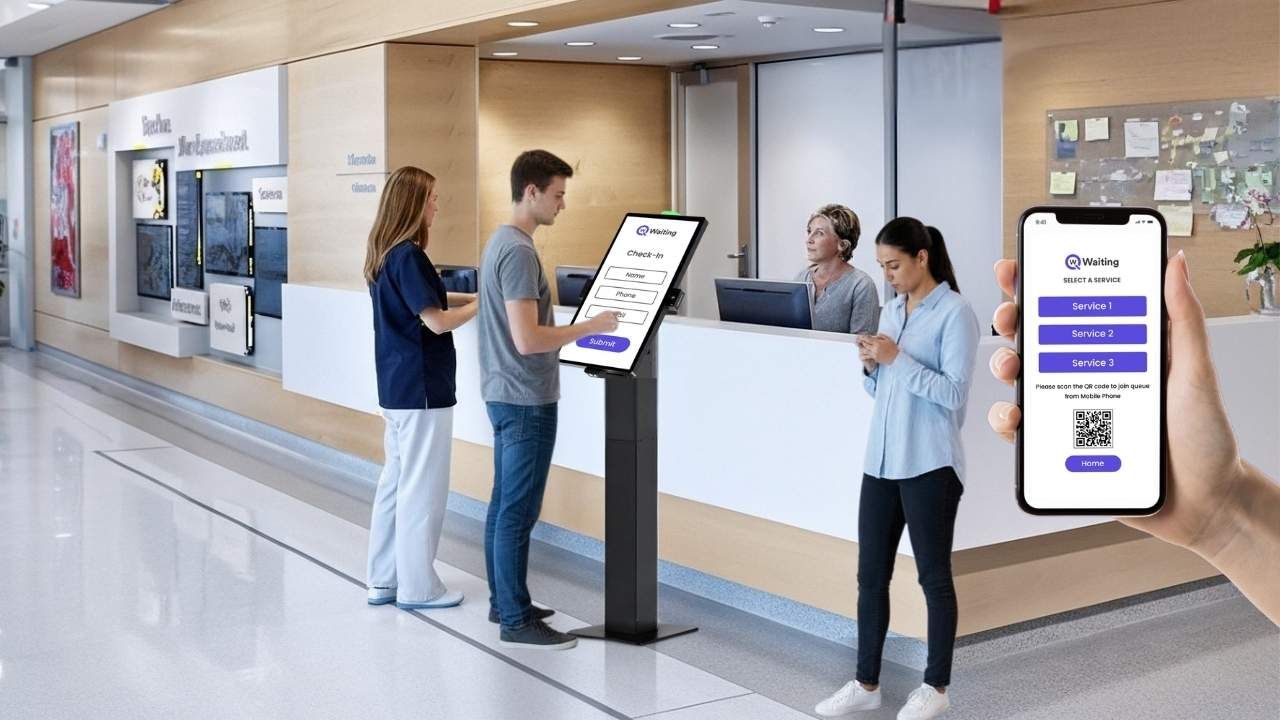
Self-service kiosks, mobile check-ins, and virtual ticketing do more than reduce staff workload. They give customers control, which dramatically reduces anxiety.
A UK retail chain reduced customer wandering time by 40% using integrated touchpoints that let shoppers check in remotely and then arrive precisely when their service window opened. The physical space became calmer, staff interactions improved, and conversion rates climbed because customers weren’t mentally calculating whether the wait was worth it.
Once customers can move effortlessly, the next challenge is how they feel while they wait; that’s where comfort becomes your differentiator.
Comfort is the New Speed: Designing for Human Emotions
Raw speed matters less than perceived speed. A ten-minute wait that feels like six, beats a seven-minute wait that feels like fifteen.
Seating, Lighting, and Ambience: The Silent Influencers
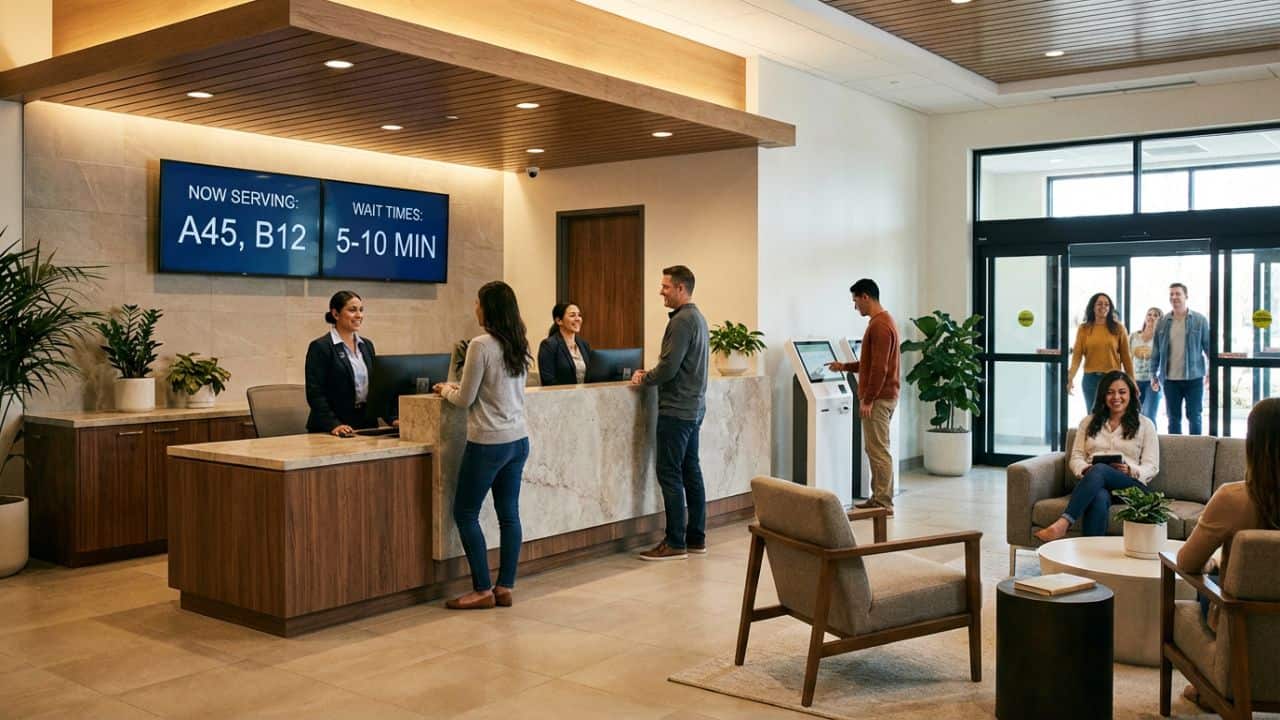
Design psychology shows that physical discomfort accelerates perceived time. Hard chairs make waits feel 30% longer than cushioned alternatives. Harsh fluorescent lighting triggers stress responses that undermine patience. The “Comfort Curve” maps how small environmental irritants compound, each discomfort adds exponentially, not linearly, to frustration.
- Healthcare clinics using soft, warm lighting report calmer patients with fewer complaints.
- Banks implementing modular seating with charging stations see customers rate waits as shorter, even when actual times are identical.
- Airports adding soundscaping (ambient music, white noise) reduce observed agitation at security queues.
Entertainment and Engagement Options
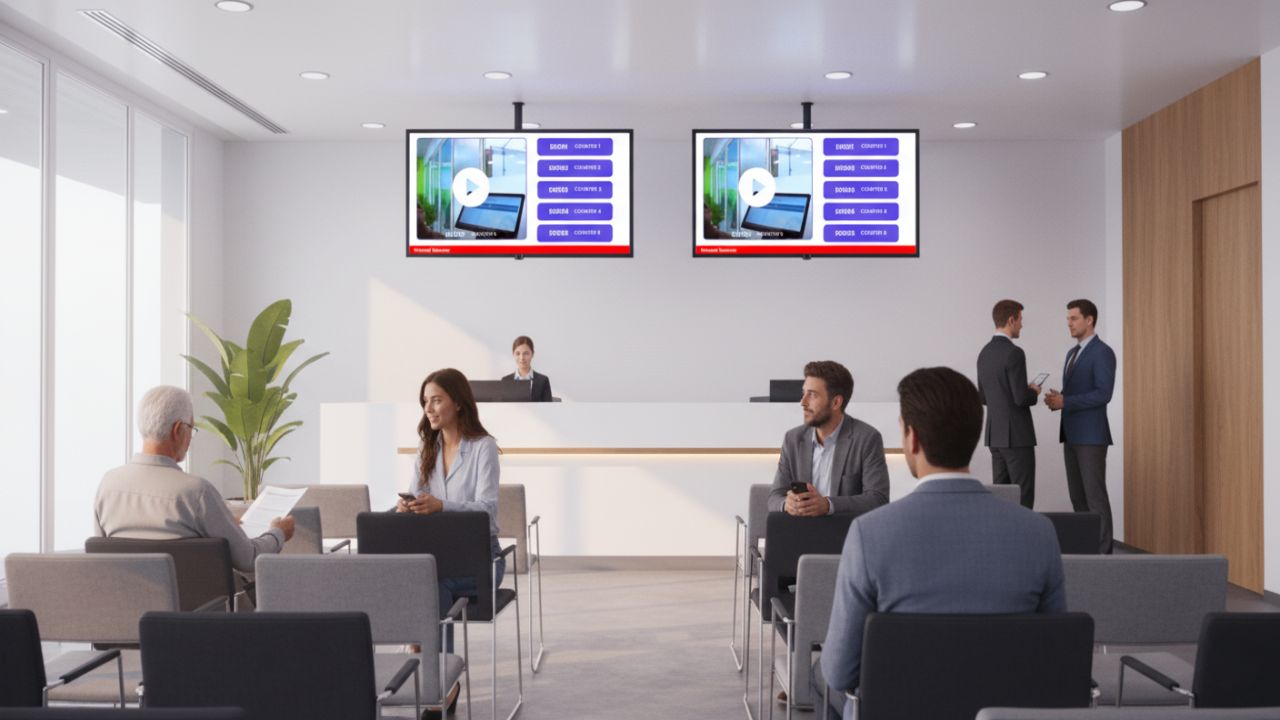
Idle minds fixate on wait times. Occupied minds don’t. Digital displays showing news, weather, or entertainment reduce perceived wait time by up to 35%, according to behavioral studies. But the most effective engagement is functional: real-time queue updates and estimated wait times. When customers know their status, anxiety drops.
Qwaiting integrates infotainment directly into queue management displays, combining estimated wait times with engaging content that keeps customers informed without overwhelming them. The system adapts content based on actual queue length, longer waits trigger more substantial entertainment options.
Accessibility and Inclusivity in Flow Design
Designing only for the average customer means failing a significant portion of your audience.
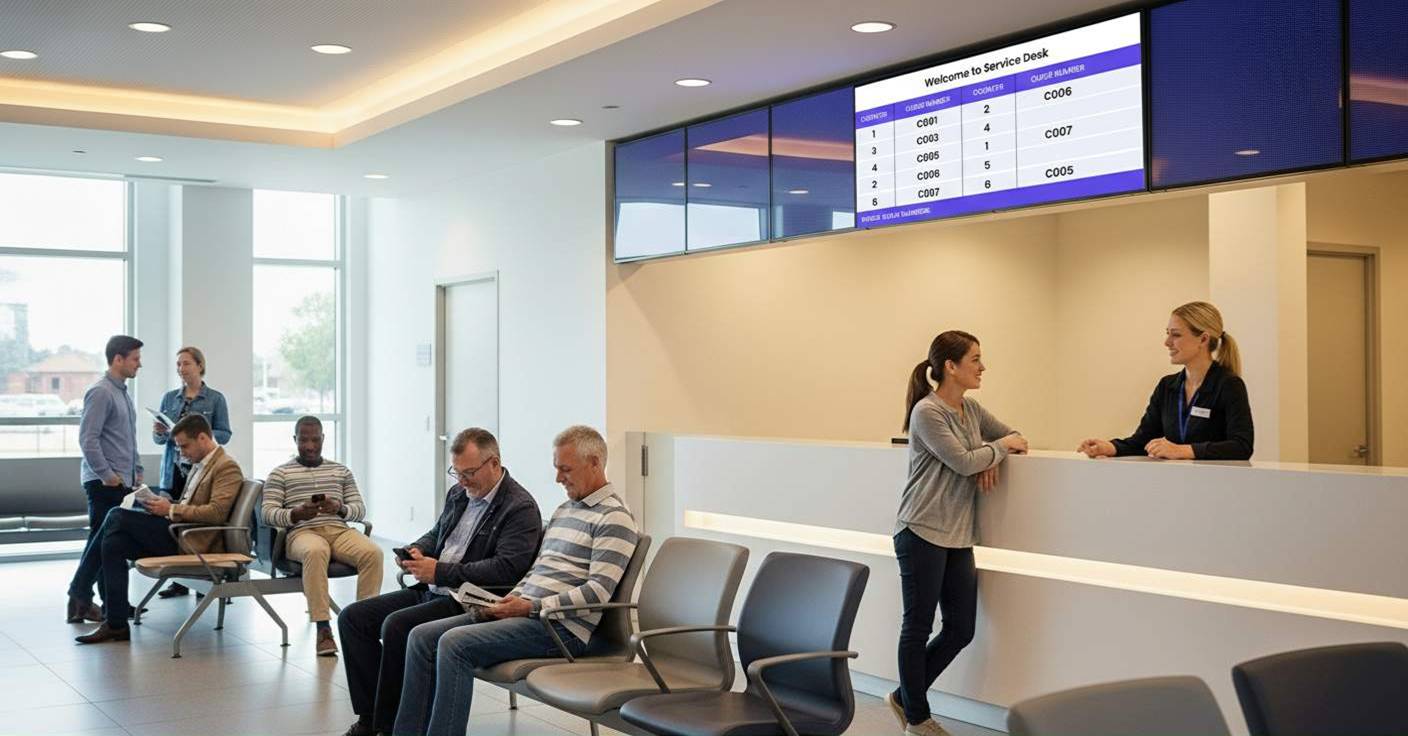
- Seniors need clear, large-format signage and accessible seating near service points.
- People with mobility challenges require wide circulation paths and priority service options.
- Multilingual visitors depend on language-flexible systems that don’t force them to guess or ask for help.
A public service office in Singapore used Qwaiting’s multilingual display screens to serve citizens in four languages without requiring staff translation. Complaints dropped 41%, and average service times improved because customers arrived at counters already informed and prepared. Accessibility isn’t a compliance checkbox, it’s a service multiplier.
When comfort meets clarity, you not only shorten waits, you build trust. But how do you measure if your design truly works?
Metrics That Matter: Measuring the Success of Customer Flow Design
Operations leaders need numbers that tie design changes to business outcomes. The right KPIs prove ROI and guide continuous improvement.
Key KPIs That Define Success
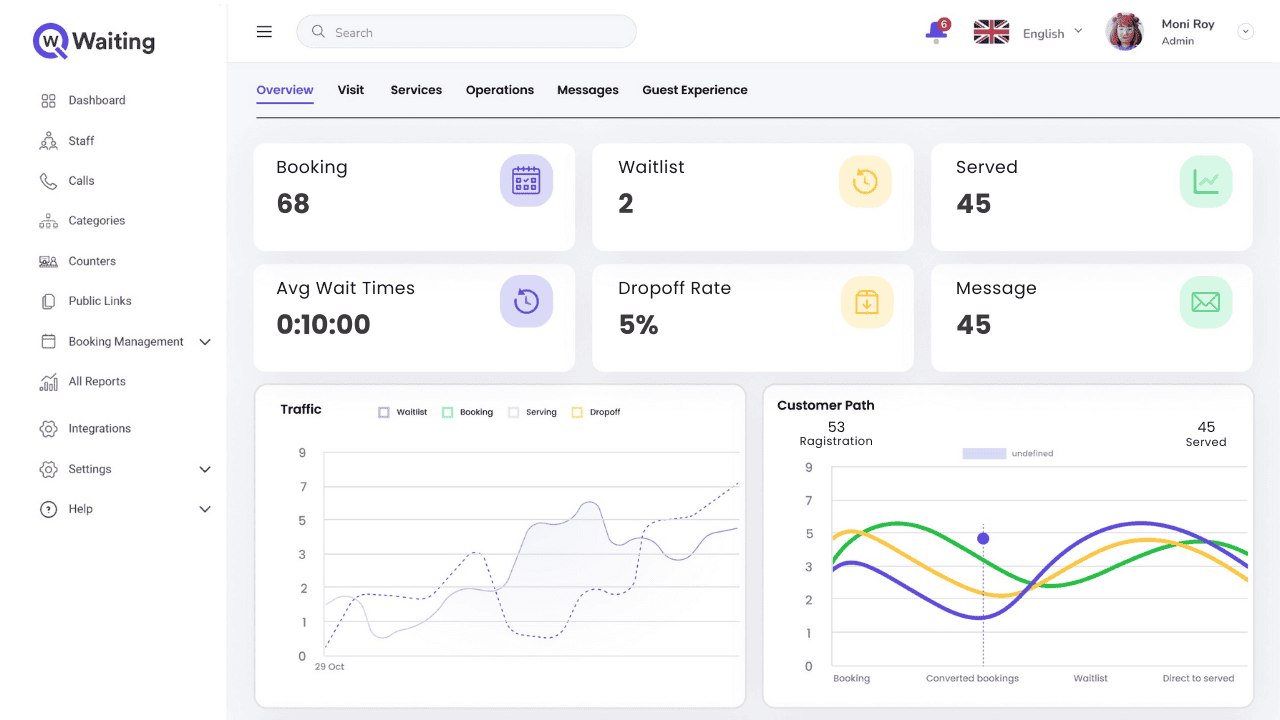
- Average vs. perceived wait time: The gap between these two metrics reveals design effectiveness. If customers think they waited longer than they did, your flow design is failing emotionally even if it’s succeeding operationally.
- Queue abandonment rate: How many customers leave before service? High abandonment signals comfort or clarity failures. Track this by time of day to identify when design breaks down under volume.
If you want to know how queue abandonment affects your business, must read the blog: Queue Abandonment Rate: The Metric 87% of Businesses Ignore (And Why It Matters)
- Space utilization and footfall flow: Heat maps reveal bottlenecks, underutilized zones, and circulation problems. Modern analytics show exactly where customers hesitate, cluster, or backtrack, all opportunities for design refinement.
- Customer satisfaction (CSAT/NPS) improvements: Correlate flow design changes with satisfaction trends. If scores don’t move, the changes didn’t matter to customers regardless of internal efficiency gains.
Before-and-After Results
Data tells the story when qualitative improvements need quantitative backing. A regional banking chain redesigned three branches using customer flow principles, clearer zoning, digital queue management, and comfort-focused waiting areas.
Common Customer Flow Mistakes to Avoid
- Overcrowded zones and poor directional cues: Packing too many people into poorly defined spaces creates physical and psychological discomfort. Clear separation between waiting and circulation zones prevents this.
- Ignoring emotional comfort or accessibility: Treating all customers identically misses demographic realities. Design must accommodate varying physical abilities, cultural expectations, and stress tolerances.
- Designing aesthetics that don’t support flow: Beautiful spaces that confuse customers or create bottlenecks waste investment. Form must follow function in queue design.
- Treating queue management as a backend tool instead of a customer experience strategy: This is the costliest mistake. When operations leaders see queue systems as admin tools rather than customer-facing experiences, they miss the entire value proposition.
Continuous Optimization with Analytics
Static designs can’t adapt to evolving customer behavior or seasonal demand shifts. Real-time dashboards, heat maps, and traffic flow analytics let you refine layouts based on actual usage patterns, not assumptions. Systems that learn from data get better over time, they identify emerging bottlenecks before they become chronic problems and suggest layout modifications based on observed behavior.
“With Qwaiting’s analytics suite, your layout learns and evolves with your customers.”
With data guiding design, the next frontier is predictive, where waiting all but disappears.
The Future of Waiting: From Queues to Seamless Journeys
The best queue management systems are becoming invisible. They orchestrate experiences so smooth that customers barely register the operational complexity behind them.
The Rise of Predictive Flow Design
AI-driven crowd forecasting is shifting queue management from reactive to proactive. Systems now predict peak times based on historical patterns, weather data, local events, and even social media signals. IoT sensors track real-time occupancy and movement flows, triggering dynamic adjustments to service allocation and space configuration. Businesses aren’t just responding to crowds anymore, they’re anticipating them and adapting infrastructure before congestion forms. This changes facility planning from static blueprints to adaptive systems that respond to demand in real-time.
Blending Design, Data, and Empathy
Technology enables efficiency, but empathy drives loyalty. The most effective customer journeys merge operational intelligence with genuine understanding of how people experience time and space under stress. Data shows where people hesitate; empathy explains why. Design addresses the why, not just the where.
The best queues are the ones customers never feel they’re in. They’re moving, informed, comfortable, and confident that the process respects their time. That’s not about hiding the wait, it’s about making the wait feel worth it.
“We didn’t just reduce wait times, we redesigned how customers experience time.” — Michael Torres, Head of Customer Experience, Global Financial Services
Every Touchpoint Shapes Your Brand
Every detail, from floor layout to digital signage placement, shapes how customers feel about your brand during those critical moments before service begins. The physical space, the visual clarity, the emotional comfort, and the technological intelligence all combine to create an experience that either builds trust or erodes it.
With Qwaiting, you’re not managing queues; you’re designing experiences worth waiting for. The platform combines spatial intelligence, real-time analytics, and customer-centric design principles into systems that adapt, learn, and continuously improve how people move through your spaces.
Ready to transform your customer flow from operational necessity into competitive advantage? Book your 2-week free trial and redesign your customer waiting experience, and win customer loyalty with Qwaiting.