
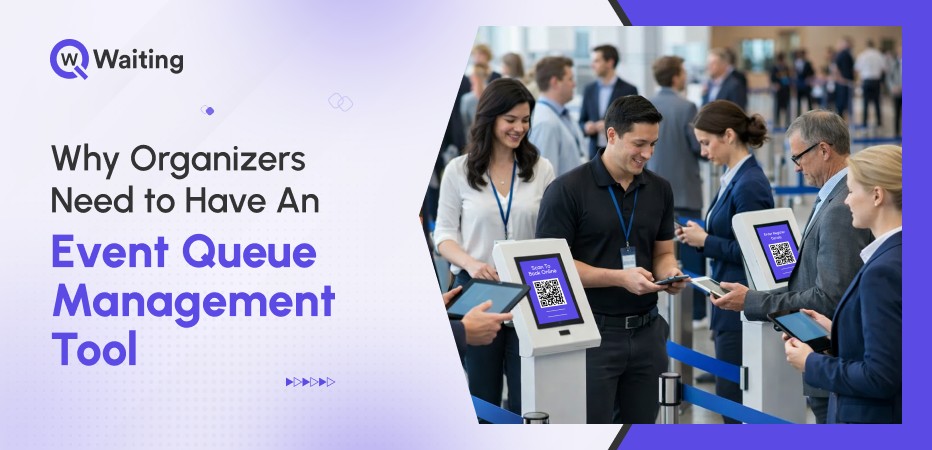
A great event and a terrible one are often different because of how people move around. Many people think the speaker or the food is the most important part, but that is not true. The line at the front door is what people notice first. If the line is long and slow, people will be unhappy before the event even starts. Sadly, many planners forget to plan for this and try to fix it at the last minute. This is a significant mistake that can render the event unsafe and result in financial loss.
New queueing tools for managing lines do more than just make things go faster. They help the staff stay calm when a big crowd shows up all at once. These tools also make sure everyone stays safe and has a good time. When the entrance is smooth, the whole event feels much better for everyone. Using technology to handle lines makes the entire day run more easily.
The Hidden Cost of Poor Event Queues (What Attendees, Sponsors, and Regulators Notice First)
Lines send a message. A slow entrance makes your event look messy and disorganized. Long waits cause people to miss sessions, which upsets sponsors and can even break safety rules. Here’s what breaks first when queues go wrong.
Long lines shape first impressions long before content or speakers do
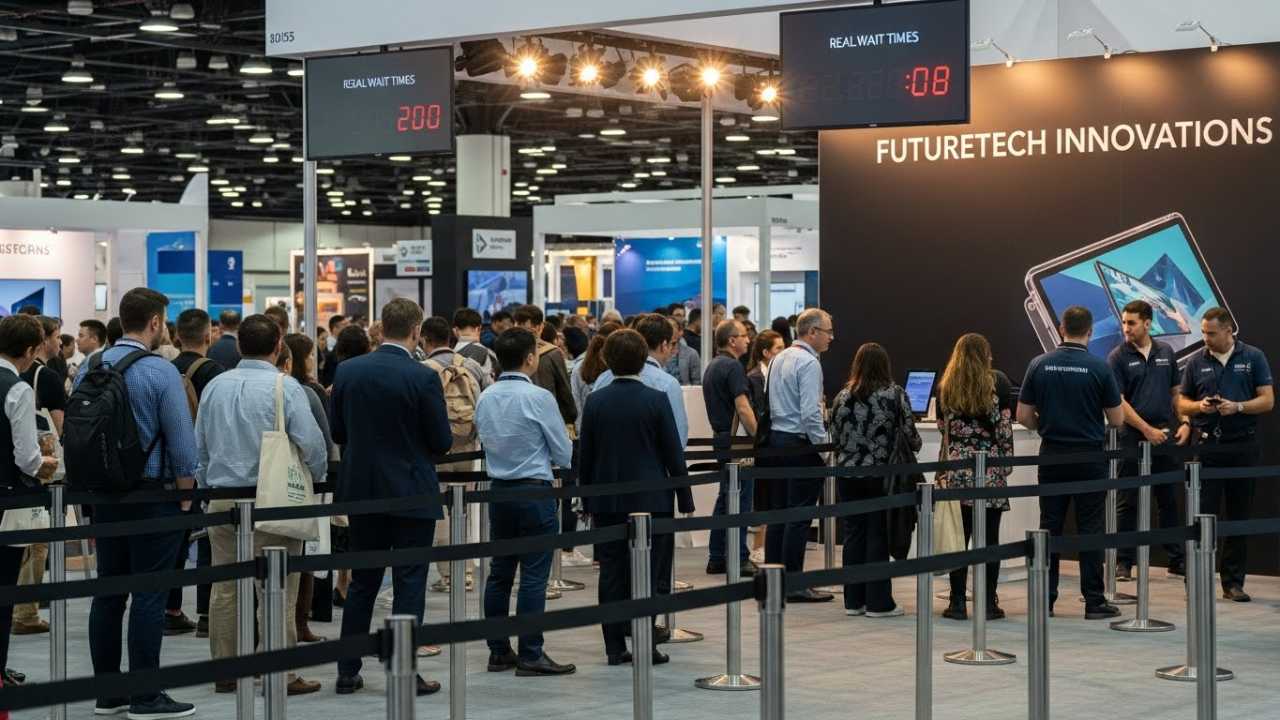
How people enter an event is how they start their experience. Attendees do not think of the long wait and the event as two different things. If they have to wait for 20 minutes, they will feel frustrated for the rest of the day. Most people think a long line means the event is messy, not that it is popular. An event feels fancy when the entrance is smooth, even if it is crowded.
Queue breakdowns increase stress across staff, security, and vendors
When the check-in process fails, everything becomes a mess. The staff starts to panic and makes poor choices. Security guards have to deal with angry people who are tired of waiting. Workers and sellers cannot get their booths ready because they are stuck in the crowd. Small issues become huge problems because the people at the door cannot talk to the people in charge. When the team has too much work to do, they do not work harder; they just get tired and give up.
Delays quietly damage schedules, sessions, and sponsor commitments
When people miss the beginning of a big event, the speaker feels bad and makes the event look less important. It also hurts the companies that paid to show up at the event. These sponsors want people to see their booths during the busiest times of the day. If guests are still stuck in line, they won’t be walking past those booths to see the products. Long lines do more than just make people annoyed. They actually make the event worth less money for the partners who helped pay for it.
Unmanaged queues introduce safety, compliance, and liability risks
Too many people in one area is more than just uncomfortable. It is a serious safety risk that can break the law. If you cannot see how crowded a room is right now, you cannot fix the problem. Not knowing what is happening makes a bad situation much more dangerous. Just one accident can lead to big fines and a bad reputation that lasts for years.
Reality check: A 2023 survey found that 68% attendees said they would leave a physical line before their turn if the wait was lengthy, and 82% actively avoid places because of visible queues.
For a deep dive into how intelligent queue systems can streamline security screening at major gatherings and cut critical entry bottlenecks, see our piece on managing security screening with smart queues at high-profile events.
Why Traditional Event Operations Fail Under Peak Pressure
Manual queue systems work okay for small, steady crowds. However, events often face sudden rushes of people all at once. Traditional systems fail because they cannot handle these big groups quickly.
Here’s why legacy methods collapse when volume spikes.
Manual check-ins collapse during arrival surges and shift changes
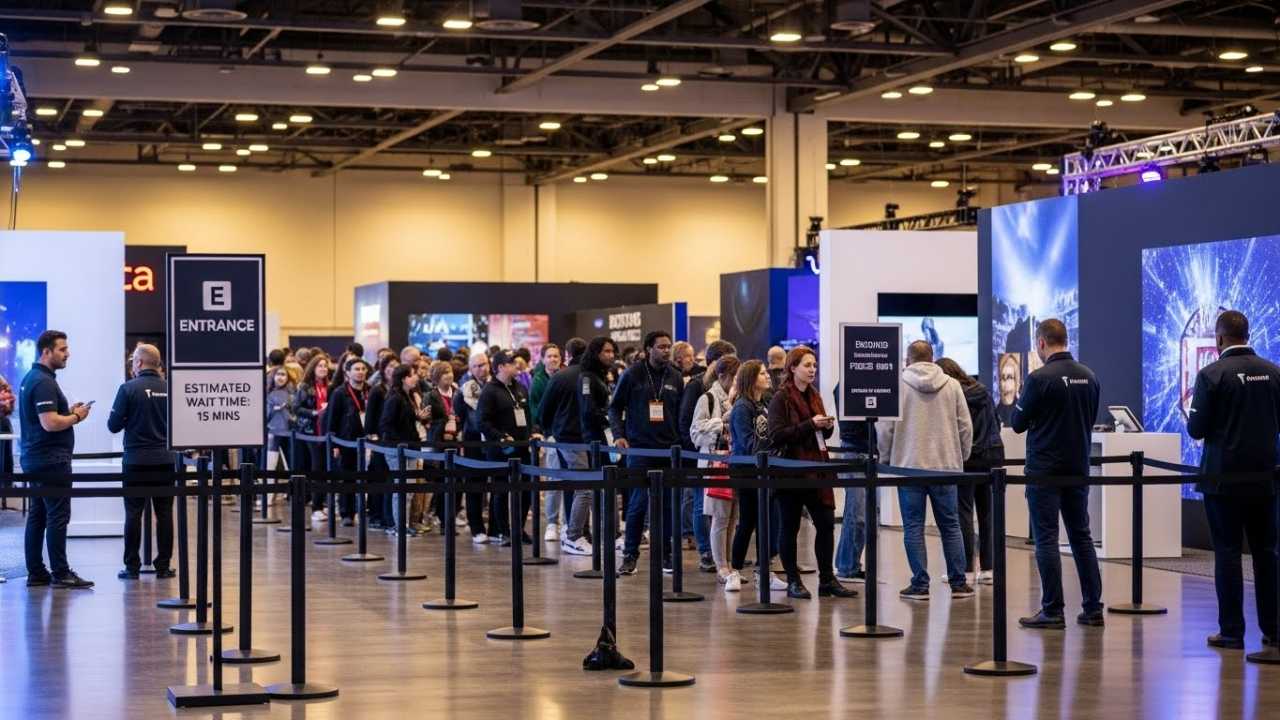
Crowds do not wait for your team to be ready before they arrive. Huge groups of people often show up all at once, especially after breaks or right before the event starts. If you have special lines for VIPs that are not managed well, it creates even more confusion. Simply hiring more staff does not fix the problem because more people often just lead to more mistakes. Old-fashioned paper or manual systems cannot grow fast enough to handle hundreds of people arriving in a very short time.
Physical queues limit flexibility and ignore attendee segmentation
Not every person at an event has the same needs. You have regular guests, VIPs, speakers, and workers who all need to go to different places. If the walkways are poorly planned, people will bump into each other and feel frustrated.
For example, a person in a wheelchair should not have to go through a long, twisting line meant for picking up badges. Also, news crews with heavy cameras should not be stuck behind everyone else. Old-fashioned lines stay the same no matter what, but modern events change quickly and need to be flexible.
Organizers operate blind without real-time queue data
You cannot fix a problem if you do not know it is happening. Without a way to see how long lines are in real time, you are always too late to help. Usually, by the time someone calls to say a line is too long, the mess has already started. Waiting too long to react turns a small delay into a huge disaster for the whole event.
Temporary fixes increase cost without improving experience
Adding more desks, more helpers, and more registers does not actually fix the real issue. These are just quick fixes that do not solve the main problem of bad planning. It is like putting a small bandage on a big wound. This makes the staff very tired, especially during events that last for many days. The second day always feels much harder than the first because everyone is already worn out from trying to keep up.
Here’s how traditional line management does not work anymore and how smart event queue management systems work to fix this issue:
| Manual Queue Management | Smart Event Queue Management |
| Long, unpredictable wait times | Predictable entry flow with real-time visibility |
| High staff load, frequent burnout | Optimized staff deployment based on live data |
| Safety risks from overcrowding | Real-time monitoring prevents capacity breaches |
| Low attendee satisfaction | Smooth entry boosts overall event perception |
| Struggles to scale beyond a certain size | Scales seamlessly across formats and volumes |
What a Modern Event Queue Management Tool Solves—Before Problems Escalate
Great systems stop problems before they even start. Digital tools change the job from fixing constant disasters to smoothly managing a plan. Here’s what changes when you move beyond manual processes.
Faster, smoother check-ins that scale without slowing attendee flow
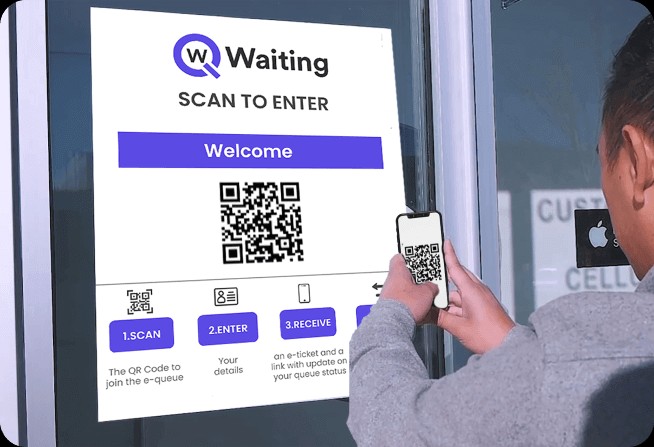
Using QR codes and digital kiosks makes checking in much faster while keeping the event safe. You do not have to choose between being quick and being secure because good design does both at the same time. When the speed is controlled well, guests move through the door quickly without feeling like they are being pushed or ignored.
Virtual queues that remove physical crowding entirely

Why make people stand in a physical line when they can wait using their phones? Virtual systems let guests check in from anywhere at the event. They get a text or notification when it is finally their turn to enter. This means they do not have to crowd together at the front gate, and can be free to talk to others, look at booths, or join small meetings.
Real-time monitoring that enables instant operational decisions
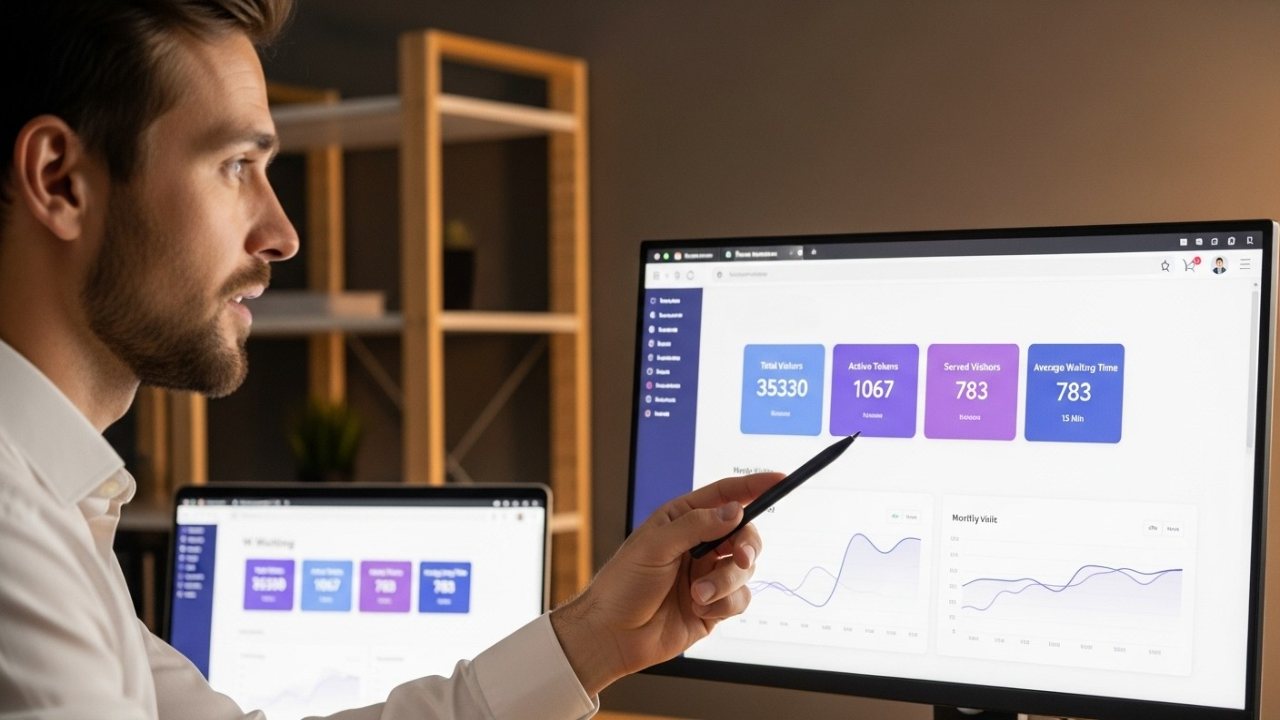
Live dashboards and alerts let organizers see exactly what is happening at every gate. If one entrance gets too crowded, managers can quickly move staff to help or open new lanes. This allows them to fix the problem before people even get upset. Making choices based on real facts and data is always better than making guessed choices while feeling stressed.
Built-in readiness for hybrid, multi-day, and high-volume events
Events that last for many days need a way for people to check in again without causing the same big mess as the first day. Some events have people attending both in person and online, so the systems need to keep everyone organized at the same time. Very large crowds need software that stays strong even when hundreds of people arrive at once. Modern queueing tools can handle all of these different situations easily without making the staff do everything by hand.
Digital signage screens that guide, inform, and calm crowds
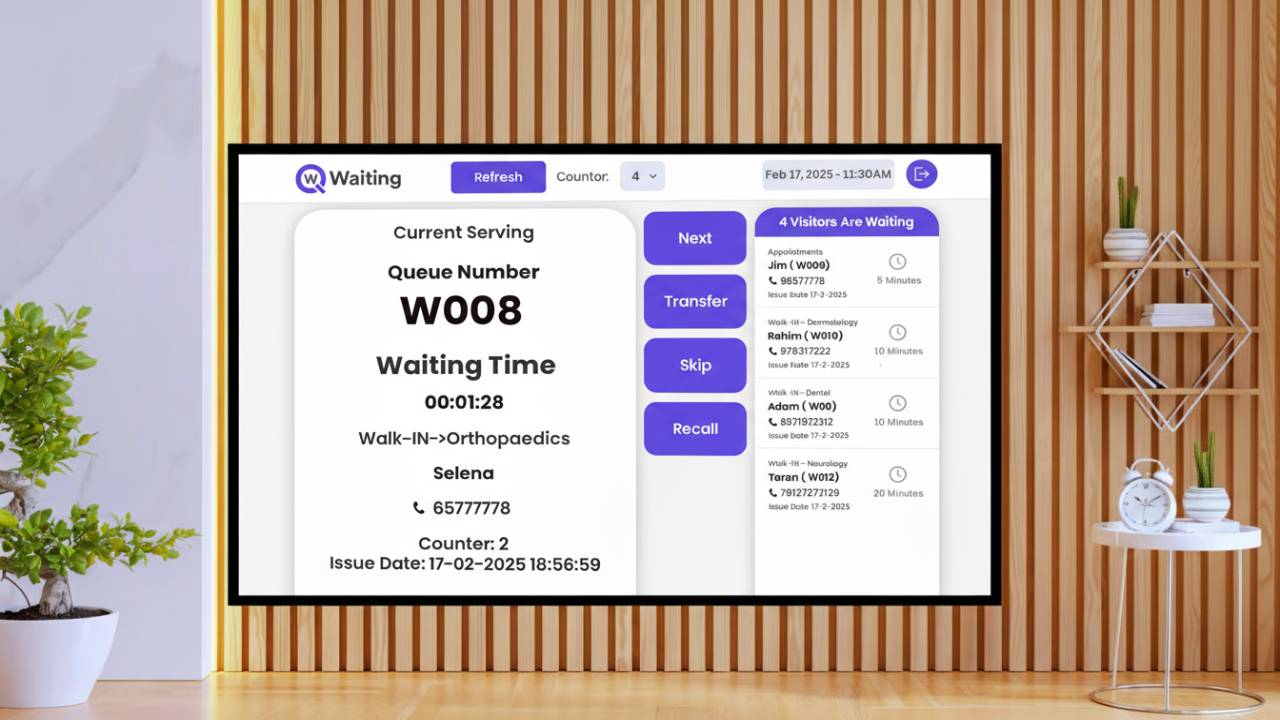
Digital signage screens remove confusion at entry points by showing real-time queue numbers, directions, wait times, and announcements. Instead of asking staff for help, attendees instantly know where to go, reducing anxiety, crowding, and repeated questions at gates.
These screens adapt live to crowd conditions, updating lanes, rerouting traffic, and displaying alerts when areas get busy. When people are informed, they move faster, follow instructions better, and feel more in control of their experience.
Client insight: The UI Path event witnessed 6200 visitors on opening day, and all the tickets were generated using the Qwaiting self-service kiosk.
The 4-day-long event went all smooth and wait times per visitor dropped by 71%, ultimately improving visitors’ experience.
How Queue Intelligence Elevates the Entire Event Experience
Managing lines is about more than just speed. Smart planning at the door improves everything that happens inside. Here’s how queue intelligence improves outcomes beyond the front door.
Calmer arrivals lead to higher engagement and session attendance
When guests start an event feeling calm instead of angry, they have more energy for the speeches and meetings. This change in their mood is easy to see and measure. After an event is over, people give much higher scores on surveys when the entrance was easy to use. It is a simple idea: people will always remember how they felt during your event.
Smarter crowd distribution improves safety and venue utilization
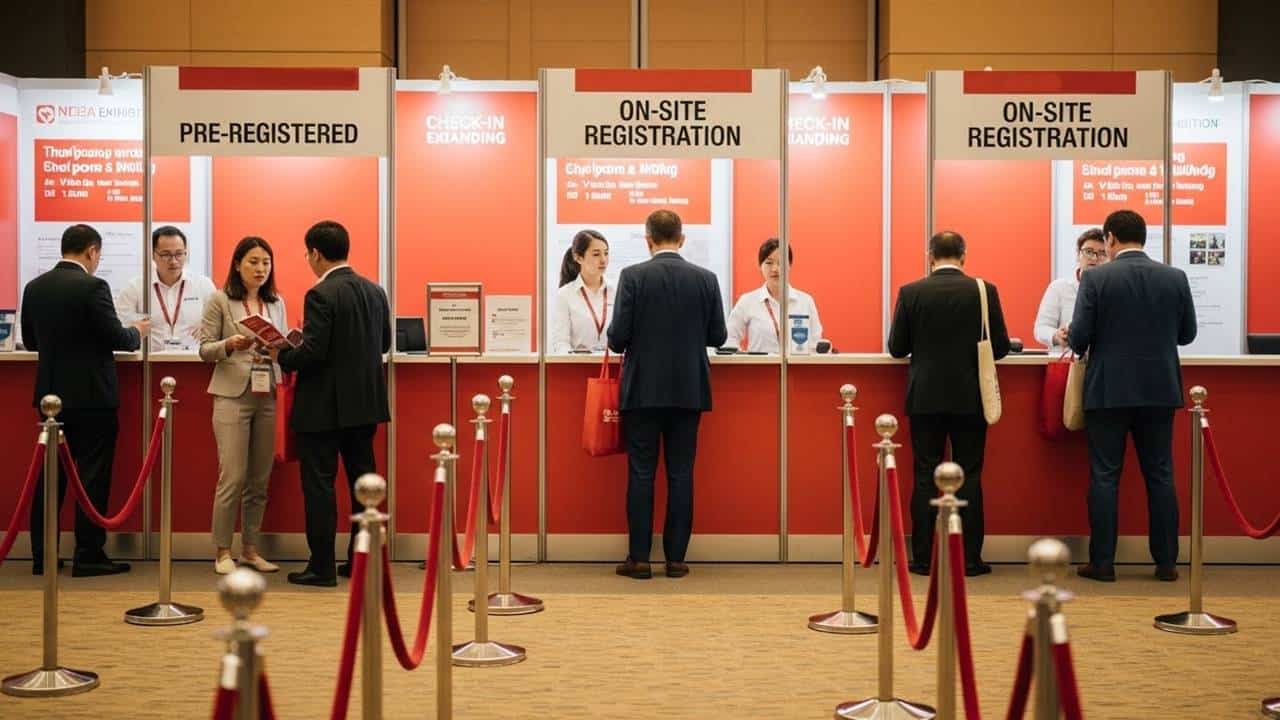
Preventing overcrowding in popular areas isn’t just about comfort; it’s about compliance and safety. Balanced movement across halls and time slots means better venue utilization, fewer fire code concerns, and more predictable service delivery. Queue analytics help you understand where people naturally cluster and how to guide flow before problems develop.
Queue data turns every event into a learning opportunity
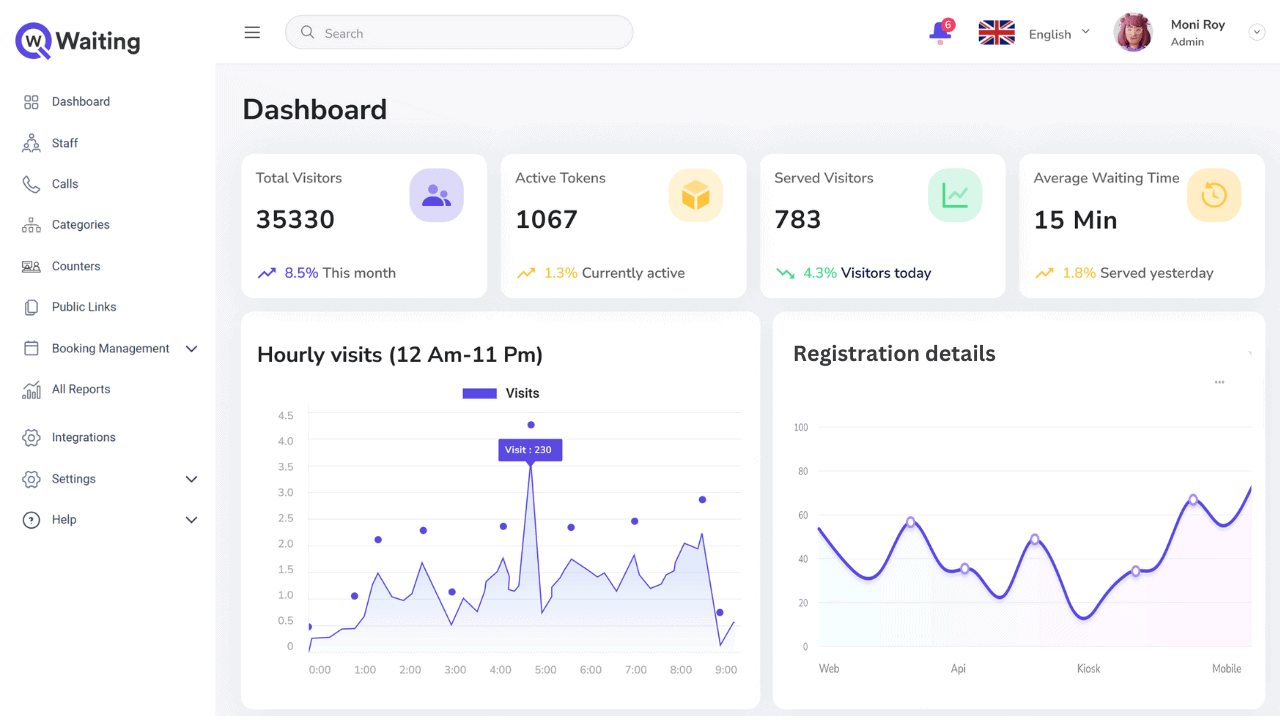
When you track how people move using digital queueing tools, you can see exactly when the busiest times are and how long people stay in one spot. You can also see who didn’t show up at all. This information helps you find problems and fix them before your next event starts. Instead of guessing, you can use real facts to plan your budget and talk to sponsors. This data makes every part of the event planning process smarter and more accurate.
Here’s what metrics event planners can check and what those insights reveal:
| Metric | What Queue Data Reveals |
| Entry time per attendee | Efficiency of the check-in process |
| Staff deployment patterns | Where and when staff is most needed |
| Zone congestion levels | Crowding risk and flow imbalances |
| Attendee flow by segment | VIP, general, accessibility patterns |
Conclusion
In the future, the best events won’t be the ones with the flashiest stages. They will be the ones who move people smoothly and stay calm under pressure. Great queue management doesn’t always get rid of lines, but it makes them feel invisible and organized.
Events that grow and keep their sponsors are the ones that feel easy to attend. This “effortless” feeling only happens when you plan the entrance just as carefully as the main speeches. No matter how famous your speaker is, the audience has already judged your event based on how they were treated at the door. Their experience starts and is often decided the moment they join the line.
If you also want to manage your event crowds efficiently, now is the right time for your business to adapt to smart event queue management software.
Book your 14-day free trial now!
FAQ’s
1. What is an event queue management system, and how does it work?
An event queue management system controls how people enter and move through an event using digital check-ins, virtual lines, and real-time monitoring to keep crowds organized, safe, and flowing smoothly.
2. How can event organisers reduce wait times during check-in?
Organisers reduce wait times by using QR-based check-ins, self-service kiosks, and pre-registration tools that speed up entry while removing manual checks and last-minute bottlenecks.
3. How does virtual queuing improve crowd control at large events?
Virtual queuing lets attendees wait digitally instead of standing in lines, reducing crowding at entrances and allowing organisers to call people in controlled waves based on capacity.
4. Is event queue management software necessary for small and mid-size events?
Yes. Even smaller events face arrival surges. Queue software prevents early chaos, reduces staff pressure, and delivers a polished experience that feels professional from the first touchpoint.
5. How do smart queues improve safety and compliance at events?
Smart queues track crowd density in real time, prevent overcrowding, and help organisers respond quickly to risks, supporting safety rules, venue limits, and regulatory compliance.
6. Can event queue management software handle multi-day or hybrid events?
Modern systems manage repeat check-ins, different access levels, and both in-person and online attendees, keeping every day and format organized without repeating day-one chaos.
