
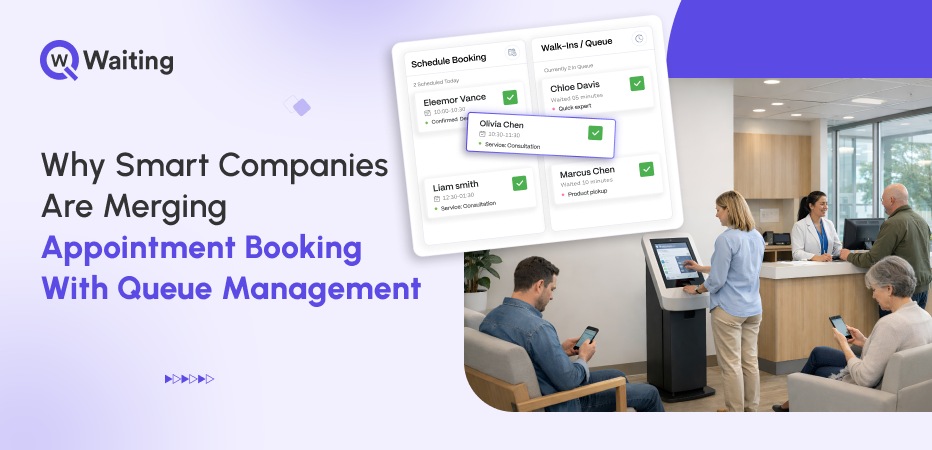
Here’s the problem: Your appointment system doesn’t connect to your queue system.
Your staff had to manage 2 different lists: one for people who called ahead to book a spot, and the other for people who just walked in the door. Because these lists are separate, your staff has to work twice as hard to keep track of everyone. If someone misses their 2:00 PM appointment, that spot stays empty even if the lobby is full of people waiting. It’s like having an empty seat at a movie theater while people are standing in line outside because the system doesn’t know the seat is open.
This confusion causes big problems. Businesses lose a massive amount of money every year, just from missed appointments. Plus, when customers have to wait a long time, they get frustrated and go somewhere else next time.
Smart appointment and walk-in queue systems help solve these problems by putting everything into one “smart” system. The result? You see everyone coming before they arrive, fill empty slots instantly, and give accurate wait times because the system knows about both appointments and walk-ins.
For executives, this shift matters because it turns unpredictable customer flow into something you can actually plan and measure.
What Happens When Appointment Booking and Queue Systems Are Separate?
Right now, your business is probably losing money, and you might not even realize it. Your current tools just aren’t built to show you where the leaks are. If you don’t have a way to see these hidden problems, you can’t fix them. It is hard to run a successful business when you are guessing instead of knowing the facts.
Here’s how disconnected systems are costing your business:
When Appointments and Walk-Ins Collide
Fullerton Hospital, Singapore, noticed a strange problem where they were facing issues with their manual record-keeping system and appointment bookings. The hospital faced a lack of analytics and appointment slots, which resulted in overcrowded service counters. The issue wasn’t a lack of staff to help people. Instead, the problem was that their appointment calendar and their walk-in line did not talk to each other. This lack of communication created chaos for everyone involved.
When appointments are canceled, which happens quite often, that open time slot is usually wasted. The empty spot just sits there, even though walk-in customers are waiting in line. This happens because the system doesn’t realize that a worker is suddenly free to help. This means patients continue to wait for no reason while the business loses valuable time and capacity because the two systems aren’t sharing information.
If you want to explore the whole story of how Qwaiting helped Fullerton Hospital overcome this issue, you must read our client success story:
Fullerton Reduced Patient Wait Times by 40% With Qwaiting’s Smart Queue System
The Financial Impact of Disconnected Systems
Here’s what disconnected systems cost you:
Lost revenue: Every no-show appointment is money left on the table. If you can’t instantly fill that slot with a walk-in customer, you lose it forever.
Wasted staff time: Your team manually manages two systems, constantly trying to figure out who’s coming when and who’s waiting now.
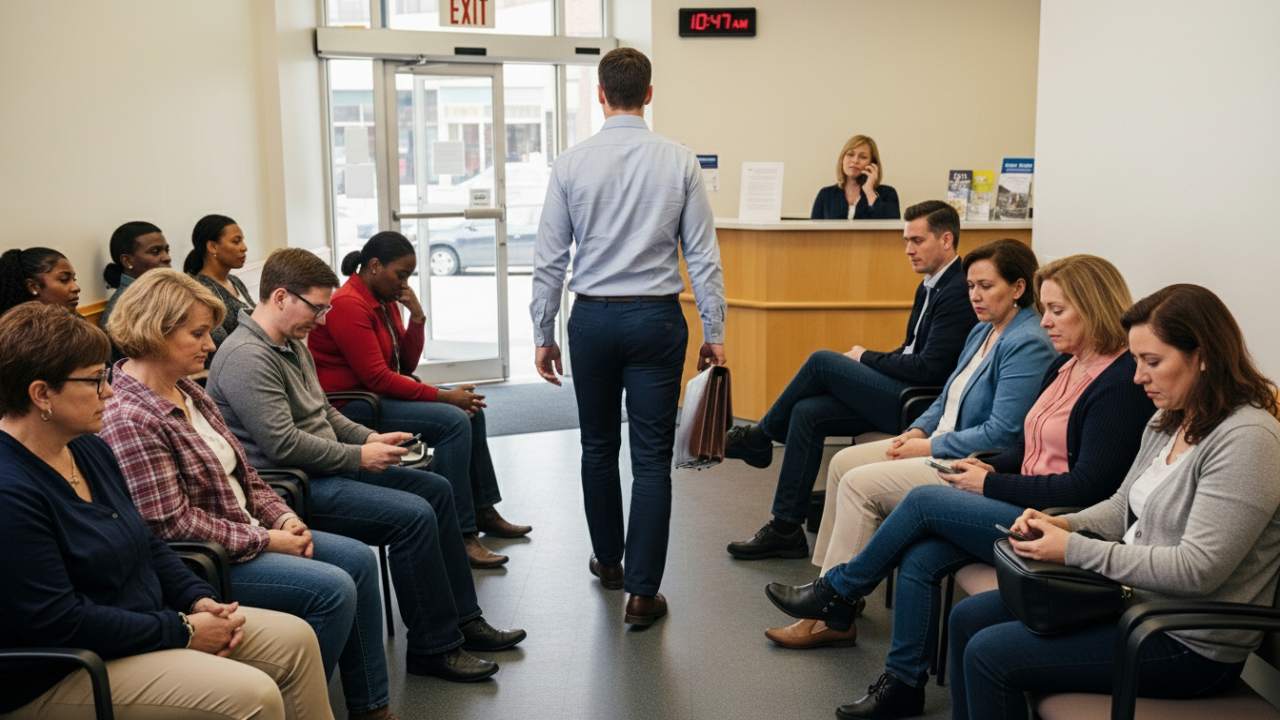
Customers who leave: When someone joins a queue showing “15 minutes” that becomes 45 minutes (because the system didn’t know about incoming appointments), they walk out. Probably to your competitor.
Unpredictable operations: You can’t plan staffing because you don’t actually know what your real demand looks like. You’re flying blind.
Industries Most Affected by Disconnected Queue Systems
Healthcare: Patients book appointments, but Emergency Rooms still get priority walk-ins. If these two systems don’t talk, you get dangerous bottlenecks.
Banks: High-value clients book time with advisors, but everyday customers walk in for transactions. Both need service from a limited staff.
Retail: Personal shopping appointments overlap with regular store traffic. Without coordination, your VIP customers wait just like everyone else.
Government offices: Citizens need service whether they book ahead or walk in. You must serve everyone fairly while maintaining efficiency.
How Unified Appointment + Queue Platforms Solve This
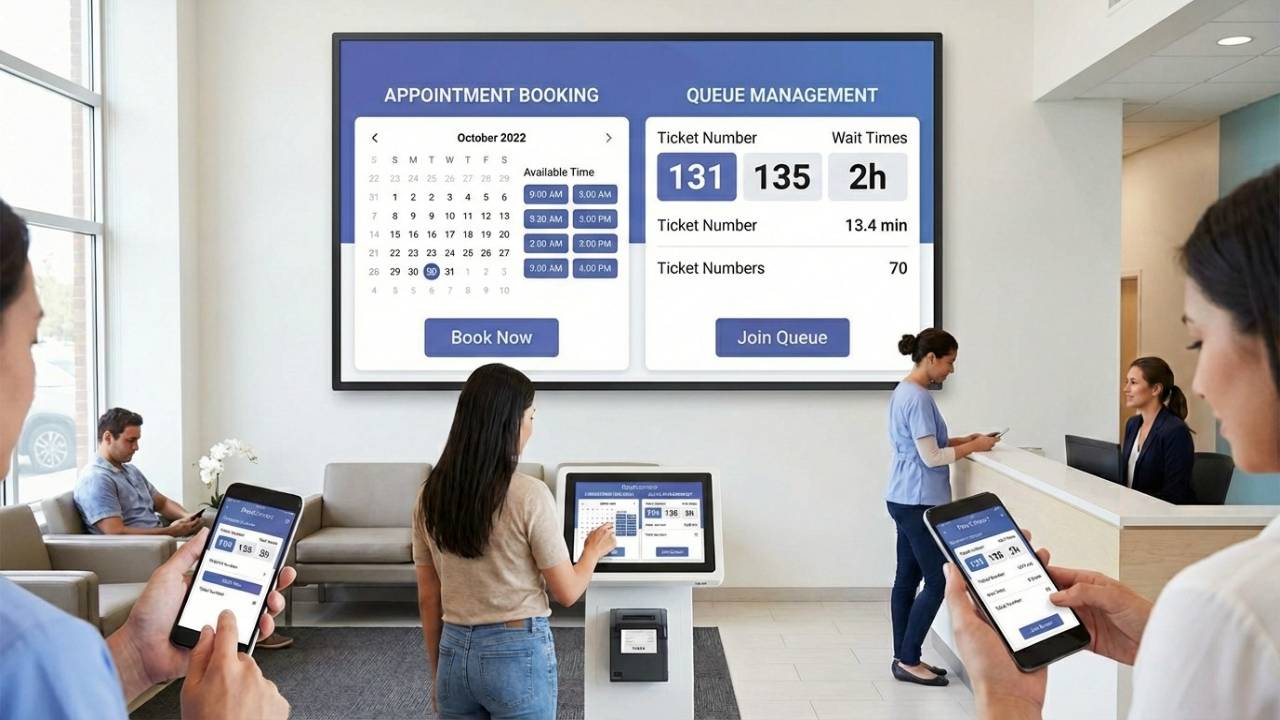
When appointment booking and queue management work together as one system, 3 things happen instantly.
Clear visibility into bookings: The system knows about the 20 people who booked appointments and the 15 people in the walk-in queue. One complete picture.
Empty slots fill automatically: When someone cancels their appointment, the system immediately offers that slot to walk-in customers. No wasted capacity.
Wait times become accurate: Because the platform knows appointments are coming, it gives walk-in customers realistic wait estimates. No more surprise delays.
Think of this like a control tower at an airport. The people in charge need to see every single plane on one screen, whether it is a scheduled flight or an unexpected landing. Your business needs that same kind of clear view. When you can see everything happening at once, you can keep things moving safely and smoothly without any crashes or confusion.
What Changes Operationally After Integration
Here’s what businesses noticed in their operations before integration:
- 9:00 am: System says “10 appointment slots available.”
- Reality: 30 walk-ins also arrive, creating chaos
- Result: Everyone waits longer than expected
After integrating appointment + queue management system:
- 9:00 am: System knows about appointments and typical walk-in patterns
- The platform automatically spreads appointments to avoid collisions
- Walk-ins get accurate wait times that account for booked appointments
- Result: Predictable flow all day
How Unified Platforms Handle Multiple Customer Entry Points
Customers don’t care whether they book ahead or walk in. They just want service.
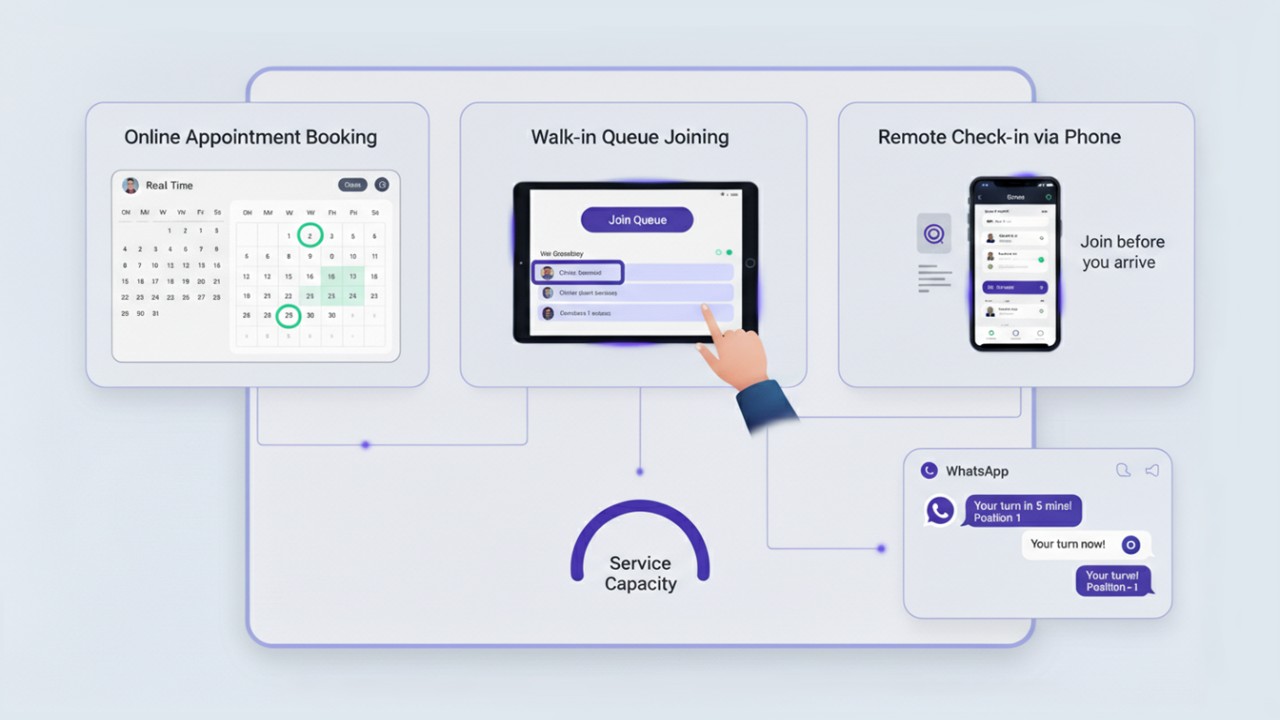
A unified platform handles:
- Online appointment booking
- Walk-in queue joining at the location
- Remote check-in via phone (join the queue before you arrive)
- WhatsApp notifications for queue position
- All feeding into the same service capacity
Everyone gets treated fairly, and the system optimizes who gets served when based on actual priorities, not which system they happened to use.
Orchestrating these entry points visually is equally important — digital signage integration plays a major role in shaping the customer journey across locations.
Key Business Benefits of Merging Appointment Booking With Queue Management
Leaders care about numbers. Here’s what unified systems deliver:
Recover Lost Revenue
The problem: 20-30% of appointments don’t show up. That’s $150 billion annually across all industries.
The solution: When someone cancels, their slot instantly becomes available to walk-in customers. You fill the gap automatically instead of losing the revenue.
Real impact: Companies typically recover 8-15% of previously lost revenue just by filling cancelled slots with walk-in demand.
If reducing no-shows is a priority, explore how modern queue intelligence actively prevents them in our guide on:
how smart queues are helping businesses reduce appointment no-shows
Serve More People With the Same Staff
The problem: You staff for peak times, wasting money during slow periods. Or your staff are average, creating terrible service during rushes.
The solution: The system predicts demand (it knows about booked appointments) and optimizes flow (it manages walk-in distribution). Staff work consistently busy, not frantically overwhelmed or sitting idle.
Real impact: Most organizations see 15-25% productivity improvement—serving more customers per employee hour without anyone working harder.
Reduces Customer Walkaways
The problem: When wait times are unpredictable or too long, customers leave. They probably go to your competitor.
The solution: Accurate wait times (because the system knows about appointments) and better flow (because capacity fills intelligently) mean shorter, more predictable waits.
Real impact: Customer satisfaction typically improves 12-20 points. Retention increases because the experience is consistently good.
Real-Time Analytics: Visibility Across Appointments and Walk-Ins
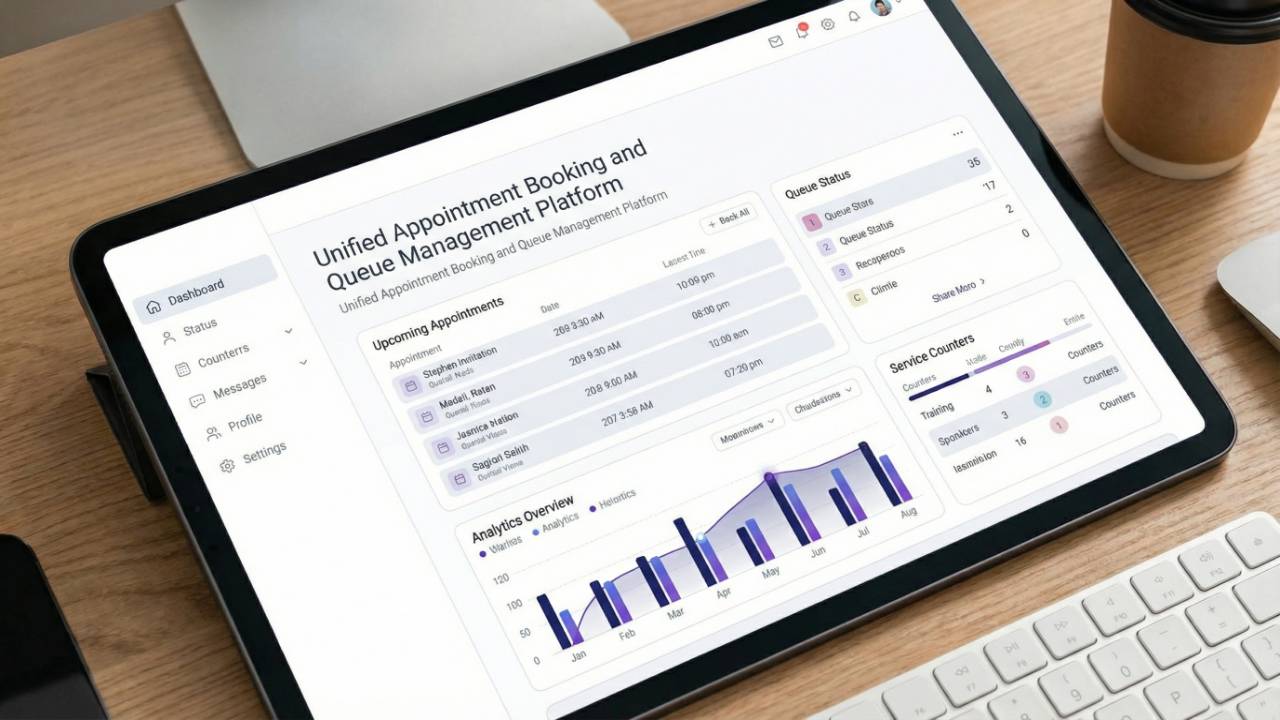
| What You Measure | Old Way (Separate Systems) | New Way (Unified Platform) |
| Tomorrow’s demand | Partial guess | Actual appointments + predicted walk-ins |
| Staff efficiency | No clear data | Exact utilization percentage |
| Wait time accuracy | Often wrong by 20+ minutes | Usually accurate within 5 minutes |
| Revenue lost to no-shows | Unknown | Tracked and recoverable |
| Customer journey | Fragmented data | Complete view from booking to service |
The difference is visibility. You can’t improve what you can’t measure.
If you want to know in-depth steps to keep your appointment scheduling software updated, you must read our blog:
Tips to Optimize Online Appointment Scheduling for Your Business Growth
How to Implement Unified Appointment and Queue Management Successfully
Technology is the easy part. Organizational change is harder.
Connecting to Your Existing Systems
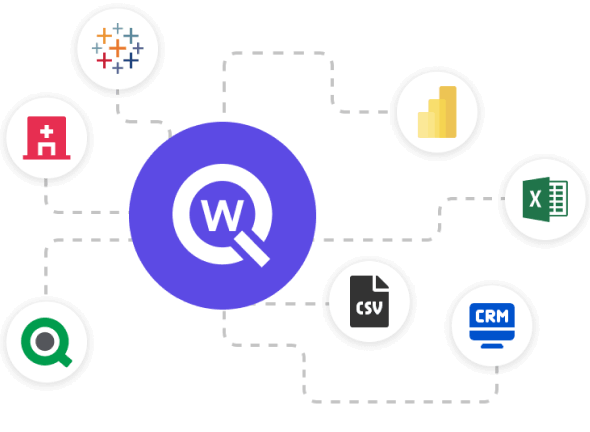
You already have systems running your business:
- CRM (customer relationship management)
- Core banking platforms
- Hospital information systems
- ERP (enterprise resource planning)
Your new queue and appointment platform must connect to these. Otherwise, you’re just adding another disconnected system to the mess.
Look for platforms with proven integrations to your specific systems, not generic claims about “we integrate with everything.”
Scaling Across Multiple Locations
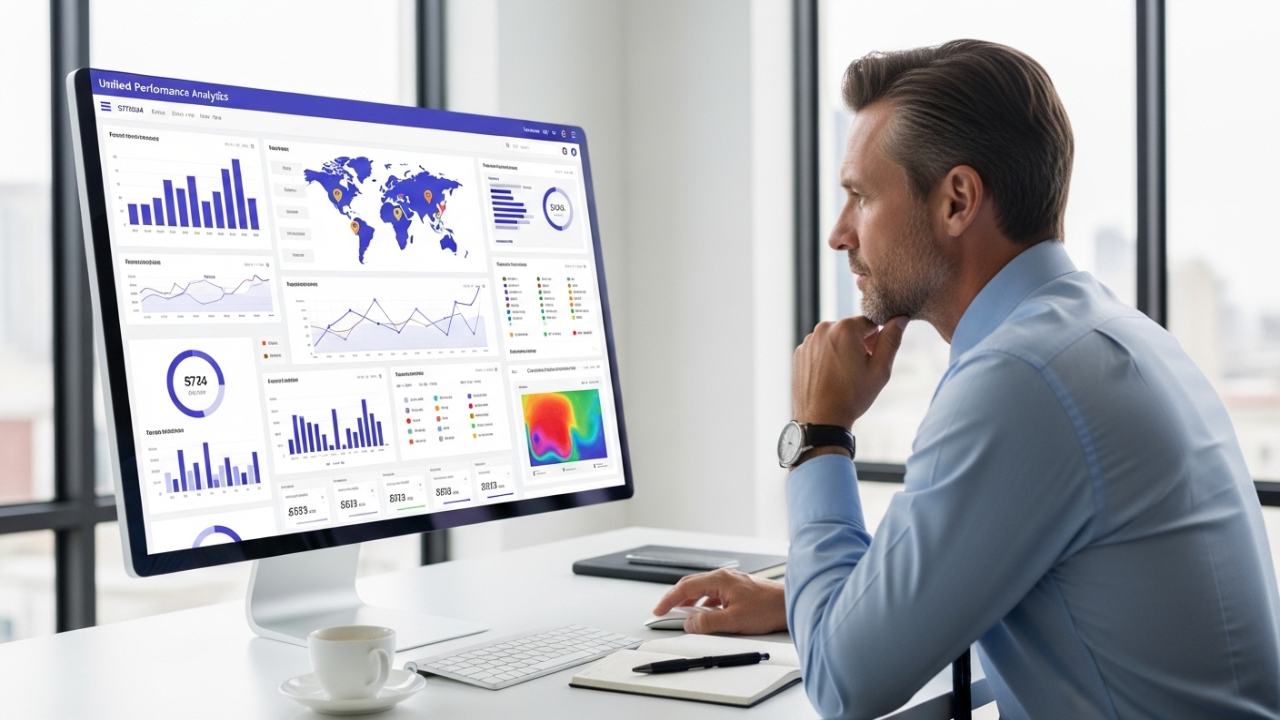
What works in one location might break at 50 locations across different countries.
You need:
- Consistent core functionality everywhere
- Flexibility for local rules (different service hours, different priorities)
- Centralized reporting so you can compare performance
- One support team, not 50 different configurations
Staff Adoption Strategies for Queue Platforms

The best system fails if your staff won’t use it. Developing a successful strategy requires a dedicated staff adoption playbook for queue technology training.
Keys to adoption:
- Make it easier than what they do now (not harder)
- Show them how it makes their day better
- Train thoroughly but simply
- Start with a pilot location before full rollout
If the new system creates more work for frontline employees, they’ll resist it. Understandably.
Security and Compliance Requirements
Customer data requires protection. Different industries have different rules:
- Healthcare: HIPAA compliance
- Finance: PCI and banking regulations
- Government: Data sovereignty requirements
- Everyone: General data protection laws
Verify your platform meets your industry’s specific security standards before implementation, not after.
Future Trends in Appointment Booking and Queue Management
Technology keeps evolving. Your platform should too.
AI-Powered Queue Forecasting and Demand Prediction
Modern queuing systems learn from patterns:
- Friday afternoons get more walk-ins than Monday mornings
- Certain appointment types always run long
- Some customers always arrive 10 minutes early or late
The platform uses this to predict tomorrow’s demand more accurately than any human could, then adjusts automatically.
Hybrid Physical + In-Person Customer Journeys
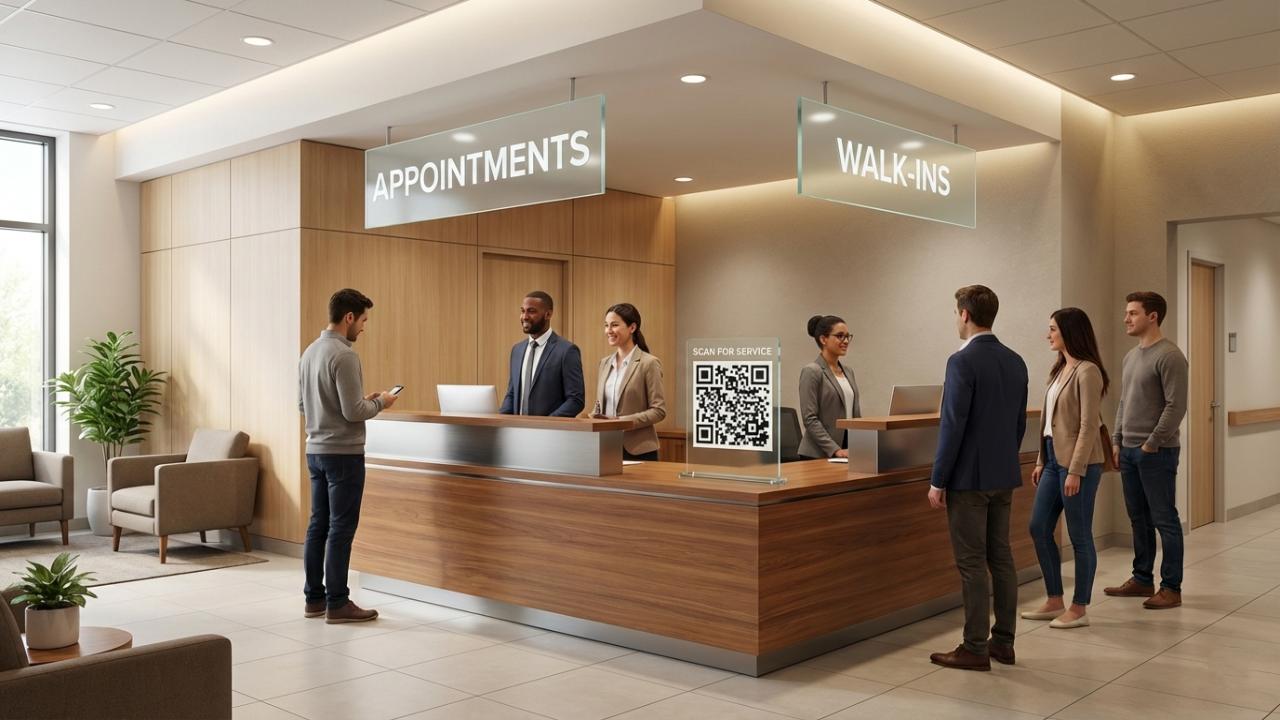
The future isn’t “everyone comes in person” or “everything’s online.” It’s both, seamlessly:
- Start a transaction online, finish in person
- Book an appointment virtually, get served physically
- Join a queue remotely, arrive when you’re actually needed
Your platform needs to handle customers moving fluidly between digital and physical without losing track of them.
Questions Businesses Should Ask Before Choosing a Queue Platform
Can we try it first? Pilot programs reveal problems vendor demos don’t.
Does it actually integrate with our specific systems? Generic integration claims mean nothing. Get specifics.
What happens to our data if we switch platforms later? You should own your data completely.
How much does implementation really cost? Software price is one thing. Implementation, training, and integration are often much more expensive.
Who else in our industry uses this successfully? Talk to their actual customers, not references the vendor cherry-picked.
The Bottom Line
Companies are combining appointment scheduling with queue management because:
- It stops revenue loss from no-shows and empty time slots
- It reduces wait times through better capacity management
- It improves efficiency without adding staff
- It provides visibility into what’s actually happening
The question isn’t whether to integrate these systems. Market pressure and customer expectations will eventually force it.
The question is whether you lead this change or react to it after competitors already have the advantage.
For organizations ready to move, the path is clear: assess honestly what you have now, define specifically what success looks like, choose platforms that match your technical capability to their complexity, and commit to the workflow changes that technology alone can’t deliver.
The organizations treating this as an infrastructure investment rather than a software purchase will define service delivery for the next decade. Now is your time. Book your free consultation call with Qwaiting experts today and integrate a smart queue system with an appointment scheduling software for a seamless customer flow.