
Most operation teams do not worry about how much pollution they cause using a digital kiosk. They mainly care that the screen is always working (uptime), how many people it helps (throughput), and if customers are happy. But things are changing now. The cost of electricity is going up, and government groups are starting to pay attention to how much energy businesses use. Your customers are also noticing if your company is eco-friendly or not.
Changing to systems that use less energy is not just about looking good. It is about being smart with how you run your business. Companies that change their systems to save energy are getting good results. They are using 20 to 35 percent less electricity, which also means they do not have to buy new machines as often. Plus, they look better to people who care about the environment. This is how being sustainable helps a company save money.
Why Sustainability Is Now a Core Requirement in Queue, Kiosk & Display Programs
Being honest about how much energy you use is not a choice anymore. If a company has many digital screens or kiosks in different places, someone has to explain how those screens affect the environment. They need to show that they are not using too much power or causing too much pollution.
Here’s why sustainability in queue software is becoming necessary:
The Global Shift Toward Low-Carbon CX Infrastructure
When a company changes how customers shop or get help, it now has to think about carbon pollution. Before, buying new screens or systems was a simple decision. Now, it is a rule to be sustainable. Many places around the world, like the UAE, Saudi Arabia, Europe, and North America, have strict rules for companies to report their environmental efforts. Because of these new rules, people who manage buildings must now answer questions about how much electricity they use.
Big rules like ISO 14001 and the GHG Protocol force businesses to measure the pollution from every digital screen and device they use. People in charge of customer experience are not just trying to make things fast and fun anymore. They are also trying to use the least amount of electricity for every customer interaction.
What’s Fueling the Green Queue Movement
3 main things are making this change happen.
- First, energy bills are getting much higher.
- Second, companies are using a huge number of devices in many different places.
- Third, people are watching closely how much digital waste these systems create.
For example, a normal store chain that has 200 screens in its branches spends $40,000 to $60,000 every year just for the electricity to power those screens. This number does not even include the cost of air conditioning to keep those hot devices cool. Also, many of these screens have to be thrown away after only about three years. When you add up all these costs from being wasteful, it is too expensive to ignore.
What a Low-Carbon Queue, Kiosk & Display Program Actually Looks Like
This change is not just about switching an old screen for a new one. It is about looking at the whole system in a new way. This means thinking about everything. It includes choosing the right hardware, how the software works, and how the machine will be taken apart or recycled when it is old.
Energy-Efficient Hardware Designed for Longevity
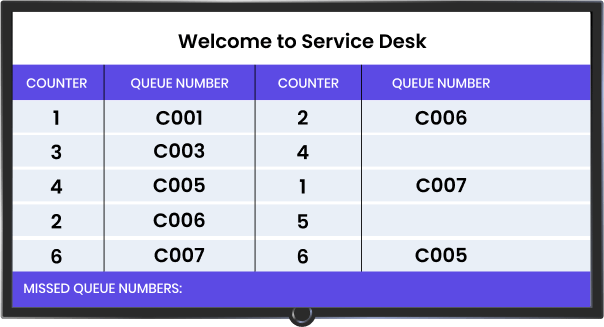
New digital screens that use less power have better parts. They use LED lights and sensors that adjust the brightness automatically, using 30 to 40 percent less energy than older screens. The materials used are also better for the planet, like recycled aluminum and plastics that are less toxic.
But the biggest improvement is the modular design. If a part breaks, you just replace that one part, not the whole machine. Instead of throwing out the whole screen after four years, you can make it last for eight years. This cuts the pollution caused by making new machines in half. This is not just about helping the environment. It is also about spending money more wisely. Fewer replacements mean the company spends less money on buying new machines.
Smart Software That Automatically Reduces Energy Load
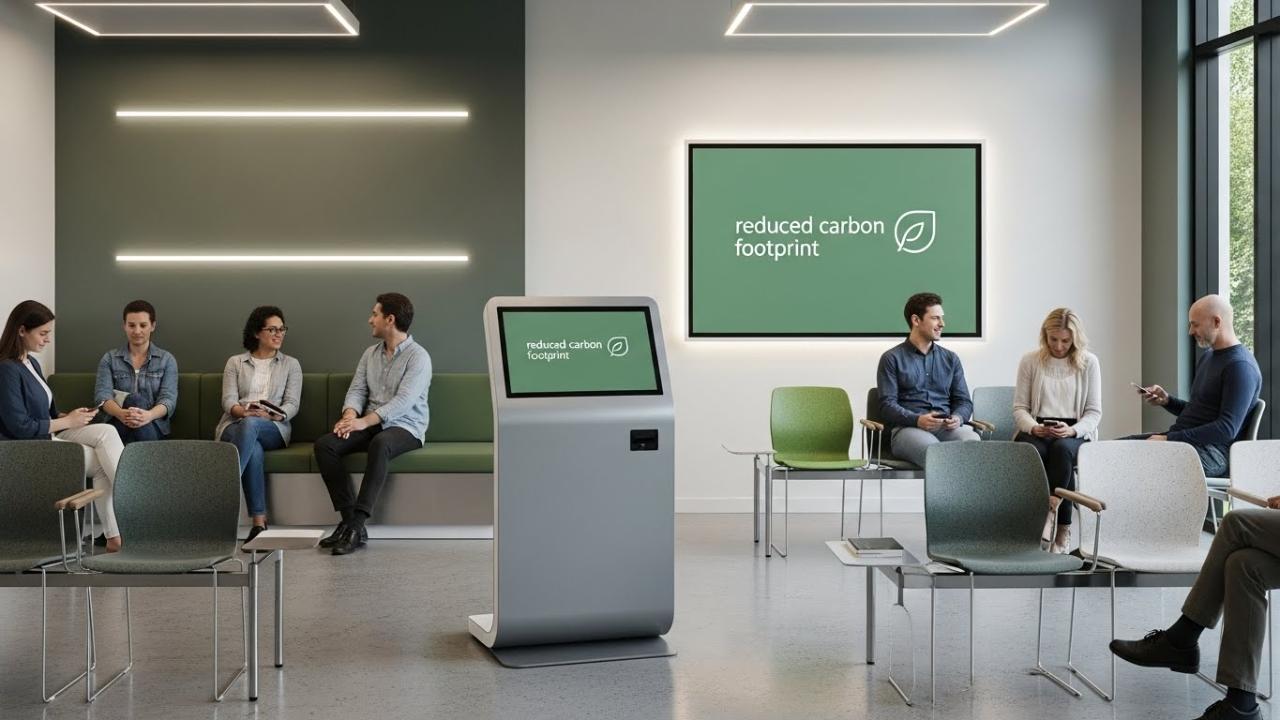
Saving energy is not only about the machine parts. The computer software is where you can save a lot of power. Smart programs can automatically make the screens turn off or go to sleep when not many people are around. This happens without a person having to push a button.
Also, the program can check for problems from far away. This means they do not need to send a repair truck and a worker to the site as often, which saves gas and cuts down on pollution. The most important part is the predictive logic. This means the system is smart enough to guess what will happen. It can make the computer work less hard and stop any extra moving pictures on the screen. This means you are not just saving energy, but you are also giving customers a smarter and faster experience.
The Circular Lifecycle Approach
Linear thinking doesn’t work anymore: manufacture → deploy → discard. The new model is circular: refurbish components that still function, reuse modular parts across device generations, recycle materials that can’t be repurposed. Components designed for disassembly make this possible. When a kiosk reaches end-of-life, 70–80% of its materials should re-enter the supply chain, not a landfill.
| Lifecycle Stage | Carbon Reduction Opportunity |
| Manufacturing | Use recycled materials, low-emission production processes |
| Deployment | Choose energy-efficient models, right-size device placement |
| Operation | Enable adaptive power modes, cloud-based energy monitoring |
| Maintenance | Prioritize remote diagnostics, reduce physical service trips |
| End-of-Life | Design for disassembly, partner with certified recyclers |
How Sustainable Digital Programs Improve CX and Reduce Costs
The business case for green queue systems isn’t about doing the right thing. It’s about doing the smart thing, better customer journeys, lower operating costs, and measurable ROI.
Faster Journeys With a Lower Environmental Footprint
Efficient queues mean fewer devices running for extended periods. When your system routes customers intelligently, balancing load across kiosks, minimizing wait clustering, you’re not just improving service speed. You’re reducing the total runtime of your device fleet. Better customer distribution prevents kiosk overuse.
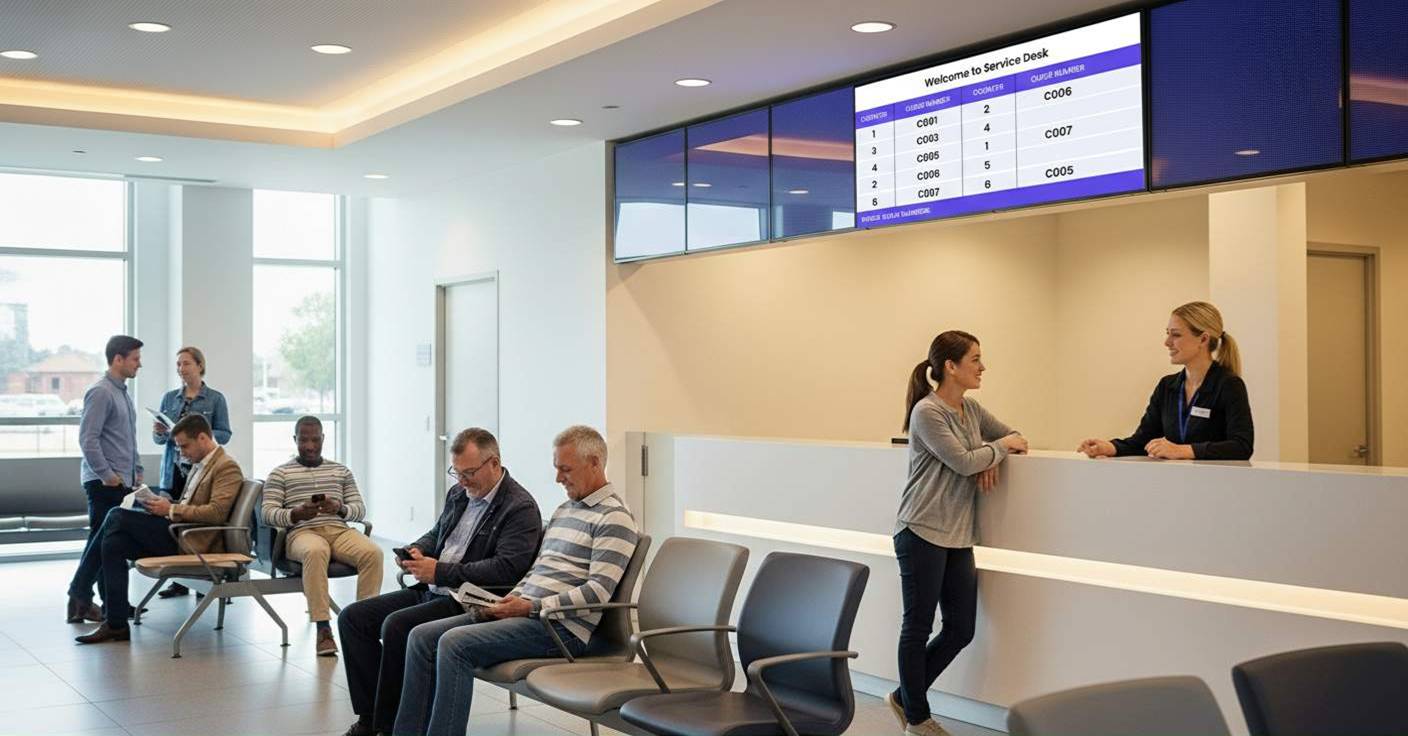
Instead of 3 displays running at full brightness while two sit idle, your system dynamically adjusts based on real-time flow. That’s energy optimization baked into CX improvement.
Lower Operational Energy Spend Across Multi-Site Networks
A Middle Eastern bank with 42 branches transitioned to energy-optimized kiosks and saw power consumption drop 32% in the first year. A retail chain in North America cut annual energy costs by $78,000 after deploying Qwaiting’s adaptive display logic across 150 locations. These aren’t edge cases. Companies moving to low-carbon kiosk solutions consistently report 20–35% reductions in device-related energy spend. Over a five-year horizon, that’s six figures in savings for mid-sized networks.

“Switching to Qwaiting’s energy-optimized kiosks helped us cut power use across 42 branches by 32% in just one year.”
— Operations Head, Global Retail Brand
Sustainability as a Brand Differentiator
Environmental leadership builds trust with customers, regulators, and investors. When a healthcare system announces it’s running carbon-neutral waiting areas, patients notice. When a government service center reports reduced energy consumption, taxpayers notice. Green CX programs strengthen corporate perception in ways that traditional marketing can’t. You’re not claiming sustainability, you’re demonstrating it through measurable infrastructure decisions.
Mini Case Insight: A Southeast Asian telecom provider reduced kiosk maintenance emissions by 40% after deploying remote diagnostics, cutting truck rolls from 800 to 480 annually.
Building a Scalable Low-Carbon Queue & Display Strategy
Sustainability at scale requires a framework, not a one-off pilot. Here’s how enterprise operations teams are approaching it.
A Step-by-Step Enterprise Framework
- Conduct a full device energy audit: Measure current consumption across all kiosks, displays, and queue management endpoints.
- Identify high-consumption hotspots: Find locations where devices are oversized, always-on, or underutilized.
- Prioritize energy-efficient hardware and adaptive displays: Build a procurement roadmap for phased hardware refresh.
- Transition to cloud orchestration for remote control: Enable centralized energy management and real-time adjustments.
- Deploy analytics to monitor usage, carbon, and customer flow: Track energy per transaction, device uptime, and flow efficiency.
- Align strategy with upcoming sustainability benchmarks: Ensure compliance with regional ESG standards and reporting requirements.
Procurement Criteria Leaders Should Demand From Vendors
When evaluating kiosk and display vendors, ask for repairability scores, modular design documentation, and open lifecycle transparency. Check standby power consumption, devices should draw less than 2W in sleep mode. Require recyclable materials and sustainable packaging. Demand proof of environmental maturity: third-party certifications, carbon offset programs, take-back guarantees. These aren’t nice-to-haves. They’re table stakes for any vendor operating in 2026 and beyond.
KPIs to track: energy efficiency ratio (kWh per customer interaction), hardware longevity (years in service before replacement), recycling rate (percentage of materials recovered at end-of-life).
Cross-Functional Leadership Needed to Make It Successful
No single department owns this. IT manages the infrastructure, sustainability teams set the standards, finance evaluates ROI, and operations executes deployment. CX leaders define customer journey requirements, facilities manage energy consumption, and procurement negotiates vendor commitments. If these groups aren’t aligned, your green queue strategy will stall. The most successful programs have executive sponsors who force cross-functional collaboration from day one.
Common Mistakes Enterprises Must Avoid
Don’t over deploy screens. More displays don’t equal better CX, they equal higher energy bills and diminishing returns. Avoid closed hardware with short lifespans; you’ll replace devices twice as often. Never ignore lifecycle emissions beyond the operational phase, manufacturing and disposal matter. Failing to enable remote management means you’re burning fuel on unnecessary service visits. And the biggest mistake? Misunderstanding the total cost of inefficiency. Low upfront price doesn’t mean low total cost of ownership.
Also Read: The Ultimate Kiosk Buyer’s Checklist: Costs, Risks, and Must-Have Features
The Future of Green Queue Experiences
The next wave of sustainable customer journey technology is already emerging. It’s not incremental, it’s foundational.
The Emerging Technologies Moving the Industry Forward
- Solar-assisted kiosks are appearing in outdoor environments: airports, transit hubs, and public plazas, reducing grid dependency.
- Ultra-low-power e-paper displays offer always-visible information at 1/100th the energy cost of LCD screens.
- Renewable-powered micro-stations run entire queue systems on localized solar and battery storage.
- AI-based energy optimization adjusts screen brightness in real time to footfall, dimming displays when traffic drops and boosting brightness during peak hours.
These technologies aren’t experimental. They’re in production, and early adopters are measuring results.
From Device-Level Upgrades to Ecosystem-Level Sustainability
The future isn’t about single green kiosks. It’s about large-scale, carbon-efficient customer journey ecosystems. Global enterprises are shifting toward end-to-end low-carbon CX architecture, where every touchpoint, from virtual queuing apps to in-branch displays to backend orchestration platforms, is designed for energy efficiency. This is systems thinking applied to sustainability. When your entire customer flow infrastructure operates on low-power principles, the cumulative impact is massive.
Final Takeaway
Sustainable queue and display strategies deliver better customer experiences, lower operational costs, and stronger brand leadership. The companies redesigning their digital infrastructure around energy efficiency aren’t just checking ESG boxes, they’re building competitive advantages that compound over time. Lower energy spend, longer hardware lifecycles, reduced maintenance overhead, and measurable carbon reductions create operational leverage that legacy systems can’t match.
If you’re managing multi-site kiosk networks, digital signage programs, or queue management systems, start with an energy audit. Measure your current footprint, identify high-consumption hotspots, and map a transition strategy. The technology exists. The business case is proven. What’s left is execution, and the best time to start was yesterday.
Book your free consultation call with Qwaiting experts today, and build the next generation of low-carbon customer journeys.