
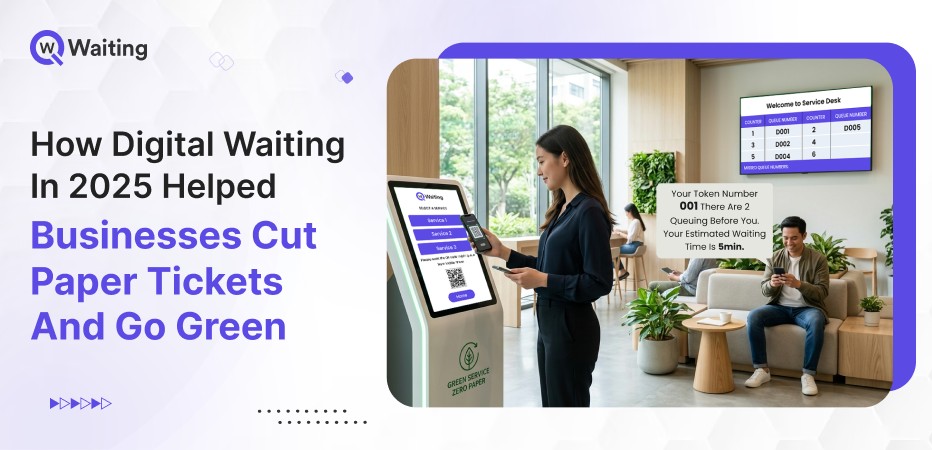
In 2025, leaders across industries like hospitals, banks, and stores faced a tough challenge. They wanted to make their services better for customers while also being kinder to the planet. Many people focused on big projects, but they often missed a small problem sitting right at the front desk: paper tickets.
In busy places, thousands of these little slips were printed every single day. People would hold them for a few minutes and then throw them away immediately. This created a huge amount of trash that was hard to ignore or dispose of. It was a constant waste of paper that didn’t fit with the goal of being more eco-friendly.
To fix this, many companies started working with Qwaiting. They swapped out paper tickets for virtual lines. Instead of holding a piece of paper, people could join a line using their phones. This small change did a lot more than just make things run smoother. It completely stopped the waste from paper tickets and showed that even small changes can help the Earth in a big way.
Here’s how Qwaiting helped:
The Challenge
Even though many businesses spent a lot of money on new technology, many of their offices were still stuck in the past. They were still using old-fashioned ways to communicate and help their customers.
For example, many places still made people stand in long lines or grab those little paper number tags from a machine. It felt weird to have a fancy smartphone in your pocket but still have to use a piece of paper just to wait for your turn. This old way of doing things was slow, messy, and really not great for the environment.
Businesses were still relying heavily on:
- Thermal ticket printers
- Ink cartridge consumption
- Manual paper-based waiting workflows
- Physical appointment confirmations
- Non-reportable sustainability practices
A moderately busy location handling 250–600 visitors per day could generate tens of thousands of tickets annually. Multiply that across branches or facilities, and paper waste becomes operationally significant.
Leadership teams needed solutions that could modernize experiences while supporting ESG targets without disrupting frontline delivery.
The Transformation
Organizations deployed Qwaiting’s virtual queuing framework to replace physical touchpoints with mobile-first engagement:
- Queue entry via personal devices
- QR-based self check-in
- Digital notifications through SMS and WhatsApp
- Paperless appointment confirmations
- Cloud-based queue records
- Real-time flow visibility for staff
Visitors joined and tracked queues digitally, removing the need for printed tickets entirely. Administrative logging and reporting shifted away from paper trails toward centralized analytics.
The transition required minimal behavioral change from customers and produced immediate operational and environmental gains.
Adoption Across Industries
Healthcare Providers
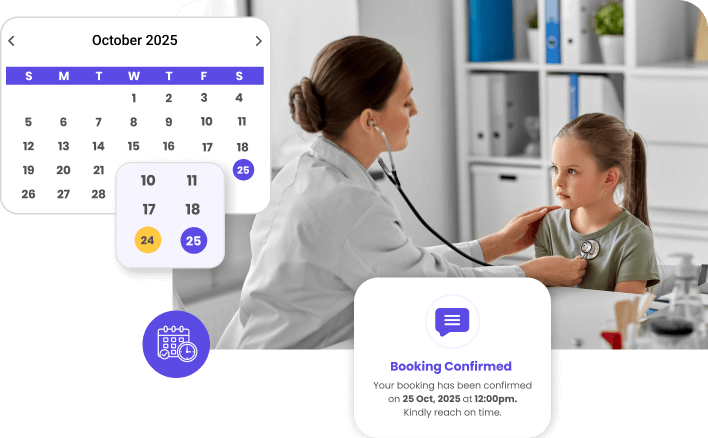
Patient intake moved away from printed tokens, reducing reception congestion while eliminating continuous paper consumption.
Retail Networks
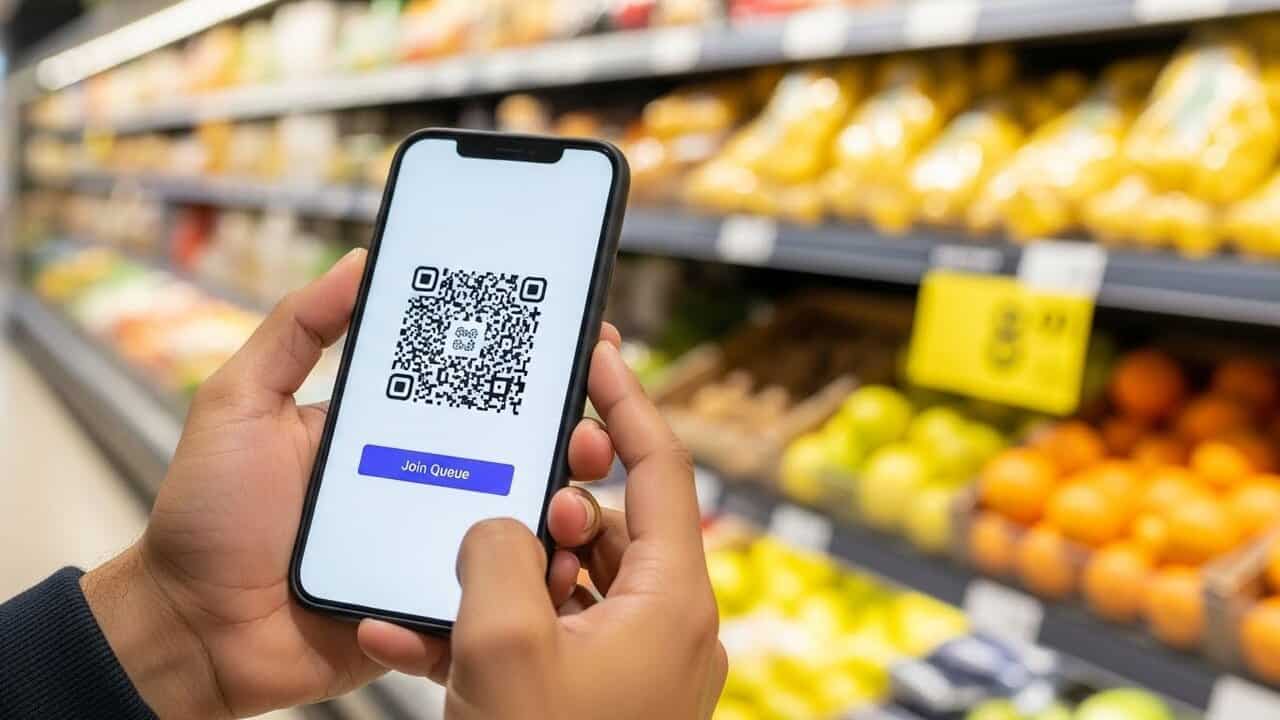
Peak-hour traffic and promotional events were managed virtually, replacing disposable queue slips with digital entry.
Banking Institutions
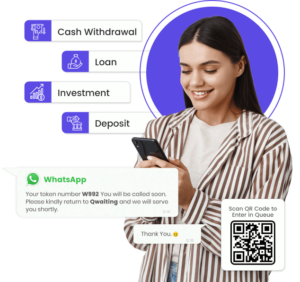
Branches modernized customer flow infrastructure by retiring ticket printers and enabling mobile-led queue access.
Public Service Centers
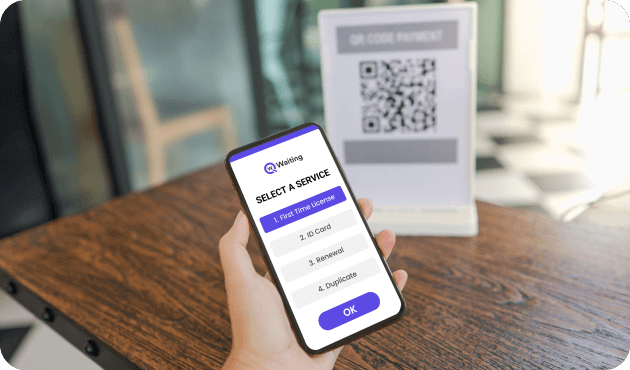
Citizen services implemented paperless intake aligned with modernization mandates and sustainability objectives.
If your business also wants to contribute towards the greener operations but don’t know how and where to start from, you must read our blog:
The Green Queue: Designing Low-Carbon Kiosk & Display Programs
Measured Environmental Impact
Using conservative modeling benchmarks from 2025 deployments:
Per Location (Annual):
- Tickets eliminated: 75,000 — 180,000
- Paper saved: 75 — 180 kg
- Tree equivalent preserved: 8 — 20 trees
- Ink usage: Nearly eliminated
- Printer hardware strain: Significantly reduced
Enterprise-Level Scaling:
25 Locations
- Tickets removed: 1.8M — 4.5M
- Paper saved: 1.8 — 4.5 tons
- Tree equivalent preserved: 200 — 500
100 Locations
- Tickets removed: 7.5M — 18M
- Paper saved: 7.5 — 18 tons
- Tree equivalent preserved: 800 — 2,000
These figures exclude secondary environmental gains from reduced cartridge disposal, logistics, and energy use — meaning the total sustainability impact trends higher.
Business Outcomes Beyond Sustainability
While environmental progress was measurable, organizations also reported:
- Faster visitor onboarding
- Lower consumables spending
- Reduced equipment maintenance
- Stronger brand perception among customers
- Clear sustainability metrics for reporting
- Improved frontline workflow efficiency
This shows us that being kind to the planet and making customers happy don’t have to be separate goals. In fact, when a business updates its tools, these two things actually help each other. When a company stops wasting paper, the service usually feels faster and more modern for the person waiting. It proves that a business can do the right thing for the Earth while also doing a great job for its customers at the same time.
Strategic Perspective
The big changes we saw in 2025 taught us an important lesson. Helping the planet doesn’t always require spending a fortune on huge, complicated projects. Instead, some of the best ways to help the environment come from fixing small, everyday habits. By looking at the simple things we do every day, like how we wait in line, we can find big ways to stop waste.
By moving waiting lines onto phones and computers, companies turned millions of paper tickets into “zero-waste” digital steps. This change didn’t make things slower or harder for anyone. In fact, it kept everything running smoothly while completely getting rid of the trash. It shows that we can be high-tech and eco-friendly without making life more difficult.
Conclusion
In 2025, moving waiting lines to a digital queue system became a perfect example of how modernizing a business helps the Earth. By getting rid of paper tickets at the front door, companies saved money, made things easier for people, and helped the environment all at the same time. It turned out to be a win for everyone involved.
For the people in charge, the lesson was very clear. Updating how customers wait isn’t just about making things faster or more organized. It is actually a powerful way to protect the planet. It proves that using smart technology is one of the best ways to put a “green” strategy into action in the real world.
The future towards green technology starts with Qwaiting. Switch to Qwaiting today, and enjoy your 14 day paperless, digital trial today.