
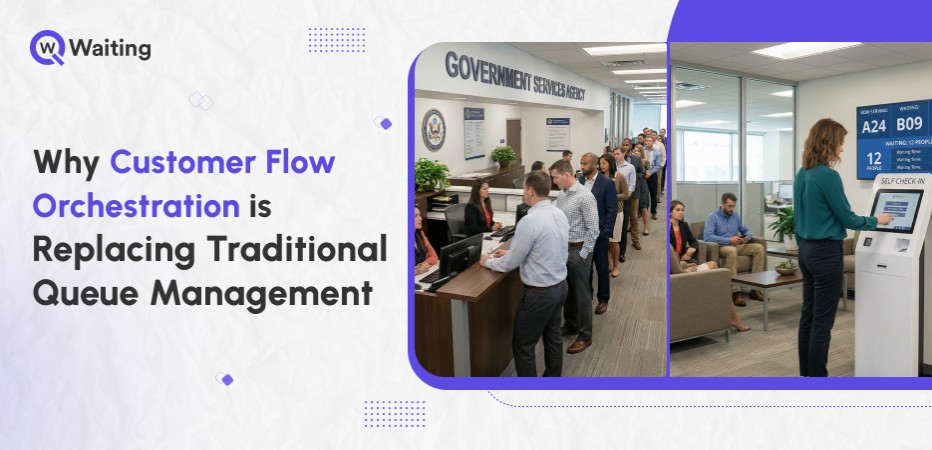
Walk into any business today, and you might see companies spending millions of dollars on fancy apps and new technology, yet their actual buildings still rely on long, slow lines. For a long time, businesses only cared about how long customers stood in line. Now, they need to care about their entire experience from start to finish. Instead of just trying to make a line move faster, they need to “orchestrate” the visitor journey.
With the evolving expectations and technology, people expect everything to be easy and fast, like booking a cab or ordering food for themselves. Standing in a still line feels like a total waste of time. Companies have to stop thinking about just “the line” and start thinking about how to keep up with modern, fast-paced lives. To achieve success, it has become a mandatory asset for businesses to have a queue management software for better customer flow optimization.
Why Traditional Queue Management Is Losing Strategic Relevance
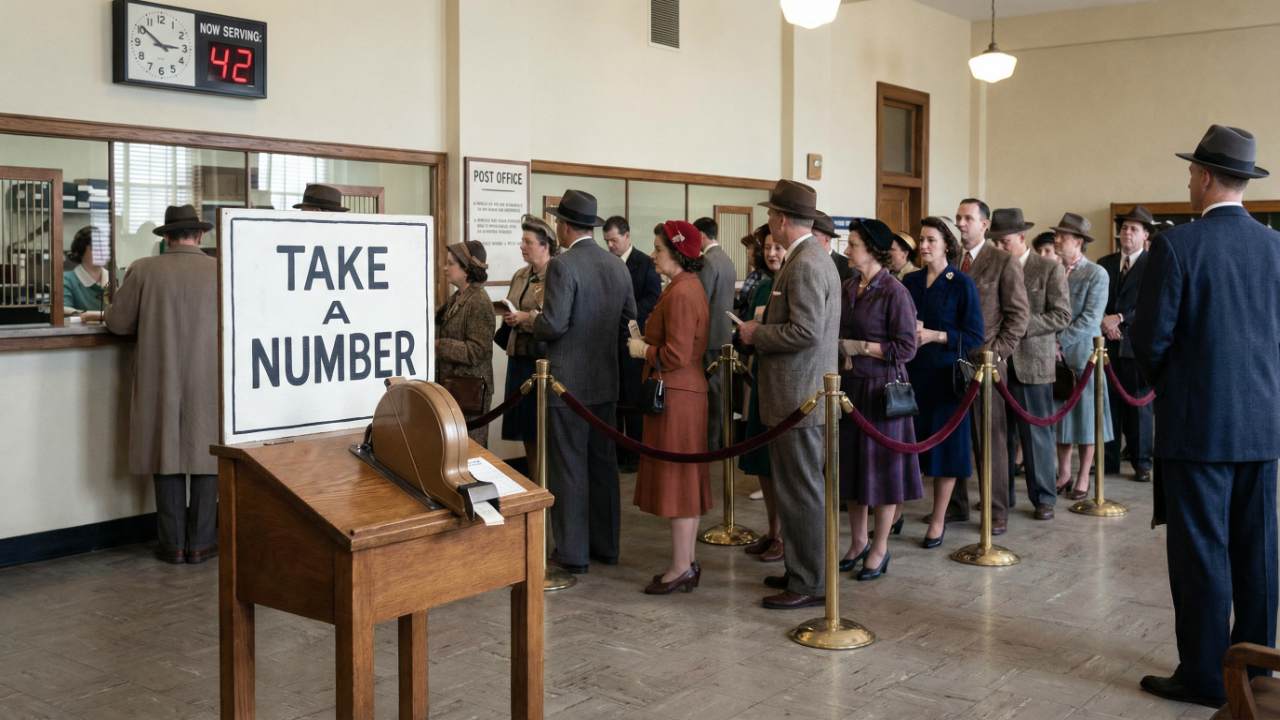
In the past, lines helped keep crowds fair and organized. They worked well for 1980s banks or hospitals, but today, just managing a line isn’t enough for our modern world. Traditional queuing is no longer an option to rely on for businesses. Here’s why:
Where Legacy Thinking Breaks
Traditional systems have a big problem: they only track people who walk through the door. They completely ignore everything you did beforehand, like booking an appointment online or getting a text confirmation. This makes things messy because someone who planned weeks ago gets treated the same as someone who just walked in off the street. It’s frustrating to fill out forms on your phone only to be asked the same questions again in person.
Because these systems are “blind” to your history, they don’t give leaders the right information. They might know how long the line is, but they don’t know why people are getting annoyed or giving up halfway through. They can’t see which parts of the visit are actually broken. To do a better job, companies need to stop just watching the clock and start looking at the whole journey from the first click to the final goodbye.
Executive-Level Risks of Remaining in Queue Mode
Revenue leakage happens silently. If a line is too long, customers don’t complain; they just walk out the door and never come back. Legacy systems can’t track this because they don’t know who those people were or why they left. This means companies lose out on all the money those customers would have spent over many years without even realizing it.
Another big problem is how staff members spend their time. Without a smart plan, a highly trained expert might end up doing easy tasks while people with complicated problems are stuck waiting. This wastes talent and creates a huge traffic jam. Because the leaders track the wrong data and often make the wrong choices. They focus on how fast a line moves instead of making the whole visit better, which can actually lead the company in the wrong direction.
For a deeper perspective on the business risk behind outdated approaches, explore our blog on:
Understanding Customer Flow Orchestration
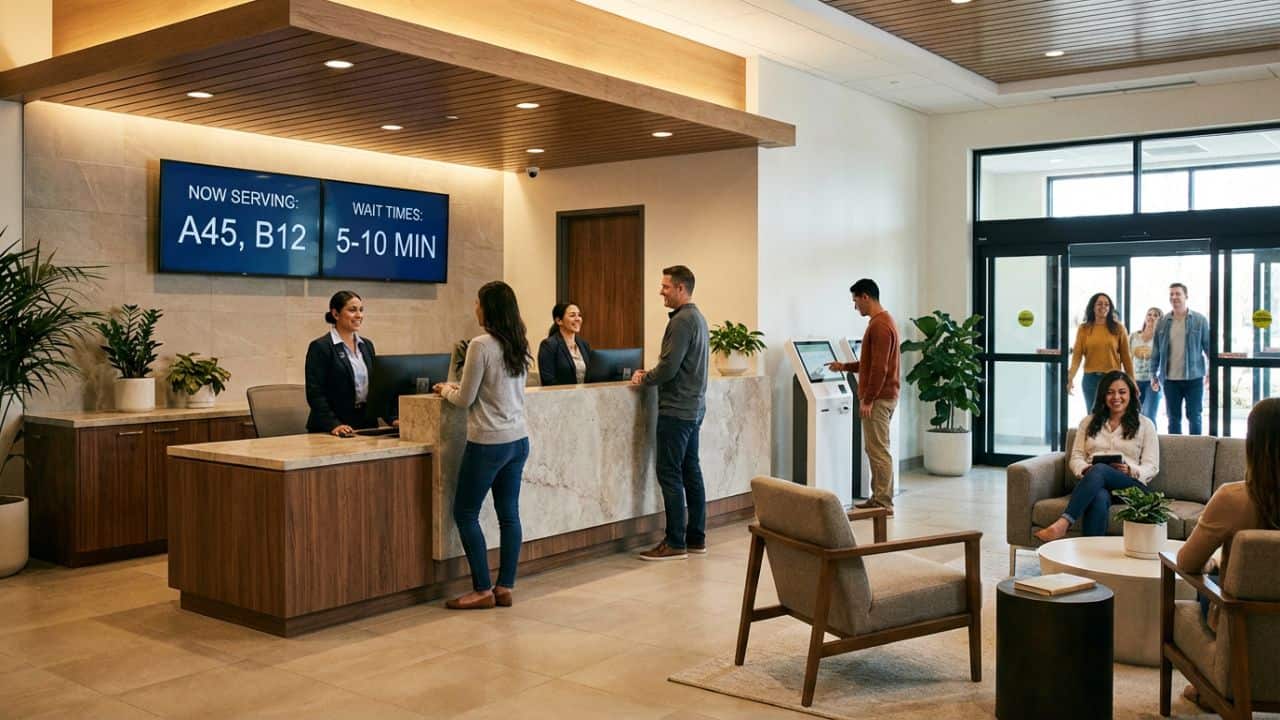
Customer flow orchestration coordinates the entire visit journey; before arrival, on-site, and post-service, using real-time data. Traditional queue management only organizes waiting lines. Orchestration manages intent, routing, prioritization, and experience outcomes end-to-end.
Here’s why modern customer flow orchestration matters:
Core Capabilities That Matter
-
Virtual access and pre-arrival engagement
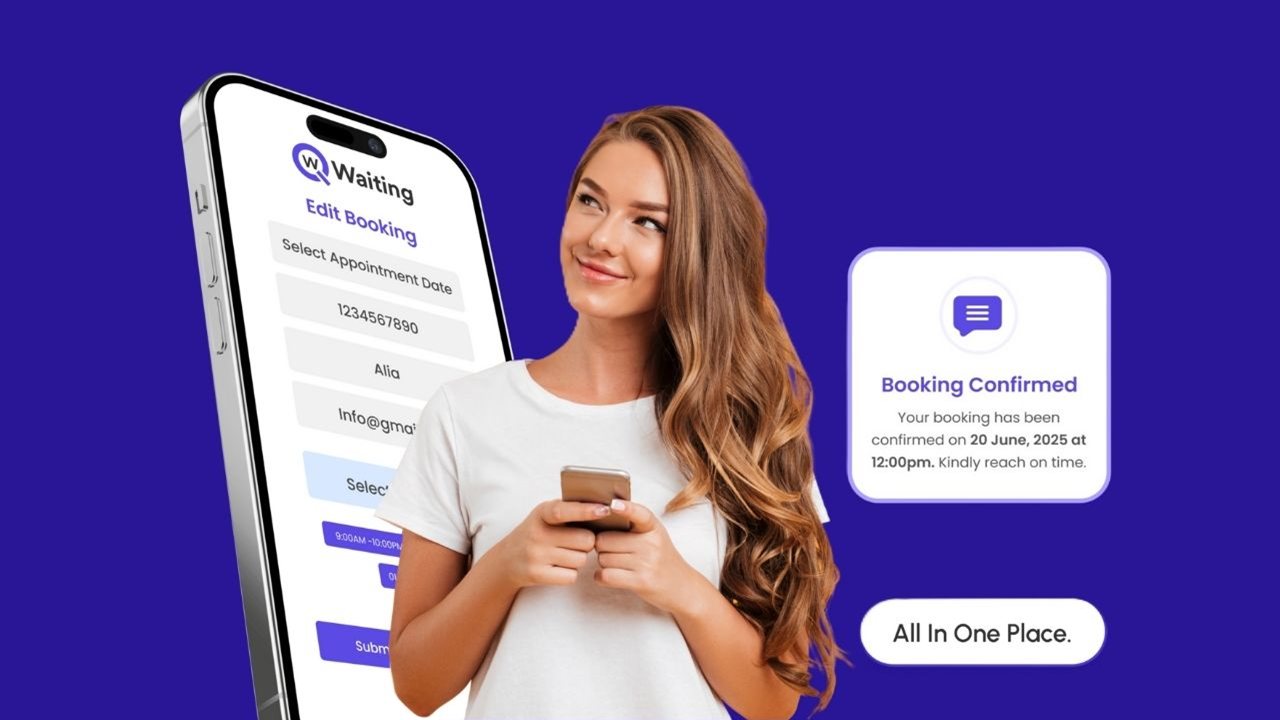
Virtual queuing lets visitors pre-book their appointments at home on their phone, fill out forms, and send over paperwork early. This eliminates the need for sitting around in a waiting room, and when customers finally arrive, the staff is already prepared and knows exactly what they need.
Instead of wasting time on basic paperwork, staff members can focus on helping visitors with more important questions. This makes the whole visit much faster and much more helpful since the experts can spend their time where it matters most.
-
Intelligent routing
It is like having a helpful guide who knows exactly where you need to go. Instead of making everyone stand in the same long line, the system sends visitors to the right place based on what help they need.
For example, at a bank, someone who needs a complicated home loan would go straight to an expert, while someone just cashing a small check will be guided to a quick self-service machine.
This isn’t about picking favorites or being unfair. It’s about being smart with everyone’s time. By organizing people this way, the business runs much more smoothly, and everyone gets the specific help they need much faster.
-
Identity-driven recognition
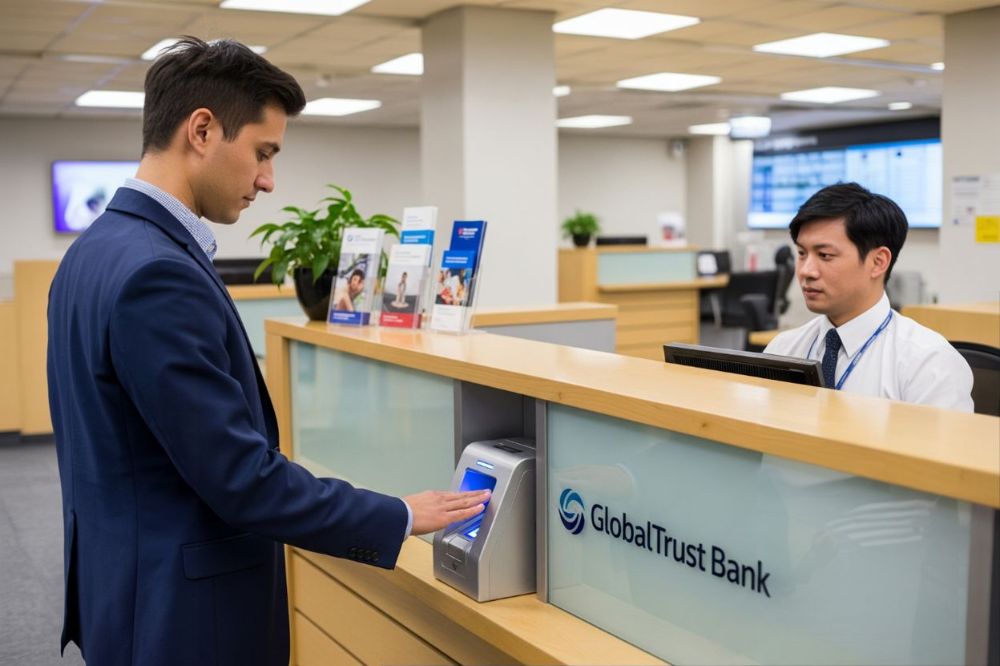
Facial recognition or biometric machines can recognize people the moment they arrive, so they don’t have to explain themselves over and over. By using appointment info or even a quick face or fingerprint scan, the staff instantly knows what they need and who they are. This means you won’t have to answer the same old boring questions every time you walk in.
This makes everything move much faster and shows that the business actually knows what it’s doing. When a team member can greet customers by name and already has the file ready, it saves time for everyone. It makes the whole experience feel professional and smooth instead of confusing and slow.
-
Unified analytics
Analytics lets leaders have a super-powered telescope for their business. Instead of just looking at old reports about how long people waited yesterday, they can calculate how many visitors they will expect in the coming days. They can spot the specific moments when people get frustrated and decide to leave, which helps them fix problems before they get worse.
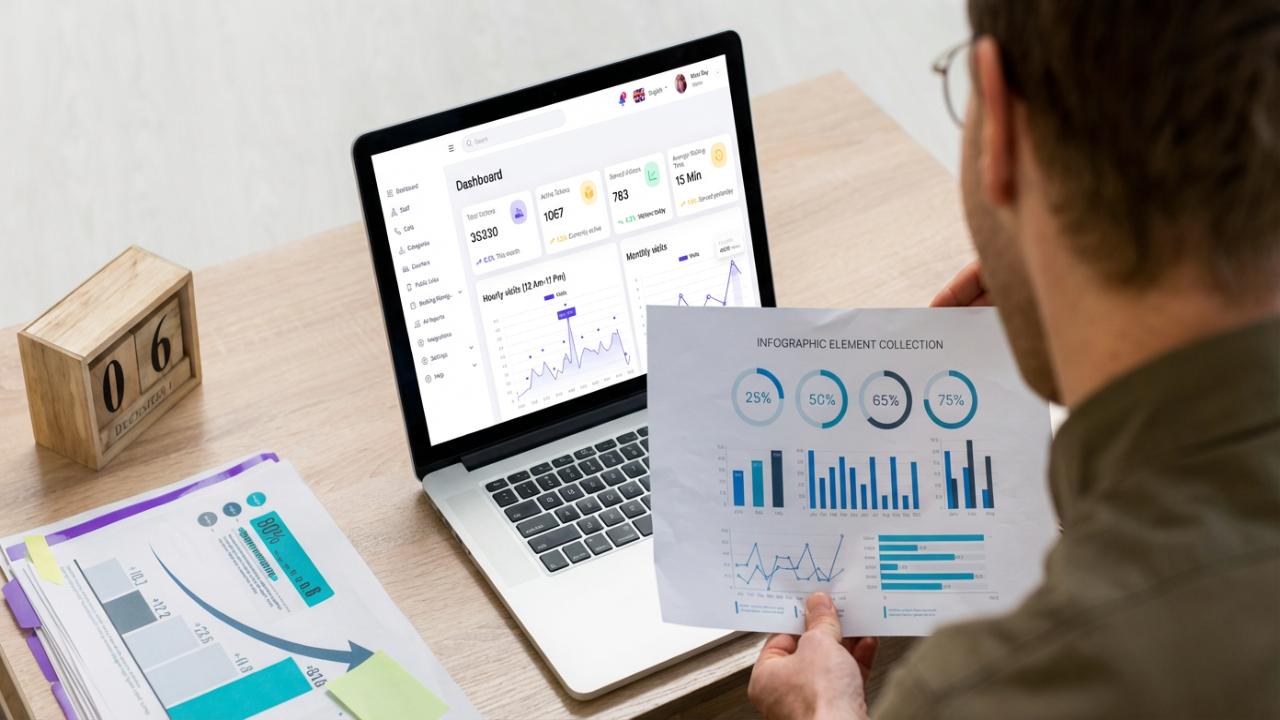
This high-tech data also helps them plan for the future. They can see patterns and predict when the busiest times will happen, so they always have enough staff ready to help. Instead of just guessing, leaders can make smart choices that keep things running smoothly and make sure every customer has a great experience.
Leadership teams looking to operationalize these insights should also consider the performance metrics that truly signal operational efficiency. Read our blog on:
Financial Impact: From Tool to Revenue Enabler
When a business makes things easier for its customers, they actually make more money. For example, if a store has a super smooth checkout, people are much more likely to actually buy what’s in their cart. In a hospital, if the paperwork is easy to finish, patients are more likely to show up for their appointments.
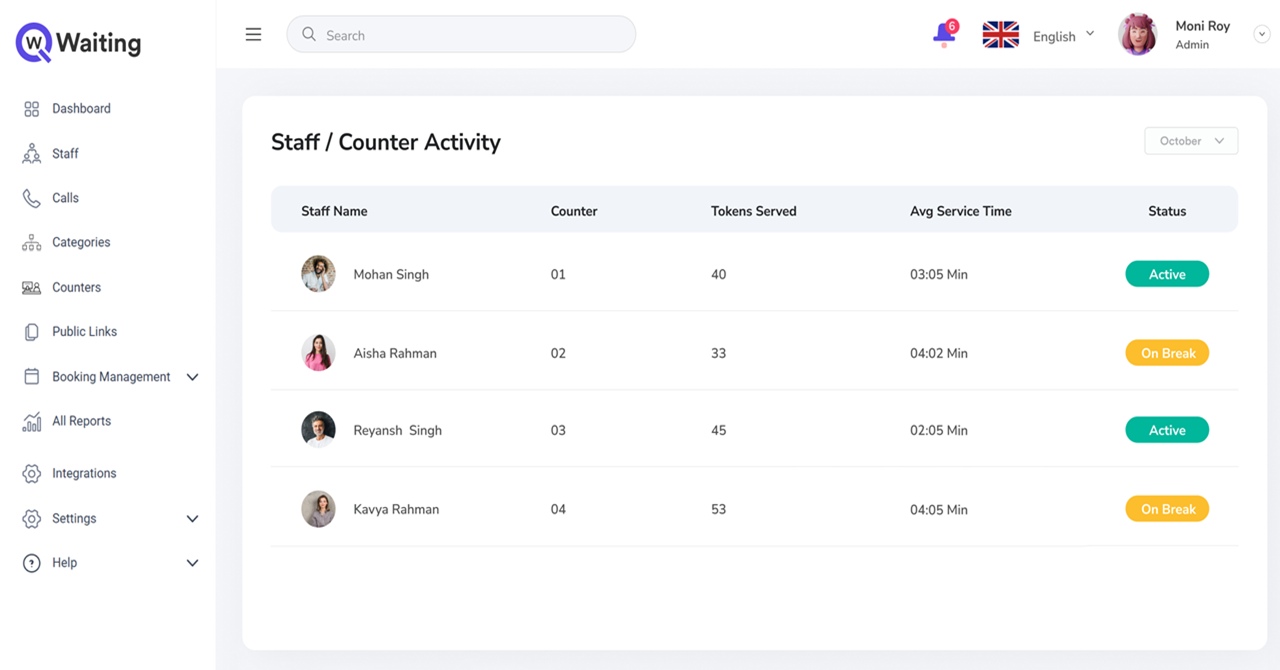
These smart systems also help businesses use their resources better. They show exactly when staff members are just sitting idle and when things are getting too crowded. This helps managers allocate staff members more efficiently. Plus, by keeping customers from getting frustrated and leaving, the company saves a lot of money. Even a small change, like keeping a few more people from walking out the door, can add up to millions of dollars for a big company.
Also Read: Customer Flow Design for the Perfect Waiting Experience
Transformation Across Industries
Smart queue systems work everywhere, but each business uses them differently. Whether it’s a hospital or a shop, the goal is always the same: stop the frustration, use staff wisely, and keep customers happy.
Here’s how smart customer flow orchestration is transforming operations across different industries:
Healthcare Ecosystems
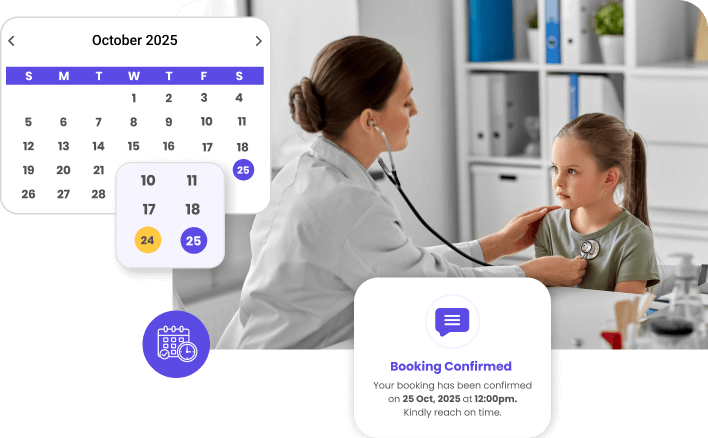
In a hospital, a smart healthcare queue system connects everything from a patient’s first doctor’s visit to their final check-up. It makes sure your medical records and test results follow you so you don’t have to keep explaining your health history to every new doctor you meet. By pre-booking appointments via the smart appointment & walk-in queue system before you arrive, patient check-in time can drop from 12 minutes to less than 3.
Banking Networks
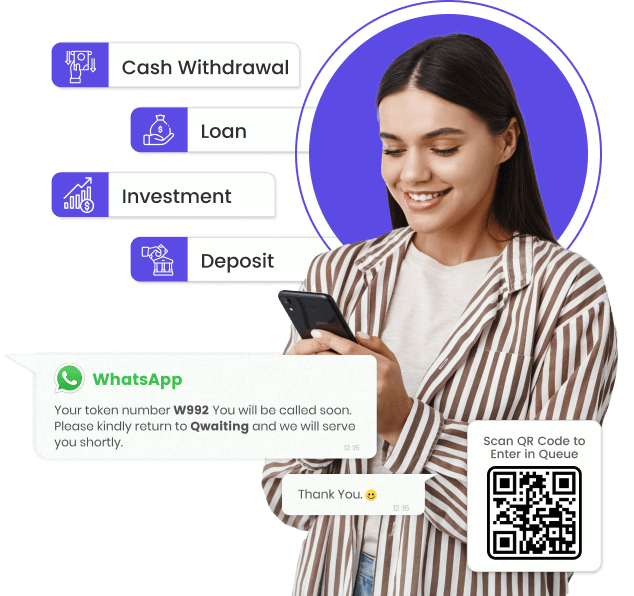
A bank queue management system makes sure you talk to the right person for your specific problem. If you need a house loan, it automatically sends you to an expert in home loans instead of making you wait for a regular teller. This way, you don’t waste time talking to someone who can’t help you, and the bank’s most skilled workers can focus on the hardest tasks.
The system also helps separate simple chores from big ones. People who just need to deposit a check are guided to quick machines, while customers with bigger needs get fast access to a person.
Retail Environments
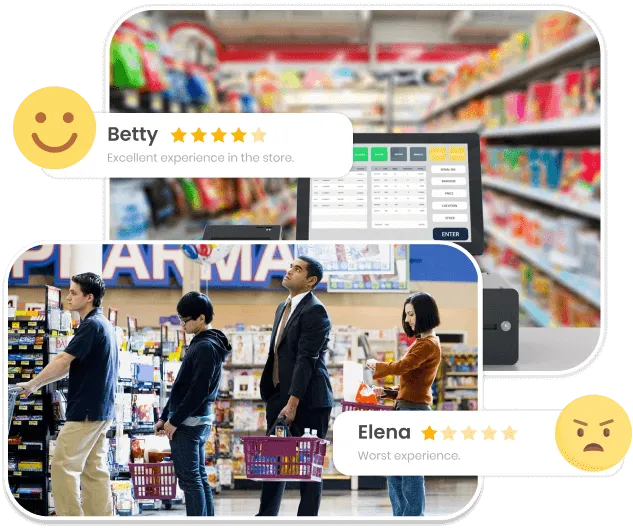
Retail stores mainly face high footfalls on weekends, and it can feel like a total mess. A smart retail queue management system helps “smooth out” the traffic so the store doesn’t get overwhelmed.
These systems help keep people from giving up and walking out. By making the wait feel shorter and more organized, the store makes sure you actually finish your shopping instead of getting frustrated and going home empty-handed.
Government Services
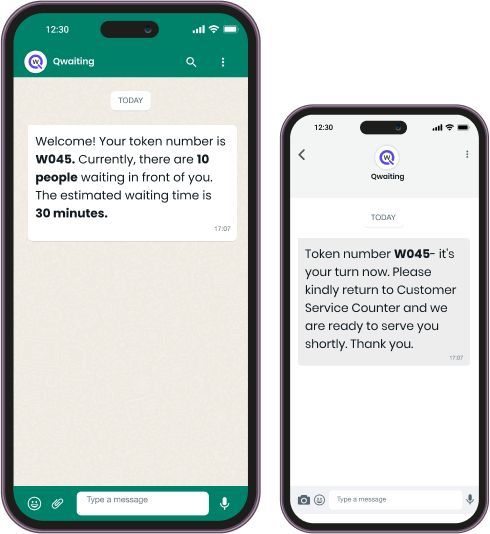
A visit to a government office can be the most frustrating thing. An e-governance queue solution fixes this by being totally honest and robust. It sends real-time updates to citizens’ phones so they can track their requests in the process.
This technology helps the government plan better with the limited money and staff they have. By looking at the data, they can predict exactly when the office will be the busiest. Instead of just guessing, they can make sure they have enough teams ready to help when the crowds show up. This makes the whole experience feel much more professional and less like a confusing maze.
Here is a simple comparison of different industries of how switching operations to a smart orchestration approach helped transform their operations for a measurable result.
| Industry | Primary Challenge | Orchestration Approach | Measurable Result |
| Healthcare | Fragmented care journeys, no-show rates | Pre-arrival coordination, intelligent scheduling | 35-45% reduction in patient wait time;
28% improvement in appointment adherence |
| Banking | Misallocated expertise, branch inefficiency | Advisor routing, priority segmentation | 40% smaller branch footprint with maintained service quality;
25% increase in complex service conversions |
| Retail | Checkout friction, inconsistent experiences | Mobile queue-ahead, VIP recognition | 55% reduction in peak wait times;
18% decrease in basket abandonment |
| Government | Citizen frustration, resource constraints | Journey transparency, demand forecasting | 60% reduction in complaints;
30% improvement in staff utilization |
Leadership Roadmap for Transition
To grow and stay competitive, big companies must move past simple tools. When businesses open many locations, they need smart systems to handle the complicated job of keeping every customer happy.
In the following section, we’ll break down the leadership roadmap for moving beyond basic tools to a fully coordinated strategy that scales alongside your business.
Cross-functional alignment:
Success depends on synchronizing departments like IT, finance, and marketing to work together. If teams work in isolation, the system will feel disconnected and fail to deliver. True orchestration requires every part of the business to stay aligned on the same goal.
Experience-first redesign:
Instead of just putting old, messy records onto a computer, “experience-first” design starts with the goal: a happy customer. By working from that first visit, businesses can build a better system from scratch rather than just speeding up a broken process.
Phased capability expansion:
This strategy manages risk by implementing core functionality first. Begin with appointment scheduling and mobile check-in; add intelligent routing once staff adapt; introduce predictive analytics after baseline data accumulates.
Don’t just watch the clock; watch the whole journey. Real success means checking if customers actually finished what they started and where they got stuck. By tracking these “journey efficiency” scores, businesses can see exactly how smooth service translates into higher sales and recovered revenue.
The Future of Customer Movement
The shift from queue management to customer flow orchestration represents a fundamental change in how organizations view customer relationships. We’ve transitioned from managing lines to managing lifecycles, and from controlling congestion to coordinating journeys.
Looking ahead, predictive orchestration will anticipate customer needs even before they express them. AI-driven insights will optimize staffing and routing with a level of precision that human judgment cannot achieve. Additionally, coordination across different locations will allow customers to move seamlessly between sites, ensuring a consistent journey regardless of geographical boundaries.
Book your 14-day free trial with Qwaiting today, because the message is clear: customer flow orchestration is a current need, not just a future goal.
Must Read: The Future of Customer Flow with RFID, Beacons, and Kiosks