
Security checks at big events are confusing. They are meant to keep everyone safe. But they often cause the most problems. Nobody really talks about this strange fact. Think about going into a stadium before a big game, or to a concert, you will see the same mess every time. The lines are very long and confusing. People do not know where to go, and guards look overwhelmed.
The real problem is usually not the security check itself. It is everything happening around it. It is hard to know when a lot of people will suddenly arrive. Guards depend on radios to talk to each other, and use lanes that stay the same all the time. This does not work well if 3,000 people go to one gate instead of only 1,500. Event organizers know security must be good. But they also see people miss the start of the event. Sponsors complain about the mess getting in, and people start complaining on social media before the fun even begins.
Smart queue management for events isn’t about replacing security protocols. It’s about giving teams the real-time intelligence and control they need to move crowds safely, efficiently, and without the anxiety that’s become synonymous with getting through the front door.
Why Security Screening is Still the Biggest Bottleneck at Major Events
Modern event planning and its operations are now completely changed. But the tools they use are old and have not gotten any better. A system that worked five years ago for 10,000 people will not work now. Today, that same place might have 25,000 people. Security rules are also much tougher now. Plus, people expect much better service when they arrive.
Here’s how it affects;
The Rising Pressure on Modern Event Operations
The number of people at events is getting bigger. Concerts, sports, meetings, and shows are drawing huge crowds. But it is not just the size that matters. Things are also more complicated now. Today’s events have many different ways for people to get in. There are special lines for important people, for workers, and for reporters. There are also entrances for backstage and regular tickets. All these lines meet up in the same area. Each group needs different checks to get in. Trying to control all these lines by hand causes problems all the time.

Let’s see what are the average wait times people have to wait at different events:
| Event Type | Average Wait Time | Peak Surge Period |
| Sports Stadium | 18-25 minutes | 60-90 min before start |
| Concert Venue | 22-30 minutes | 45-75 min before doors |
| Political Summit | 30-45 minutes | Morning session arrival |
| Trade Expo | 12-18 minutes | Opening hour rush |
The Expectation Shift: From Safe Entry to Smooth Entry
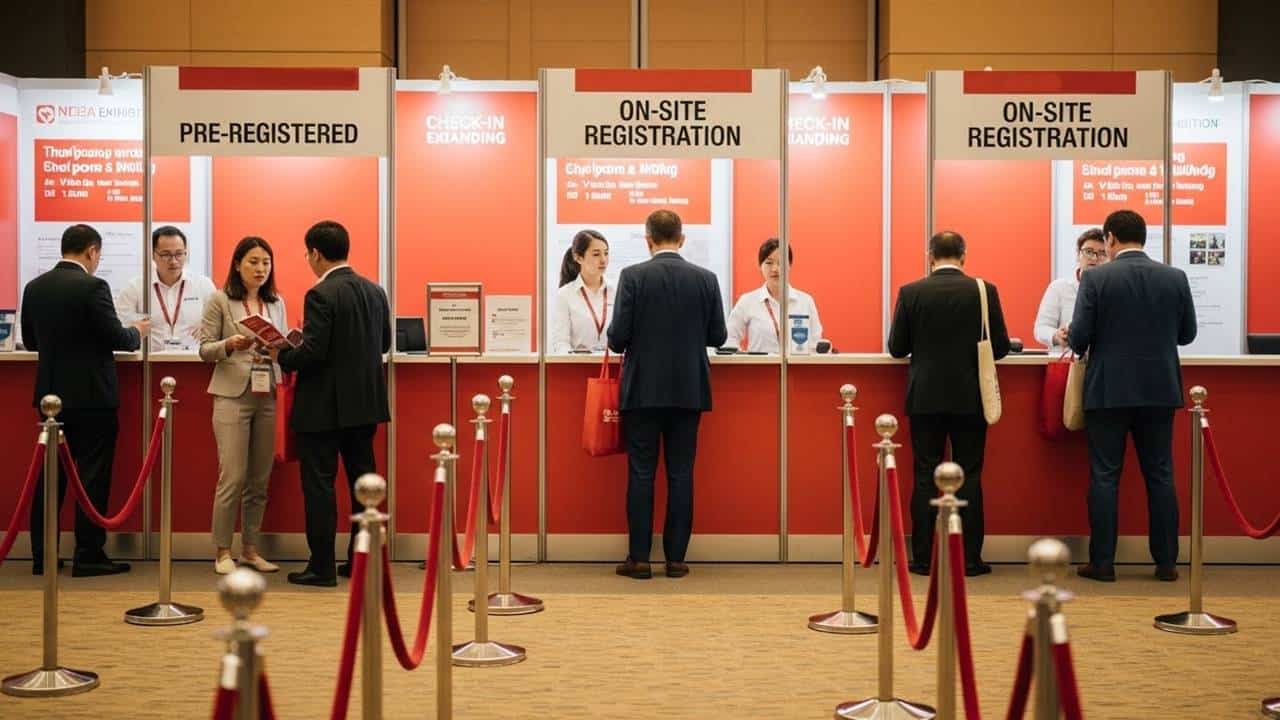
People know that security checks are important. They accept that, to some extent. But they do not like it when things are messy and unorganized. Getting into the event should be part of the experience, not a frustrating hurdle. Waiting 40 minutes in a chaotic line makes people angry. Long waits can hurt the organizer’s reputation and create a negative mood before the event even starts.
Global events are even more challenging to manage. Think about big sports games or meetings hosted by the government. Many different security groups must work together. Private guards, stadium staff, and government police are all involved. This is much harder when everyone has different information. Also, they have no single way to see what is happening at every security spot.
Why Traditional Screening Models Can’t Meet Today’s Demands
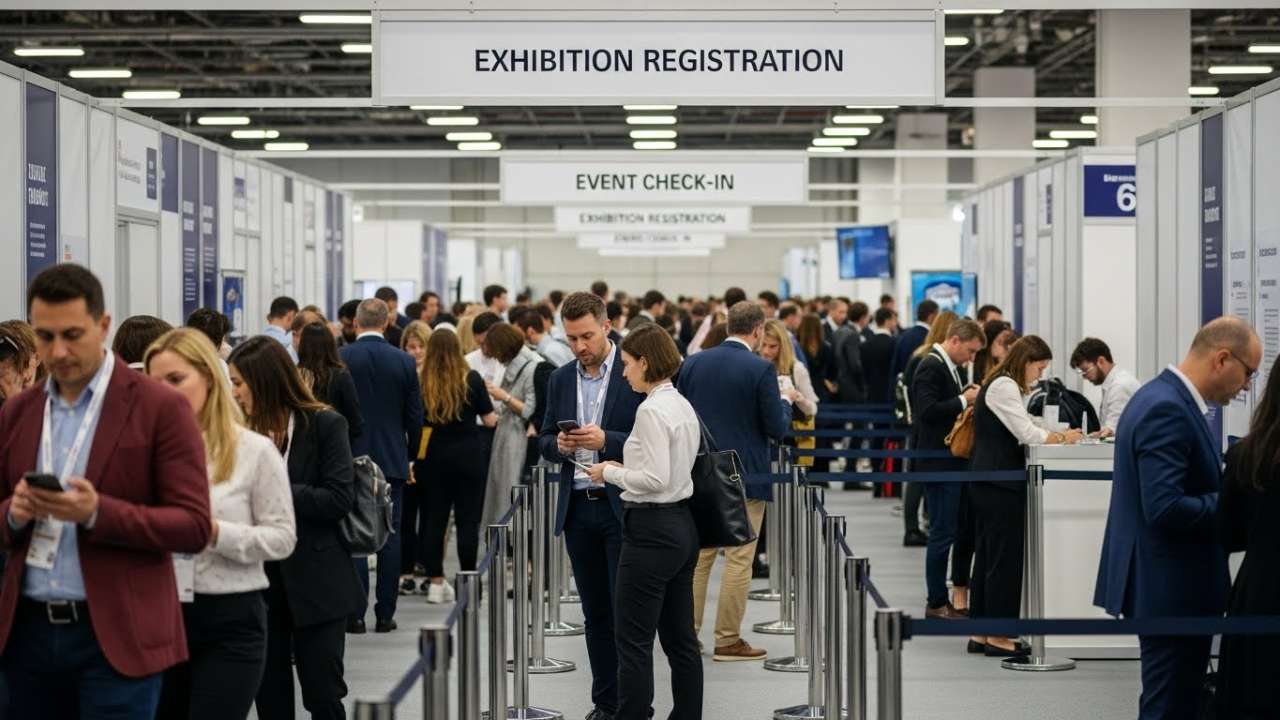
Most venues still rely on manual lane assignment, radio-based coordination between security zones, and static checkpoint configurations that were set up hours before doors opened. The problem? Crowds don’t behave statically. Gate assignments shift. Weather changes foot traffic patterns. Pre-sale data doesn’t always predict actual arrival distribution.
Sometimes, too many people suddenly rush to one security line. This line might not have enough security checks. There is no system to spread these people out evenly. The security team sees the line getting longer. But they do not know why this is happening. They also cannot see if other gates nearby are empty. Someone has to use a radio to ask for help. Then, workers have to be moved over. By the time this happens, 15 minutes have passed. The crowd pressure has built up, and it is now much harder to control.
For a deeper look at how modern queue systems help organizers fix these operational gaps, you can explore our detailed guide on –
why it is essential for organizers to have an event queue management tool
What Smart Queues Actually Change in Security Screening
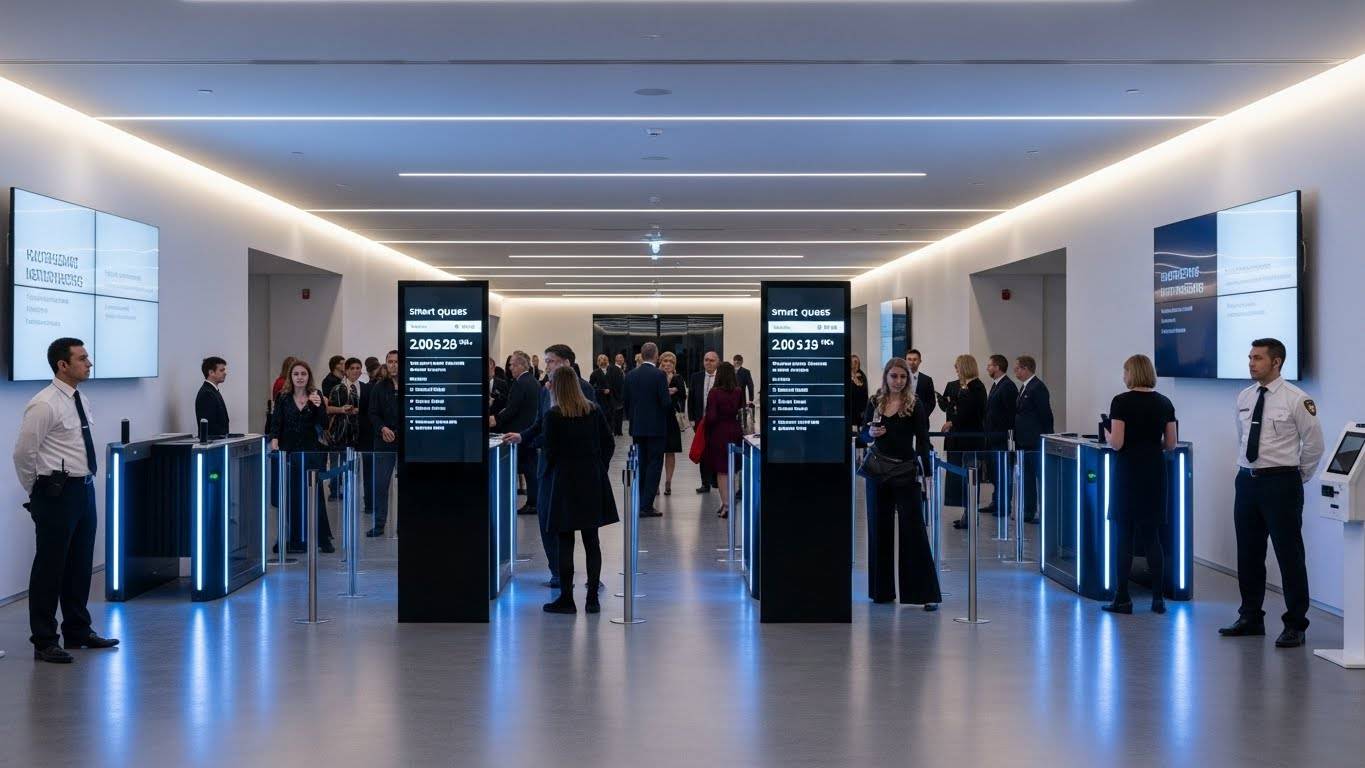
Changing things is not just about using new technology. It’s about replacing guesswork with visibility and giving security leaders the ability to respond before small issues become operational failures.
Here’s how smart queuing can help organizers plan better:
Real-Time Visibility That Security Teams Can Act On
Smart queue systems provide live dashboards that show exactly what’s happening at every entry point. They show how many people are in each line, how slow or fast people are getting through, and also guess how long people will wait. This information is not just for a report later. It is helpful information that they can use right now while the event is going on.
If a lane starts to get crowded, the organizers can see it right away. They can also see why it is backing up. Maybe the security check is slow, a machine is broken, or checking tickets is taking too long. With this information, they can decide what to do right away. They might open a new line quickly, or could send VIPs to a different gate. The response happens in minutes, not after the problem’s already cascaded.
Predictive Wait-Time Intelligence
There is a difference between security checking and just managing crowds. A better security system can guess what will happen next. It uses old information about past events, and uses how many tickets were sold. Then it looks at how people are arriving right now and guesses when the biggest crowds will come.
That means fewer “all hands on deck” panic moments. Staffing gets allocated more efficiently. Machines and security stations can be set up where they are needed most. This is based on how many people are expected, not how things were last year. If the system predicts a huge crowd at Gate B in 20 minutes, the teams can get ready for it. They do not just have to react after the rush happens.
Top Causes of Screening Delays + How Smart Queues Mitigate Each are:
- Uneven lane distribution → Intelligent routing balances load automatically
- Credential verification slowdowns → Pre-issued digital tokens speed up checks
- Poor staff coordination → Unified dashboard eliminates radio confusion
- Unexpected surges → Predictive alerts enable proactive lane opening
- Manual error in lane assignment → Automated instructions reduce human mistakes
Consistent, Controlled Entry for Every Attendee Category
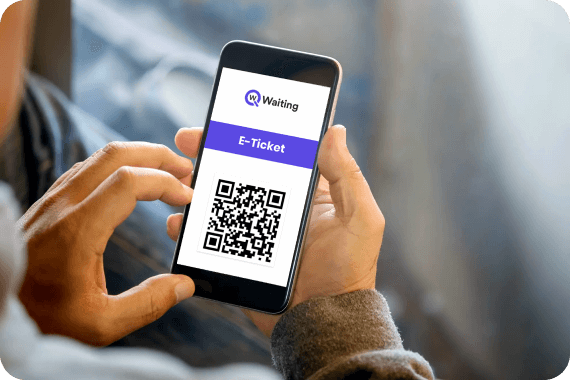
Digital security checks simplify guest entries. Now, people can get digital passes before they even get to the event. They can scan a QR code to check in. Instructions for which line to use are given automatically. This means the workers do not have to make as many fast decisions. People know where to walk before they even show up. Staff know what they need to check before a person reaches their station.
Throughput increases because the system handles routine decisions. It checks tickets, tells people what line to use, and shows how long they must wait. This lets the security guards focus on the real checks. People make fewer mistakes. Everything works the same way all the time. Also, every group of people has a clear way to get in.
Strengthened Risk Reduction & Compliance
Here’s something operations teams don’t always consider upfront: digital logs. Every entry, every scan, every lane assignment gets recorded automatically. For high-security events involving government oversight or multi-agency coordination, this becomes critical for audits and post-event reporting.
It’s also easier to demonstrate compliance with local regulations, especially for international events where screening standards vary by country.
Higher Attendee Satisfaction & Lower Entry Anxiety

Clear visibility into wait times changes the psychology of waiting. When attendees can see “10-minute wait at Gate A” on their phone before they arrive, they make better decisions about when to leave home and which entrance to use. Uncertainty breeds frustration. Transparency defuses it.
“We’ve handled hundreds of large-scale events, and entry has always been the biggest complaint. After deploying smart queuing at our main venue, we saw a 40% drop in guest service issues related to security wait times. People weren’t less secure—they were just less stressed about getting in.”
— Operations Director, Major Sports Arena
ROI Snapshot for Event Decision-Makers
Let’s make this concrete. For a 30,000-attendee event:
| Metric | Before Smart Queues | After Smart Queues | Impact |
| Average entry time | 24 minutes | 11 minutes | 54% reduction |
| Lanes needed at peak | 12 lanes | 8 lanes | 33% efficiency gain |
| Staff overtime hours | 180 hours | 95 hours | 47% cost savings |
| Guest complaints | 340+ | 85 | 75% improvement |
Action Plan for Event Leaders: Deploying Smart Queues the Right Way
Technology solves problems only when it’s implemented with operational clarity. Here’s how to actually deploy an event entry management system that works on day one.
Step 1: Audit the Current Entry Flow
Start by mapping the reality of how crowds move through your venue. Where do bottlenecks form? What time do arrival surges happen? Which gates get overloaded while others sit underutilized? How long does credential verification actually take versus how long you assumed it would take?
Walk the entry process during an actual event, not during setup when everything’s theoretical. Time for each stage. Identify the choke points that slow everything down.
Step 2: Configure Smart Queues to Your Security Protocol
Access tiers matter. VIP lanes have different throughput requirements than general admission. Media checkpoints operate differently from crew entrances. The queue system needs to reflect these distinctions, not force every category through the same process.
Define fast lanes for pre-verified attendees. Set up multi-level screening for high-security zones. Configure mobile check-ins for attendees who can validate credentials before arriving. Build flexibility into the system so protocols can adjust during the event if needed.
Step 3: Train Teams & Communicate Early With Attendees
Staff training isn’t optional. Security personnel, venue coordinators, and volunteers all need to understand how the system works before the first attendee arrives. Run simulation drills. Test lane assignments under load. Make sure everyone knows where to find real-time data and how to respond to dashboard alerts.
Equally important: communicate with attendees ahead of time. Send pre-event notifications explaining digital check-in options. Use clear signage at entry points. Provide mobile-friendly instructions for QR code scanning and lane selection. The more people understand the process before they arrive, the smoother the execution becomes.
Step 4: Monitor in Real Time & Continuously Improve
Use analytics to refine entry flow for future events. After each event, review throughput data, bottleneck patterns, and peak surge timing. What worked? What didn’t? Which gates handled crowds well, and which struggled?
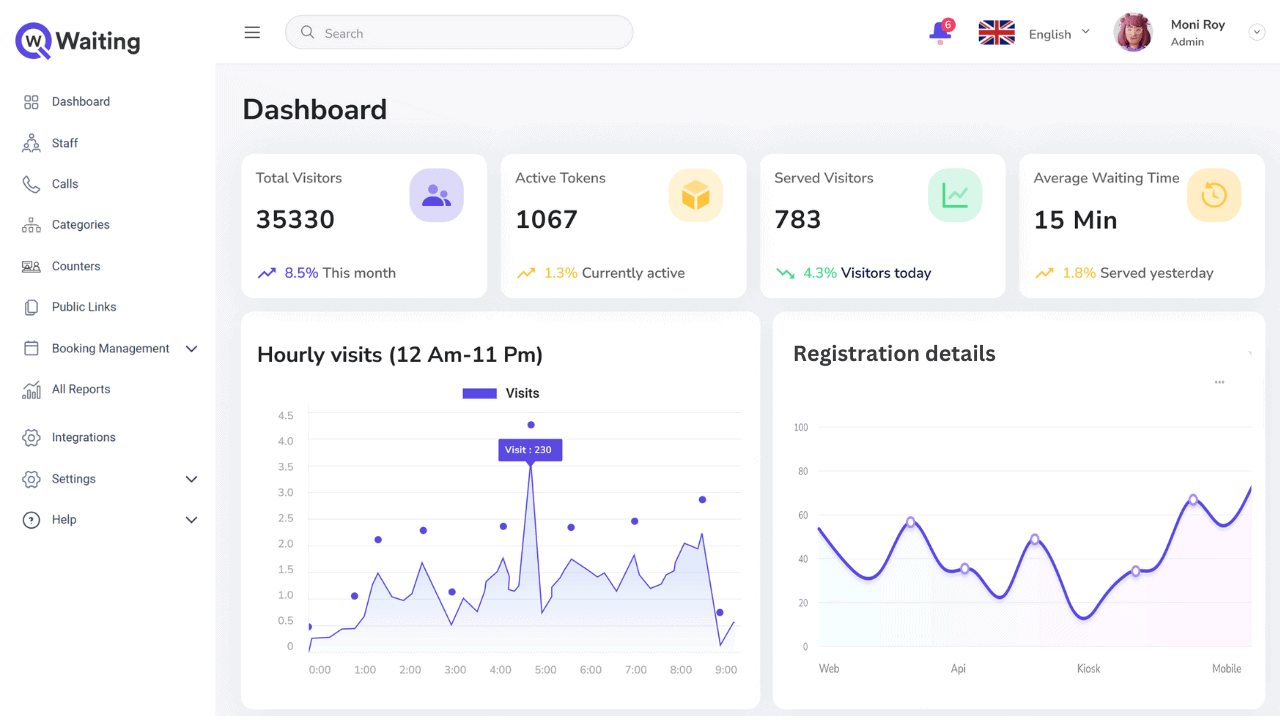
Modern event queue management solutions provide post-event dashboards that break down performance by lane, time slot, and attendee category. Use that data to optimize staffing, adjust gate capacity, and improve routing algorithms for the next event.
Before vs. After Snapshot:
- Before: 35-minute average wait, 8 gates operating at inconsistent speeds, 200+ complaints
- After: 14-minute average wait, 6 gates dynamically balanced, 40 complaints
Common Mistakes to Avoid When Digitizing Screening
- Minimal staff training leads to chaos when the system goes live. People default to old habits when they don’t trust new tools.
- Lack of pre-event communication means attendees show up unprepared, creating confusion at checkpoints that could’ve been avoided.
- No monitoring plan wastes the entire point of real-time data. If nobody’s watching the dashboard and responding to alerts, you’ve just installed an expensive data logger.
- Over-reliance on manual corrections despite new systems. The goal is to let the platform handle routine decisions so staff can focus on exceptions and security. Constantly overriding automated assignments defeats the purpose.
Conclusion
Security screening at major events doesn’t have to be the operational nightmare it has become. The technology exists to manage crowds intelligently, maintain strict safety protocols, and create an entry experience that doesn’t start every event with frustration.
Smart queue solutions for events aren’t about replacing security teams or cutting corners. They’re about giving those teams better tools, real-time visibility, predictive intelligence, and the ability to respond dynamically when conditions change. When entry flow works the way it should, everyone benefits: attendees get in faster, security maintains control, and event leaders protect the reputation they’ve spent years building.
The venues and event organizations already making this shift aren’t doing it because it’s trendy. They’re doing it because the alternative, continuing to manage high-profile events with static, manual coordination, doesn’t scale anymore. Crowds are larger. Expectations are higher. And the margin for error has disappeared.
Ready to see how Qwaiting can transform entry operations at your venue?
Request a demo to explore how queue management for security checkpoints adapts to your specific event requirements, or use our ROI calculator to quantify the operational and financial impact before you commit.