
Walk into any modern airport, hospital, or bank today, and you’ll notice something different. The crowded front desks are quieter. The ticket machines sit unused. Instead, people are pulling out their phones, scanning a code, and walking straight to where they need to be. That’s not a trend, it’s a complete shift in how service operations work.
QR codes are now the main way to check in at busy places. During the pandemic, they were just a quick fix. Now, most people use them to get entry, check into their spots, and feel more independent. They are very fast and clean, and they are easy to use. The codes also fix big problems for businesses. They stop lobbies from getting crowded and keep staff members from getting overwhelmed. If a business still makes people stand in line in 2025, they are outdated and causing customers to leave.
Businesses are using this system for important reasons. They are not doing it just because it is new or cool. Contactless check-ins help them handle more people faster. They also mean fewer people miss their appointments. The systems give teams helpful information. This information lets them make better choices about how many workers they need. We already know that QR code systems work well. The real question is whether a business can wait any longer to start using them.
Why Traditional Queues No Longer Fit Today’s Customer Expectations

People generally prefer not to touch screens that others have used. When the pandemic ended, this feeling persisted. Instead, it became a strong idea of how things should be. Here’s why traditional queues no longer make sense today:
- Crowding creates chaos: When people stand in a physical line, they crowd together. This makes the whole place feel messy and out of control. Busy places like doctors’ offices or service centers cannot easily manage how many people are gathered. They need a better system to let people in.
- Slow check-ins bottleneck everything: When every customer has to interact with a kiosk or staff member, throughput drops. You’re limited by the speed of the slowest touchpoint.
- Hygiene is now a visible brand signal: Customers notice when they have to touch the same screen as 200 other people. Even if a business cleans the screen every hour, it does not matter. People still think it is dirty.
What QR Code Check-ins Actually Solve for Businesses
This isn’t about being trendy. It’s about fixing problems that cost you money every day.
A Fast, Simple Start to the Customer Journey
- No apps, no downloads, just a scan: Customers open their camera, point it at the code, and they’re in. The friction is nearly zero, which means adoption happens instantly.
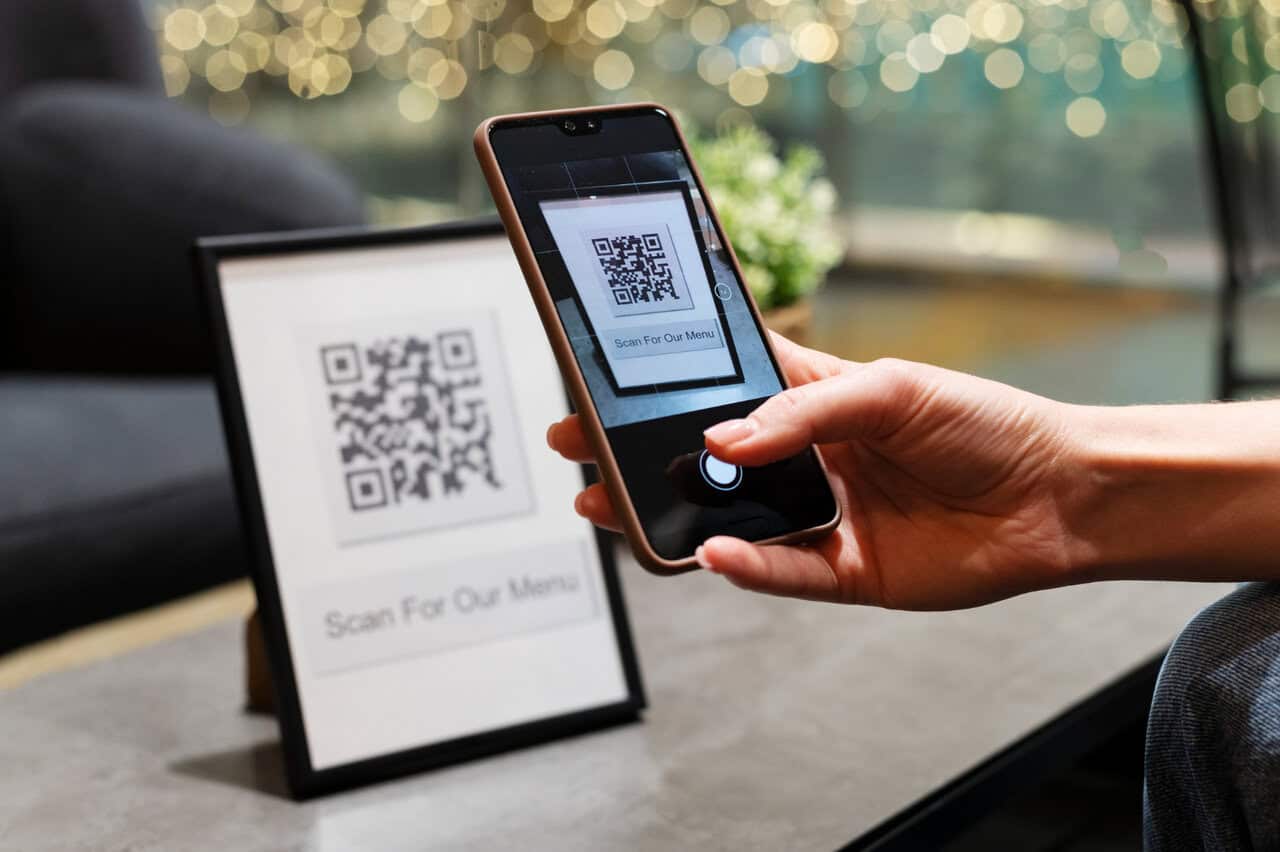
- Instant queue joining without crowding. People don’t need to stand in packed waiting areas. They scan, get a token, and wait wherever they want, outside, in their car, or at a nearby café.

- Higher throughput in high-traffic sectors. Healthcare OPDs, bank branches, retail returns desks, and government offices all see faster service cycles. When check-in takes five seconds instead of two minutes, capacity increases measurably.
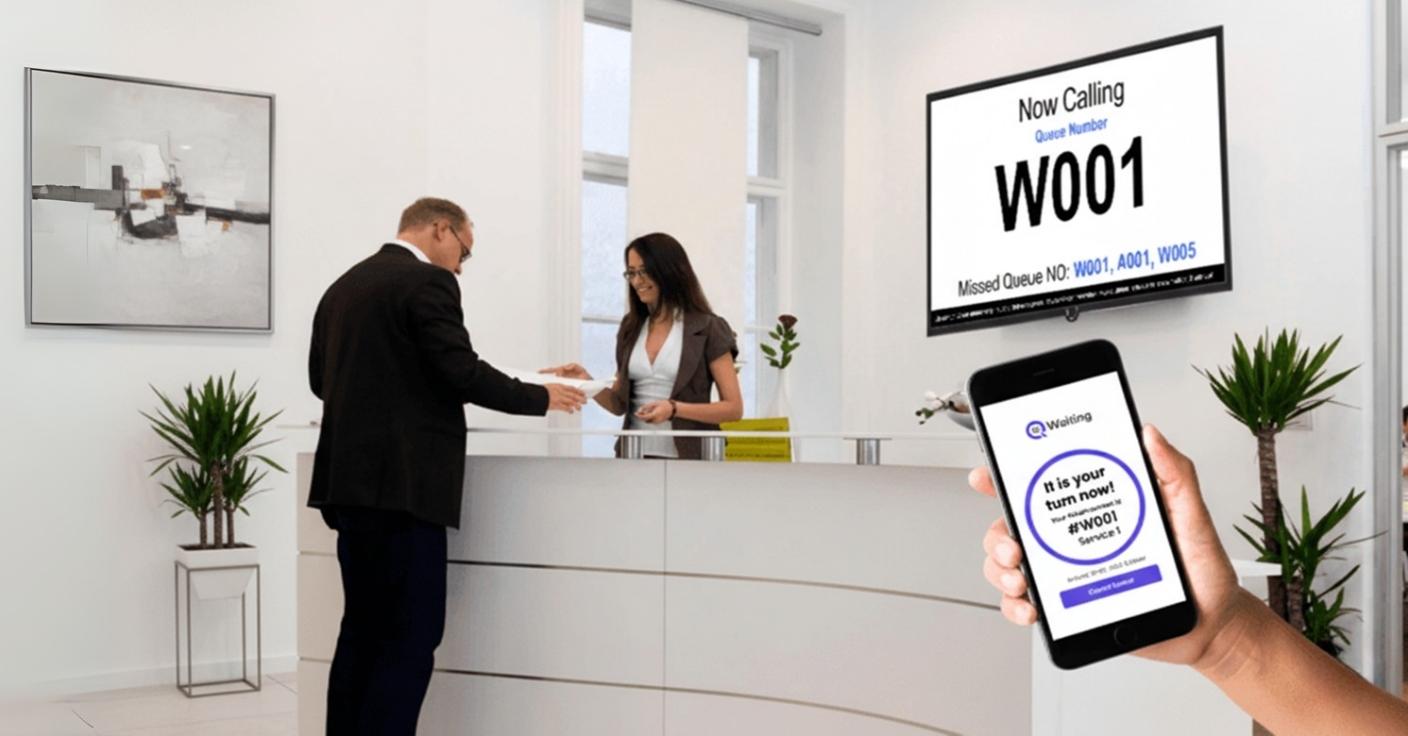
For a deeper breakdown of how QR queues directly reduce wait times, explore our guide:
QR Code Queueing: The Fastest Way to Cut Customer Wait Times
Why Modern Leaders Are Prioritizing QR Code Check-ins
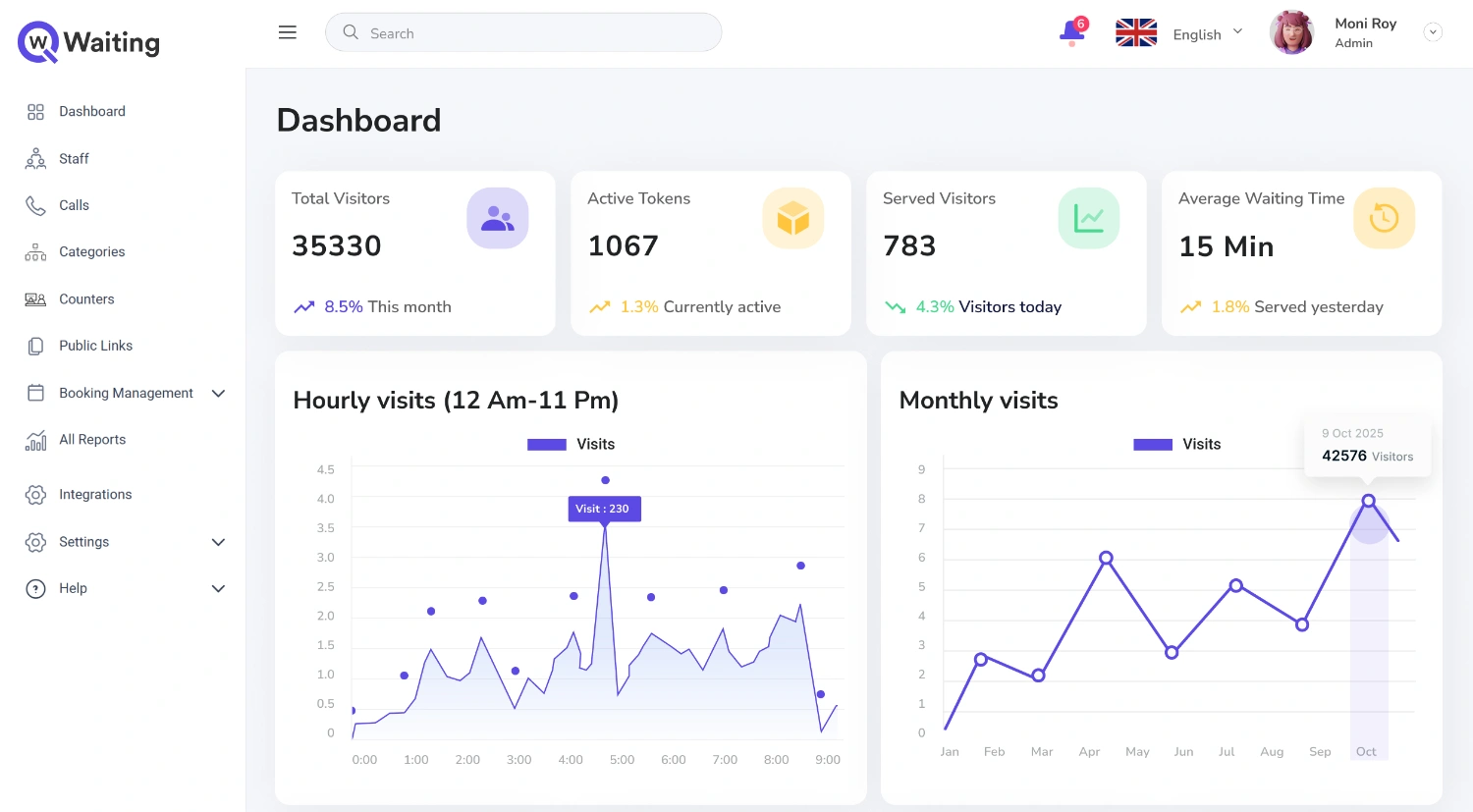
- Predictable visitor traffic and better load distribution. You can see peak times, service bottlenecks, and customer drop-off points in real time. That data drives smarter scheduling and staffing decisions.
- Reduced staff pressure at the front desk. Fewer people asking “How long?” or “Where do I go?” means your team can focus on service delivery instead of crowd control.
- Stronger visibility through analytics. Modern queue management systems like Qwaiting give you dashboards that track wait times, service duration, and customer flow across multiple locations.
Key Metrics That Prove the Impact
Data Spotlight:
- Wait time reductions: 30-50% on average
- Service capacity increase: 25-40% without adding staff
- Customer drop-offs: reduced by 35-45%
- CSAT improvements: 20-30 point lifts in high-traffic environments
These aren’t projections. They’re actual results from enterprises that switched from manual or kiosk-based systems to QR code entry.
Here’s how smart and digital QR code check-ins are way better than traditional check-ins:
| Factor | QR Code Check-ins | Traditional Check-ins |
| Speed | Instant (5-10 seconds) | 1-3 minutes per person |
| Hygiene | Zero-touch | Shared surfaces, high contact |
| Staffing | Minimal front-desk involvement | Requires dedicated staff |
| Cost Efficiency | Scales without hardware | Expensive hardware and maintenance costs |
| Customer Experience | Seamless, mobile-first | Frustrating, often confusing |
Industry-Specific Micro Examples
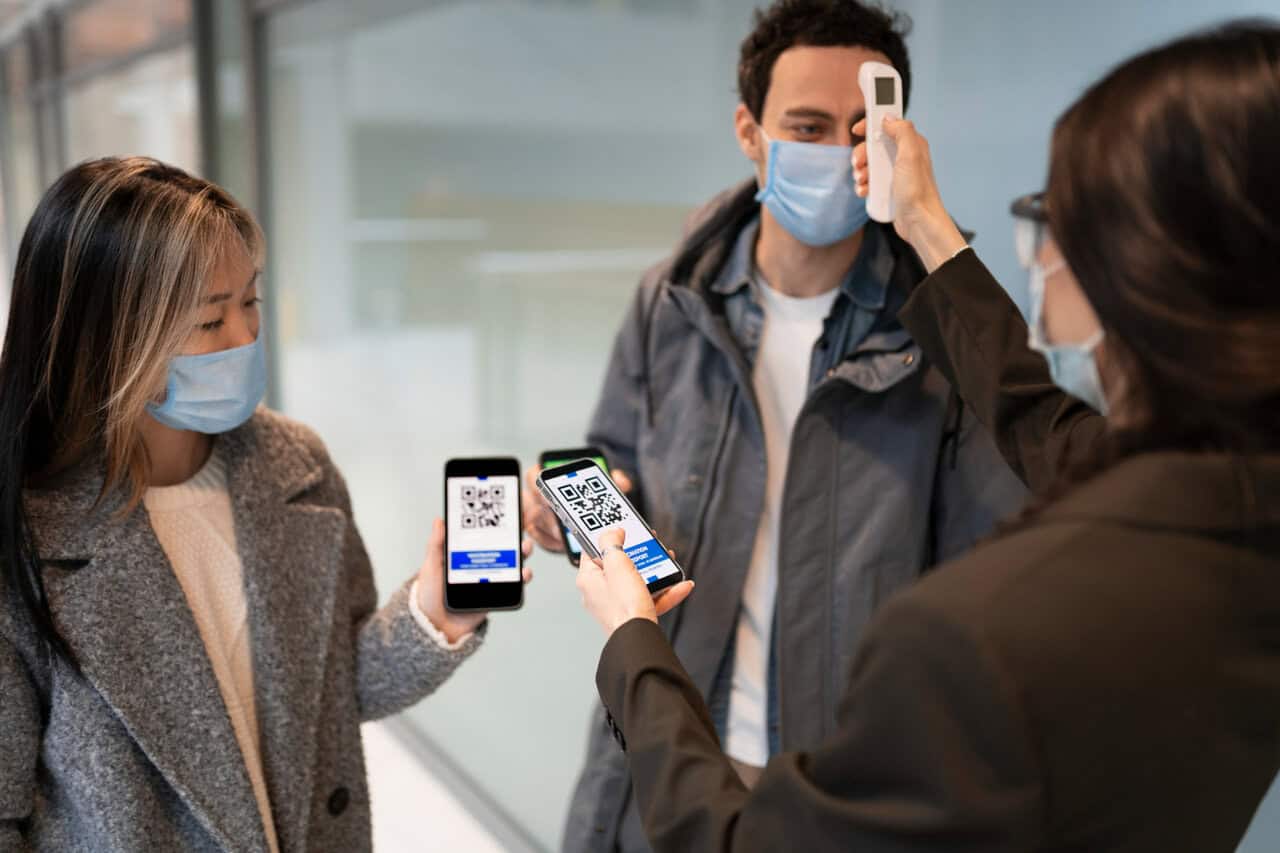
- Hospitals: OPD patients scan a QR code at the entrance, get routed to the correct department, and receive real-time updates on their phone. No more crowded registration desks.
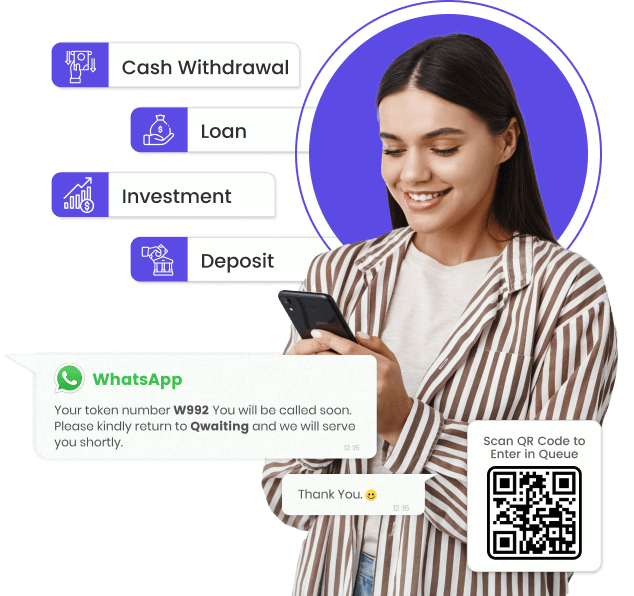
- Banks: Customers scan codes for specific services: loans, account opening, and cash deposits, and get directed to the right counter. Service staff can prepare files in advance.
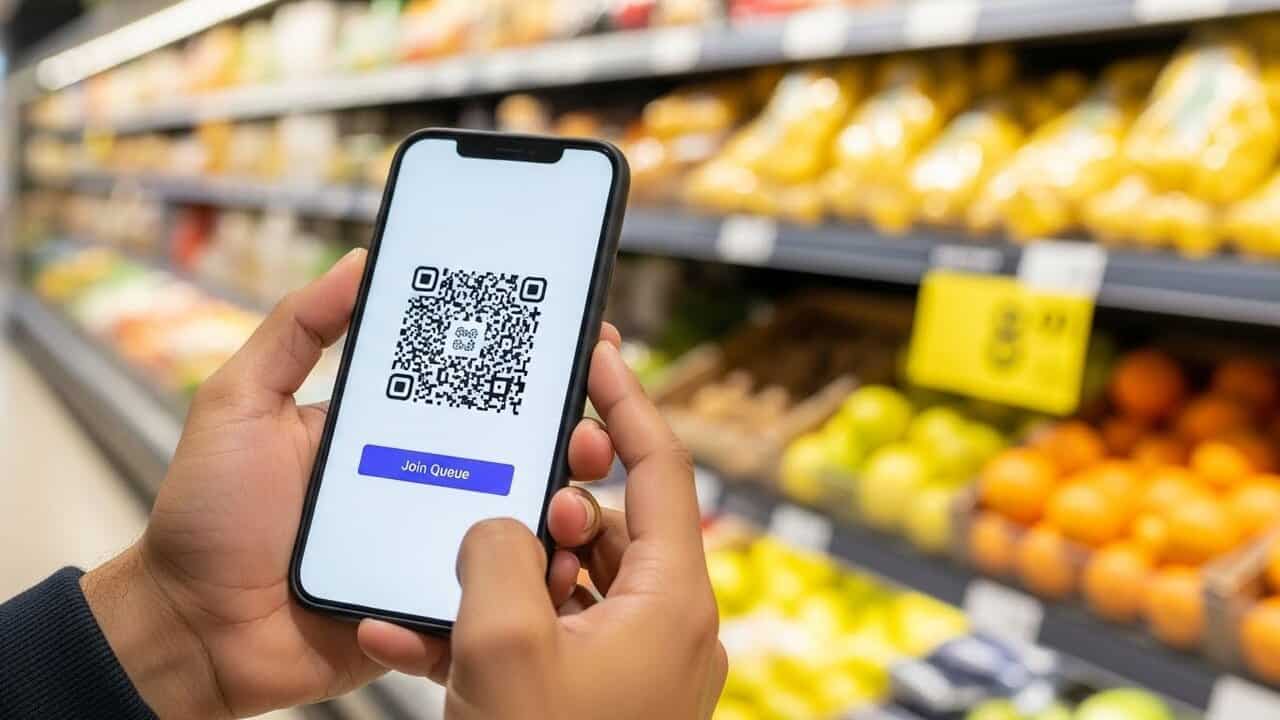
- Retailers: QR codes at returns desks or billing counters let customers join queues before they reach the counter. Wait times drop, and staff handle volume better.
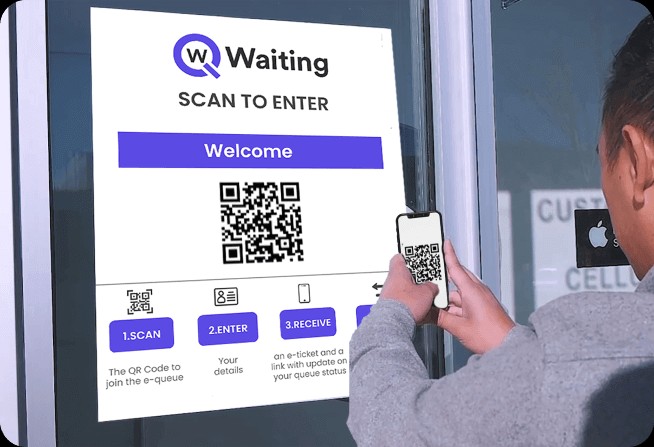
- Government offices: Document submission centers use QR check-ins to reduce lobby crowding and track service times for compliance reporting.
Implementation: How to Roll Out QR Code Check-ins the Right Way
Rolling this out isn’t complicated, but it does require planning. Skip steps, and you’ll end up with confused staff and frustrated customers.
A Step-by-Step Rollout Framework for Enterprises
- Create unique QR codes for each service type or counter. Do not use just one basic code for everyone. Instead, send people to the right place based on their needs. The system should know if they have an appointment. It should know if they just walked in. It should also know if they need quick, special service.
- Map the customer journey from entry to service completion. Your QR system needs to follow the same path people take. Think about where people walk in first. Next, think about where they are told to wait. Then, think about how they are called forward. Your QR code system must copy those exact steps.
- Placement strategy matters. You should put the codes in many easy-to-see spots. Place them at entrances, on lobby signs, at the front desk, and on computer screens. Make sure people absolutely cannot miss them. Putting them at eye level is the best way to do this.
Staff Alignment & Operational Readiness
- Train teams to guide walk-ins during the transition. Not everyone will scan immediately. Staff should be ready to explain, “Just scan this code with your camera, and you’ll get a number.“
- Link QR flows to internal dashboards and queue displays. Front-line teams need to see who’s checked in, who’s waiting, and who’s next. Disconnected systems create confusion.
- Avoid common onboarding mistakes. Don’t launch without testing. Don’t assume customers will figure it out on their own. Don’t skip signage.
Integrating QR Check-ins Into Existing Workflows
- Combine QR entry with virtual queuing and token systems. Some customers will check in remotely, others at the door. Your system should handle both seamlessly.
- Multi-location scalability is essential. If you’re running 10, 50, or 200 branches, your QR check-in system needs to centralize data and maintain consistency across every location.
- Ensure uptime, stability, and real-time sync. If the system goes down or lags, customers will walk away. Choose platforms built for reliability.
Inclusivity & Accessibility Considerations
- Fallback options for elderly visitors or those without smartphones. Keep a manual check-in option available. Not everyone has a phone, and that’s fine.
- ADA and global accessibility compliance. Make sure your QR flows work with screen readers and offer multi-language support.
- Clear, simple signage for all. Avoid jargon. Use visuals. Test with real users before going live.
Here’s what Healing Hospital, Chandigarh’s operation head, said after implementing the self-service kiosk system:
“After switching to Qwaiting’s QR check-ins, our lobby crowd dropped, average patient wait times dropped by 20 minutes, and staff productivity improved by 40%. Staff could finally focus on service instead of managing chaos.”
— Operations Head, Healing Hospital
Hygiene & Safety Benefits That Matter in 2025
Hygiene isn’t just a 2020 concern. It’s a permanent part of how customers evaluate service quality. Here’s how contactless check-ins help maintain hygiene:
- QR code check-ins get rid of things like shared screens, ticket machines, or clipboards. When you remove these touch points, you lower the risk of spreading germs. It also costs less money to keep things working. Places like hospitals, banks, and government offices benefit the most from this big change.
- QR check-ins show customers that a business is ready and professional. When people see that they can check in without touching anything, they think the business is smart. They believe the business is always planning for the future. This feeling of good planning helps build customer trust.
- Using QR check-ins makes the brand look better for certain groups. This is very important for healthcare, financial services (like banks), and government offices. People watch these businesses very closely. Showing that you care about safety helps you stand out. You look better than other groups still using old check-in ways.
Data Insight:
A MoldStud article cites research that “72% of consumers prefer contactless options for their convenience and speed.
Driving Customer Adoption & Engagement
A QR system only works if people actually use it. Here’s how to make that happen.
- You need to make the QR code easy to see. Do not hide the code at all. Put it at the level where people look when they enter the building. Give very simple instructions on how people walk in. For example, just write “Scan here to join the queue.” Do not make the instructions too complicated.
- The system must quickly tell customers they are checked in. Right after they scan, they need an instant confirmation. A screen showing their ticket number tells them they are in the system. The system should also show how long they will wait. Telling someone “Approximately 12 minutes” is much better than just saying “Please wait.”
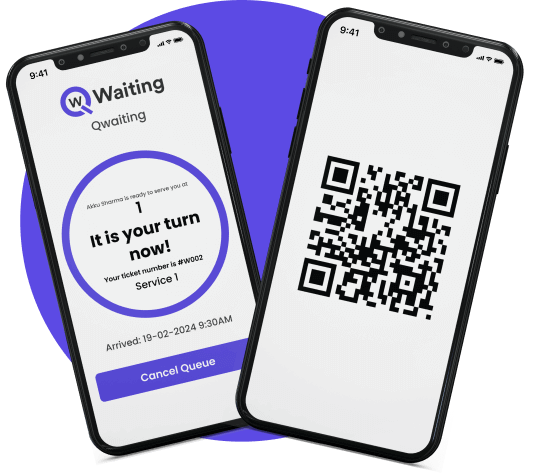
- Your staff should be kind and help people during the change. The first few weeks of using the new system are the most important time. You should ask people to try the new way. If they try it out, they will keep using it later on.
- The system must work well and be dependable every time. When customers have good experiences often, they build a habit. They will then automatically choose to use the new system.
What This Means for 2026 and Beyond
QR code check-ins are only the start of the change. The next big thing is already coming. This new method will mix QR codes with biometrics. Biometrics means using things like a fingerprint or face scan to check who you are. This mix will make checking in easy, but it will also check your identity. Places like hospitals and banks will be the first to use this. They need high security. Soon it will not be enough just to offer check-ins that are private and touch-free. These will become rules set by the government.
Businesses that start using these new systems early will gain big advantages. They will have better customer experiences and smoother workflow for a long time. These businesses are using modern waiting systems now. This change is not crazy; it just makes sense. QR code check-ins fix real problems like crowded spaces, slow work, not seeing who is waiting, and old ways of keeping clean. This technology is known to work. The money they save is obvious. The only question is if you will start using it now. Or will you wait until all your competitors have already moved on to something new?
Curious how QR check-ins can speed up queues and cut wait times? Book a live demo or start your trial now to experience the system firsthand.